



Ebola disease in DRC: find out how we're responding
Learn more
8000 Results
 
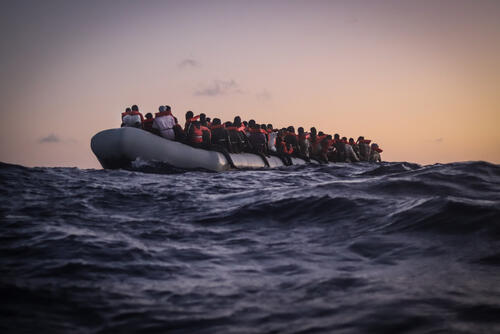
On August 24, SeaWatch4 completed its third rescue in 48 hours. Evacuated in a heavy swell, many of the some 100 survivors were hypothermic, disoriented and smelled strongly of gasoline. Emergency showers were provided for fuel exposure.
Mediterranean migration

Five things to know about the Mediterranean search and rescue crisis

Five search and rescue boats detained, including MSF's Sea-Watch 4. In five months. Here are five things to know about the current situation with search and rescue in the Mediterranean sea. Project Update - 16 Oct 2020
 
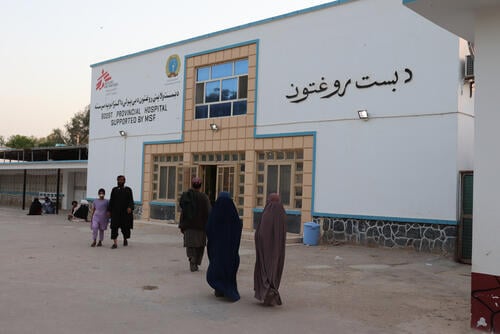
Patients and caretakers entering Boost hospital, Boost hospital, Lashkar Gah
.
Afghanistan

Sharing patients’ stories “as devastating as their injuries” in Afghanistan

MSF hospital coordinator at Boost provincial hospital, Marianna Cortesi, describes the harrowing stories of two women - mothers - caught in the crossfire of the fighting in Helmand province, southern Afghanistan. Voices from the Field - 15 Oct 2020
 
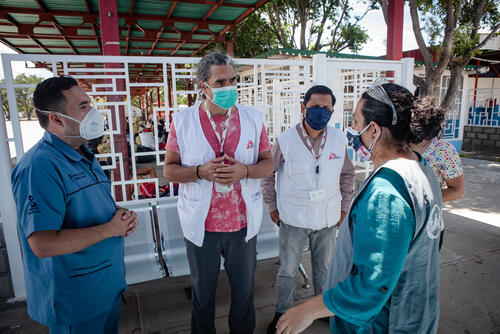
MSF staff provide support and advice to medical staff working in quarantine centres set up by national authorities to prevent the spread of COVID-19 in the Venezuelan border state of Táchira. Venezuelan returnees must undergo quarantine upon their arrival in the country.
Venezuela

MSF teams improve conditions for Venezuelan returnees in quarantine centres

Venezuelan migrants are returning to their home country in light of COVID-19. MSF is providing assistance to returnees to  ensure access to safe drinking water and prevent common diseases. Project Update - 13 Oct 2020
 
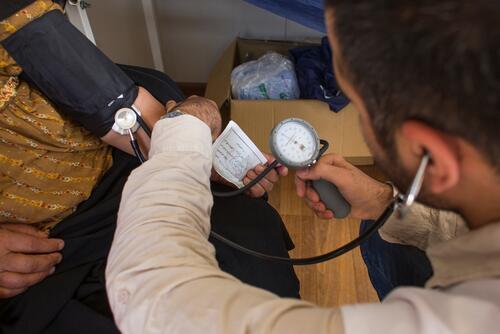
Non Communicable Disease clinic (MSF) in northeast Iraq.
Iraq

MSF hands over last projects in Diyala, Iraq, after six years

MSF teams provided healthcare services in Diyala governorate from late 2014 until August 2020 when they handed over their latest projects to the Health Directorate and other local and international organisations. Project Update - 13 Oct 2020
 
World Mental Health Day Package-Lebanon
Lebanon

“I needed to make myself useful to overcome the panic”

MSF psychologist Sara Tannouri in Lebanon speaks of the blast that devastated her home city Beirut, and its impact on mental wellbeing, including her own. Voices from the Field - 9 Oct 2020
 
A refugee waits outside the mental health clinic for consultation.
Kenya

COVID-19 further fuels mental health crisis in Dadaab as durable solutions falter

The mental health of refugees in Kenya's Dadaab camp complex is dramatically deteriorating as COVID-19 hinders promises of durable solutions. Project Update - 9 Oct 2020
 
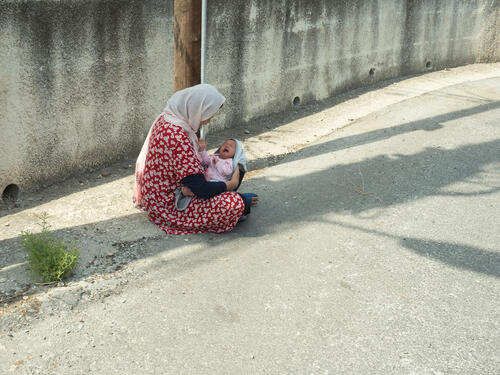
GREECE. Lesbos, 12 September 2020. Mother with her baby under the shade of a tree tried to feed it.
Greece

EU must stop trapping people in miserable conditions on the Greek islands

One month after a fire destroyed Moria refugee camp on the island of Lesbos, Greece, MSF and partner organisations are demanding EU leaders relocate people still stuck on the islands. Statement - 8 Oct 2020
 
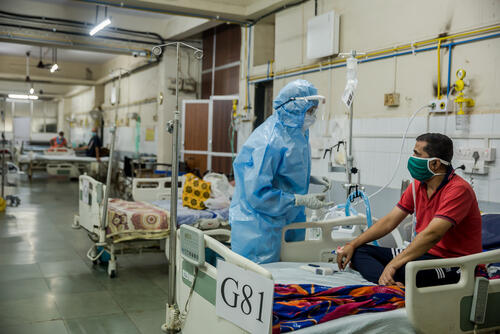
Medical doctor, Dr Ilham checking patient Pramod in the inpatient ward with High Flow Nasal Oxygen Equipment (HFNO) at Pandit Madan Mohan Malviya Shatabdi hospital located in Govandi M East ward Mumbai. MSF has closely been working in co-ordination with Municipal corporation of Greater Mumbai (MCGM) for screening, sample collection and diagnostics of Covid-19 cases and management of Mild  to moderate confirmed cases since June 2020. MSF has provided High Flow Nasal Oxygen Equipment (HFNO) to improve treatment outcomes at secondary level and decongest tertiary referral facilities.
Coronavirus COVID-19 pandemic

MSF supports India and South Africa ask to waive COVID-19 patent rights

MSF backs a demand by India and South Africa at the World Trade Organization to waive patent and intellectual property rights on coronavirus COVID-19 drugs and vaccines. Press Release - 7 Oct 2020
 
An MSF team is getting ready to prepare a mass drug administration campaign.
About MSF

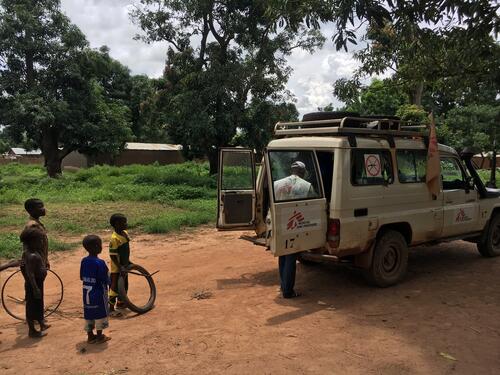
In the bush in Central African Republic

blogs.msf.org - 6 Oct 2020
 
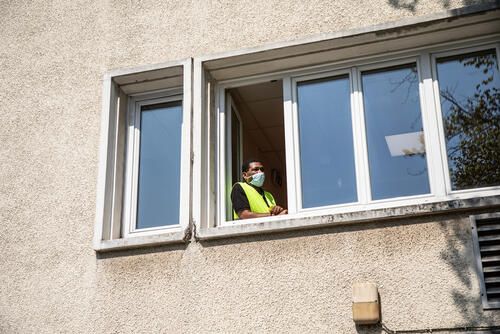
Most of the people admitted to Covid+ centres are homeless people sent from emergency shelters. When MSF mobile teams who intervene in these shelters diagnose someone as possibly having contracted the virus they try to test them——if they have the necessary kits.
From the medical perspective, we know the symptoms of the virus, so we can identify anyone suspected of having the disease. The Regional Health Authority then calls on the Red Cross, which handles transportation, to take them to Covid+ centres set up across Paris and the suburbs. 

In Chatenay-Malabry Covid+ centre (Paris suburbs), there are places for 50 people with confirmed or suspected Covid-19. We provide social support and paramedical/medical care in partnership with NGO Alteralia. This includes checking vital signs: blood pressure, temperature and oxygen saturation to see whether people are breathing properly. We also give advice on hygiene, wearing a mask and hand washing to prevent the infection spreading to other people. We also give medical examinations and, when necessary, take care of patients requiring long-term treatment for other conditions. We monitor them regularly, so if all of a sudden someone who’s really struggling to breathe—remember, this isn’t a hospital so we don't necessarily have the equipment to keep them on oxygen for any length of time—requires further tests, this is the kind of person we call the emergency services for so that they can take them to the hospital. 

MSF teams are on hand throughout the care chain: from the mobile teams, mobile clinic and care provided in the emergency centres through to the medical team who treat patients admitted to the Covid-19 treatment centres.
Coronavirus COVID-19 pandemic

High COVID-19 rates found among people living in extreme hardship in Paris

A survey has found that people living under hardship - such as in shelters or workers' hostels - in Paris have infection rates of coronavirus COVID-19 of up to 94% in some areas. Press Release - 6 Oct 2020
Four mothers posing in a corridor of the Hospital in Bili. All four of them are staying in the hospital with their child, that's suffering from a severe case of malaria. Since the beginning of the project in 2016, the pediatric ward already treated more than 4.000 cases of complicated/severe form of malaria.
Médecins Sans Frontières (MSF)

Independent medical humanitarian assistance

We provide medical assistance to people affected by conflict, epidemics, disasters, or exclusion from healthcare. Our teams are made up of tens of thousands of health professionals, logistic and administrative staff - most of them hired locally. Our actions are guided by medical ethics and the principles of independence and impartiality. We are a non-profit, self-governed, member-based organisation.

Learn more