


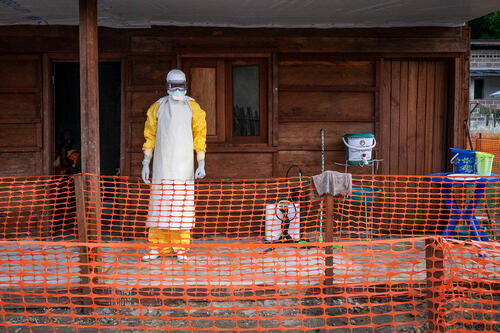

Ebola disease in DRC: find out how we're responding
Learn more
8005 Results
 
With the Syria crisis entering its ninth year in 2019, Jordan is hosting around 1.3 million Syrians of which 670,000 are registered as refugees.

With the arrival of winter, the suffering is renewed for Syrian refugees, let alone for those suffering from life-long diseases. Adding to this, winter is a season of additional torment that they still cannot avoid.

NCDs is one of the main health problems affecting Syrian and Jordanian population; it is estimated NCDs to account for 78% of all death in Jordan. Heart disease has become a leading threat to the health of the Jordanian population, with 41.5% of deaths last year 37% of them were related to heart disease.

Death due to NCDs is mainly due to complications of uncontrolled other Chronic Diseases like Diabetes and Hypertension. The lack of follow-up, diagnostics and clinical investigations, health awareness and high cost of secondary and tertiary health care like cardiac interventions are also significant reasons.( e.g.: Catheterization may reach 5000 JDs/7000 USD, excluding Hospital fees).

Like most of NCDs, the difficult economic conditions make life harder for those affected. The NCDs care and management is expensive in general and requires long term medications and regular follow ups, not a lot of patients have the financial ability to afford the treatment. It affects the access of medicines for patients. As a result, MSF intervened and operated two clinics in northern Jordan in Irbid governorate to respond to the NCDs needs between Syrian refugees and vulnerable Jordanians. MSF is helping both in Irbid governorate by providing these life-saving medications and follow up consultations free of charge.

At both clinics, MSF currently has cohort of 5500 patients out of which 3,639 are Syrian refugees and 1,619 are vulnerable Jordanian in the NCD program, out of which Type I Diabetes: 163 and Type II Diabetes: 3251, Hypertension: 3,773, Asthma 453, and Cardiovascular 1406. Many patients have more than one of these diseases.

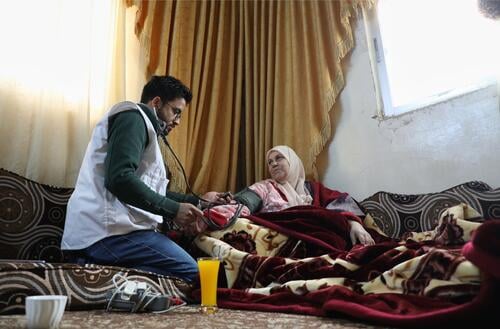
MSF teams provide medical and mental healthcare,  including psychosocial support, physiotherapy and health promotion, and home visits to patients unable to visit the clinics due to mobility constrains.

MSF contribution doesn’t stop at providing health care to Syrian refugees. MSF believes that increasing patient’s familiarity about NCDs is important, given the lifelong nature of these diseases.

Some of the NCDs services available are provided with some cost taken from the patients. For many Syrian patients that cost is not affordable and would require a global support from donors and agencies to have affordable access to NCD treatment and health care.
Non-communicable diseases

Eight reasons why diabetes is a humanitarian emergency

Diabetes is a common, chronic disease - which can be managed with drugs such as insulin and a good diet. But it can be life-threatening for people living in conflict zones or refugee camps. Project Update - 13 Nov 2020
 
Most of the people admitted to Covid+ centres are homeless people sent from emergency shelters. When MSF mobile teams who intervene in these shelters diagnose someone as possibly having contracted the virus they try to test them——if they have the necessary kits.
From the medical perspective, we know the symptoms of the virus, so we can identify anyone suspected of having the disease. The Regional Health Authority then calls on the Red Cross, which handles transportation, to take them to Covid+ centres set up across Paris and the suburbs. 

In Chatenay-Malabry Covid+ centre (Paris suburbs), there are places for 50 people with confirmed or suspected Covid-19. We provide social support and paramedical/medical care in partnership with NGO Alteralia. This includes checking vital signs: blood pressure, temperature and oxygen saturation to see whether people are breathing properly. We also give advice on hygiene, wearing a mask and hand washing to prevent the infection spreading to other people. We also give medical examinations and, when necessary, take care of patients requiring long-term treatment for other conditions. We monitor them regularly, so if all of a sudden someone who’s really struggling to breathe—remember, this isn’t a hospital so we don't necessarily have the equipment to keep them on oxygen for any length of time—requires further tests, this is the kind of person we call the emergency services for so that they can take them to the hospital. 

MSF teams are on hand throughout the care chain: from the mobile teams, mobile clinic and care provided in the emergency centres through to the medical team who treat patients admitted to the Covid-19 treatment centres.
Coronavirus COVID-19 pandemic

MSF supports nursing home staff as urgent appeal for medical personnel in France launched

MSF is providing support to nursing home staff, and appealing for more medical staff to come forward, as the second wave of the coronavirus pandemic mounts in France. Project Update - 11 Nov 2020
 
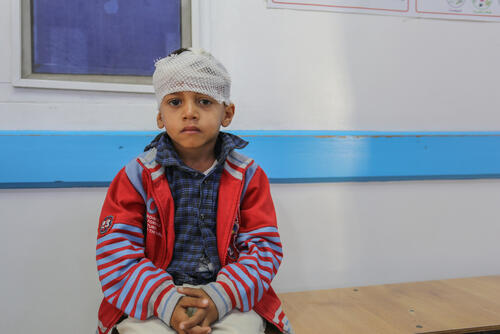
Abdullah Ali, 6 years old, fell from the top of the tree, suffered bruises in the head, and received treatment at Naser hospital supported by MSF in Ibb city.
Yemen

Humanitarian response in Yemen: time to go back to the drawing board

MSF Director of Operations in Geneva, Christine Jamet, explains why a reset is needed on the humanitarian response in Yemen. Op-Ed - 11 Nov 2020
 
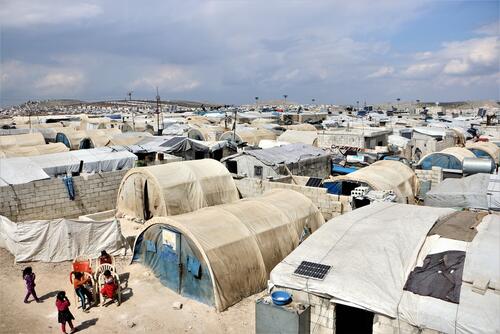
Abou Obaida area in Deir Hassan.
Syria

Taking risks to survive as COVID-19 spreads in the northwest

Three displaced people in northwest Syria recount their struggles, frustrations and fears as COVID-19 cases rise against the backdrop of an economic crisis. Project Update - 11 Nov 2020
 
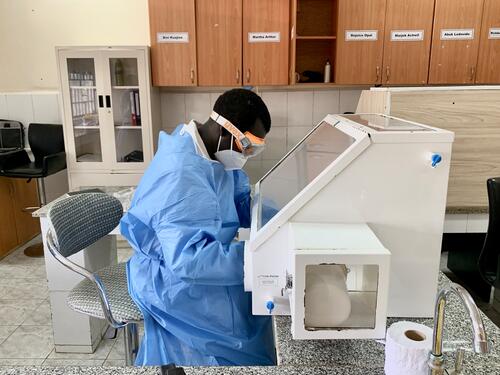
Giir, 29-years-old, examines samples of COVID-19 suspected cases in the National Public Health Laboratory (NPHL) in Juba. Giir supervises a team of eight biotechnologists of the NPHL’s reception area to where the samples are brought for testing from all over the country. After the samples are registered and coded, they are send to an extraction room where another technician will determine whether the sample is positive for COVID-19 virus.
Coronavirus COVID-19 pandemic

Governments must demand pharma make all COVID-19 vaccine deals public

With billions of dollars of tax payer money being poured into the development coronavirus vaccines, the deals from pharmaceutical companies are being kept largely secret, raising concerns. Press Release - 11 Nov 2020
 
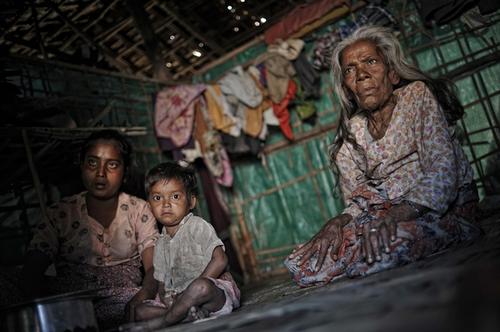
A family in their tent in a refugee camp on the outskirts of Sittwe, February 2, 2013. photo by Kaung Htet
MSF Speaking Out

MSF and the Rohingya 1992-2014 (PDF, 4.8 MB)

https://www.msf.org/sites/msf.org/files/2020-11/socs-rohingya-en_0.pdf - 10 Nov 2020
 
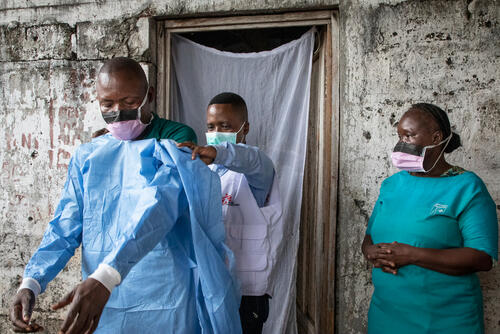
Epidemiologist Gaston trains and helps local staff at the Le Temps d'un Soir health centre in Mbandaka on how to put the protective equipments donated by MSF to improve protection and infection control in this health centre, which has had eight confirmed Ebola cases at the start of the epidemic. Mbandaka, Equateur Province, DRC, 27 October 2020.

***

L’épidémiologiste Gaston forme et aide le personnel local du centre de santé Le Temps d’un Soir de Mbandaka à enfiler les équipements de protection donnés par MSF pour améliorer la protection et le contrôle des infections dans ce centre de santé qui a connu 8 cas confirmés Ebola au début de l’épidémie. Mbandaka, Equateur, RDC, 27 octobre 2020.
DRC Ebola outbreaks

New strategies at work in eleventh Ebola outbreak in DRC

In an interview, Guyguy Manangama who is leading MSF's Ebola response in Équateur province, describes the eleventh outbreak, which has lower levels of mortality than the previous outbreak. Interview - 4 Nov 2020
 
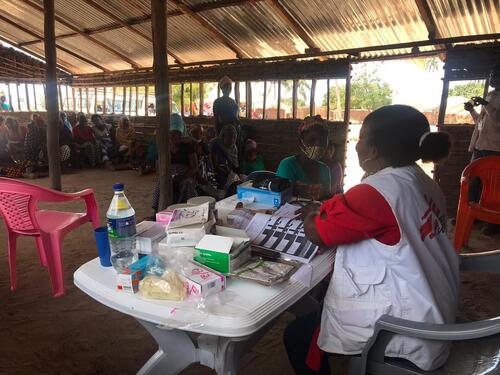
In the beginning of September, MSF teams offered medical consultations through their mobile clinic at Impire Village to respond to a diarrhea outbreak. As Impire is 9km south of the Health Center in Nanlia, northern Mozambique, where MSF has set up a Diarrhea Treatment Center, the IDPs and host communities were only reachable through the mobile clinic. MSF managed to reduce the number of diarrhea cases and provide health services to both IDPs and the host community.
Mozambique

Urgent assistance needed for hundreds of thousands of people displaced by violence in Mozambique

With fighting continuing in northeastern Mozambique's Cabo Delgado province, MSF is providing medical care to displaced people - but is hampered in scaling up assistance due to administrative barriers. Press Release - 3 Nov 2020
 
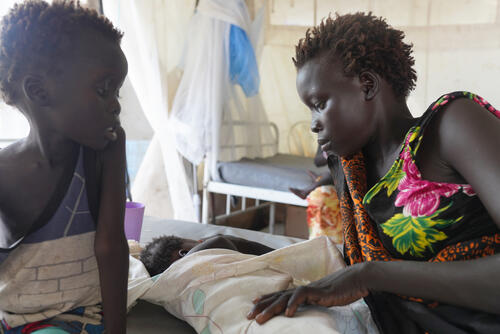
Yayai Logain with her children in MSF’s clinic in Pibor town. Two of Yayai’s children have measles. MSF has treated over 250 children for measles since admitting its first suspected case on 18 August 2020. As of November 2, 2020, vaccination campaign is yet to happen. The severity of the current measles outbreak being magnified by other illnesses like severe malaria, pneumonia and severe malnutrition as cycles of violence and ongoing flooding forced thousands of people from their homes.
South Sudan

Urgent vaccination campaign needed to stop spread of measles in Pibor

MSF raised the alarm about a measles outbreak in Pibor, South Sudan, in August but a vaccination campaign has yet to take place. Action is needed now. Press Release - 3 Nov 2020
 
A nurse from the Lotumbe General Reference Hospital has put his personal protective equipment and is about to visit a suspected Ebola case who has just been admitted to the Ebola Treatment Centre (ETC). The ETC was set up by MSF following the appearance of a few confirmed Ebola cases at the beginning of the epidemic in this area. Lotumbe.

***

Un infirmier de l'Hôpital Général de Référence de Lotumbe a enfilé son équipement de protection individuel et s’apprête à rendre visite à un cas suspect Ebola qui vient d’être admis au Centre de Traitement Ebola (CTE). Ce CTE a été mis sur pied par MSF, suite à l'apparition de quelques cas confirmés Ebola au début de l'épidémie. Lotumbe.
DRC Ebola outbreaks

DRC's eleventh Ebola outbreak

On 18 November 2020, DRC declared over an outbreak of Ebola in Équateur province, which had been the country’s eleventh in 40 years, and the third in the last two years. Crisis Update - 3 Nov 2020
Four mothers posing in a corridor of the Hospital in Bili. All four of them are staying in the hospital with their child, that's suffering from a severe case of malaria. Since the beginning of the project in 2016, the pediatric ward already treated more than 4.000 cases of complicated/severe form of malaria.
Médecins Sans Frontières (MSF)

Independent medical humanitarian assistance

We provide medical assistance to people affected by conflict, epidemics, disasters, or exclusion from healthcare. Our teams are made up of tens of thousands of health professionals, logistic and administrative staff - most of them hired locally. Our actions are guided by medical ethics and the principles of independence and impartiality. We are a non-profit, self-governed, member-based organisation.

Learn more