



Ebola disease in DRC: find out how we're responding
Learn more
8005 Results
 
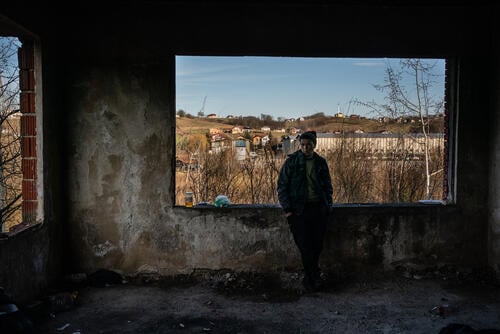
202002, Kristof Vadino, Bosnia, refugees, in an abandonned old factory in Velika Kladusa, near 'The Factory', between 30 and 50 people sleep here, the wind blows trough, only 2 small confined spaces, no water or electricity
Mediterranean migration

“What Europe is experiencing today, is not a humanitarian crisis, but a crisis of humanity.”

MSF International President Dr Christos Christou speaks to governments High-level Interparliamentary Conference on Migration and Asylum in Europe on their migration obligations. Speech - 19 Nov 2020
 
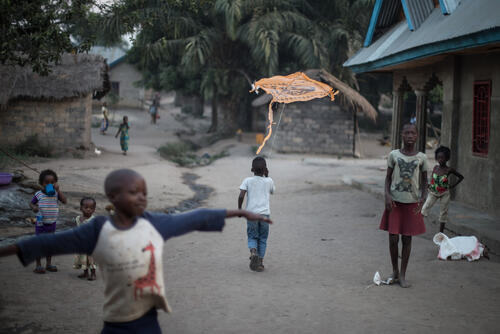
Children playing in the street
Democratic Republic of Congo

MSF denounces ongoing violence in Salamabila

Statement following further violence In Salamabila, Democratic Republic of Congo, where attacks on civilians and other human rights violations are frequent. Statement - 19 Nov 2020
 
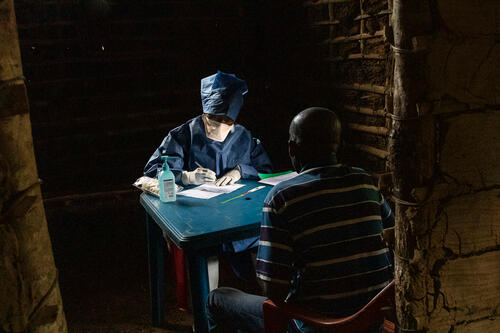
Dr Tathy, an MSF doctor, sees patients considered as non-Ebola suspects in consultation, as part of the mobile intervention clinic and training of local medical staff in the Ebola context, in the village of Bobua. This decentralization-based device aims to detect and isolate, if necessary, any person presenting symptoms close to Ebola (fevers, diarrhea, headaches, bleeding, etc.). But at the same time to treat other pathologies which are rife in the area, such as malaria or severe acute malnutrition. This is in order to increase the acceptance of MSF by the population in the area, and to avoid the stigmatization that affects Ebola patients, by getting as close as possible to the patients, and taking care of them where they live. Bobua.

***

Dr Tathy, médecin MSF, reçoit en consultation des patients considérés comme non suspects Ebola, dans le cadre des activités de clinique d'intervention mobile et de formation du personnel médical local en contexte Ebola, dans le village de Bobua. Ce dispositif axé sur la décentralisation, a pour but de déceler, et isoler le cas échéant, toute personne présentant des symptômes proches d'Ebola (fièvres, diarhhées, céphalées, saignements...). Mais de soigner en même temps d'autres pathologies qui sévissent dans la zone, telles que le paludisme ou la malnutrition aïgue sévère. Ceci afin d'augmenter l'acceptance de MSF par la population dans la zone, et d'éviter la stigmatisation qui affecte les patients Ebola, en se rapprochant au plus près des patients, et en les prenant en charge sur leur lieu de vie. Bobua.
DRC Ebola outbreaks

Improved medical response sees the end of DRC’s eleventh Ebola outbreak

Almost six months since the eleventh outbreak of Ebola was declared in DRC, new tools and an improved medical response have seen the epidemic come to an end. Project Update - 19 Nov 2020
 
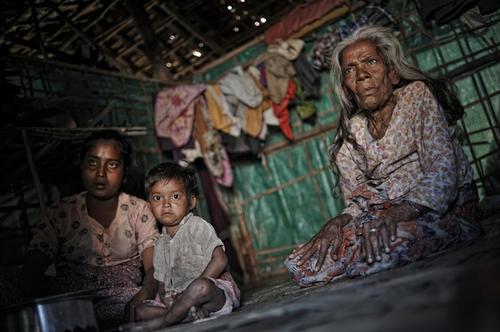
A family in their tent in a refugee camp on the outskirts of Sittwe, February 2, 2013. photo by Kaung Htet
MSF Speaking Out

MSF and the Rohingya 1992 - 2014

https://www.msf.org/sites/default/files/2026-04/VA_MSF%20and%20the%20Rohingya_1992_2014.pdf - 19 Nov 2020
 
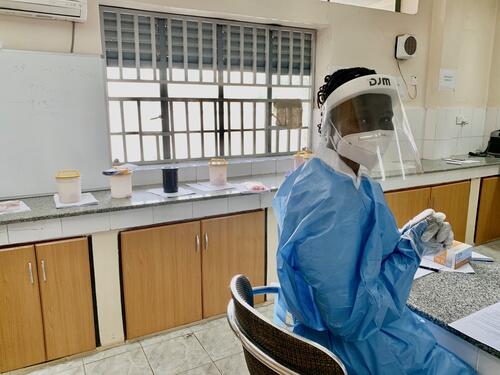
26-year-old biotechnologist Rebecca Achok, registers and codes samples of COVID-19 suspected cases in the National Public Health Laboratory (NPHL) in Juba. Rebecca is one of the eight biotechnologists of the NPHL’s reception area to where the samples are brought for testing from all over the country. After the samples are registered and coded, they are send to an extraction room where another technician will determine whether the sample is positive for COVID-19 virus.
Coronavirus COVID-19 pandemic

Governments must support landmark proposal to waive COVID-19 patents

MSF is urging all countries to join the 99 others who have expressed support for a landmark request to waive intellectual property on coronavirus COVID-19 drugs and vaccines, allowing for affordable access. Press Release - 19 Nov 2020
 
A family in their tent in a refugee camp on the outskirts of Sittwe, February 2, 2013. photo by Kaung Htet
MSF Speaking Out

MSF and the Rohingya 1992 - 2014

The case study "MSF and the Rohingya 1992 - 2014" brings to light two decades of MSF advocacy activities as part of its humanitarian assistance to the Rohingya people in Bangladesh and Myanmar and explores the questions and dilemmas the organisation was confronted with surrounding speaking out. Speaking Out Case Studies - 19 Nov 2020
 
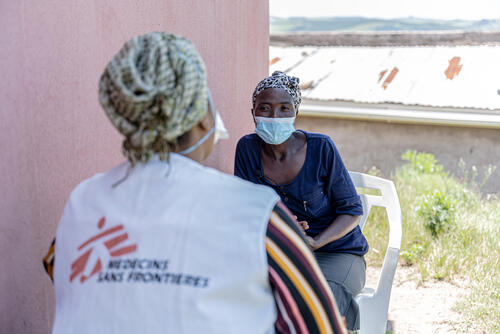
Phenduka Mtshali, a patient with Drug Resistant Tuberculosis (DR-TB), is seen at her home in Mbongolwane, South Africa speaking with MSF fieldworker, Jabulile. Phenduka lives in Mbongolwane a rural area of South Africa’s KwaZulu-Natal province at the epicentre of South Africa’s HIV & TB epidemic and where MSF is currently piloting a model of care aimed at upgrading the TB treatment cascade.

Everybody Breathes is a package documenting how the lessons learnt from the initial phases of the ‘Bending The Curves’ initiative in South Africa are now being used by MSF in Eshowe to tackle TB. The package will document interventions the project is putting in place in collaboration with its partners to prevent the spread of TB, provide a link for patients to get tested, locate missing cases and ensuring patients remain on treatment with structures that fit into their lives.

Under embargo until 24/03/2020.
Tuberculosis

Step up for TB report 2020

MSF and Stop TB Partnership present the 4th edition of the Step up for TB report, which surveys TB testing and treatment progress among 37 high TB-burden countries. Report - 16 Nov 2020
 
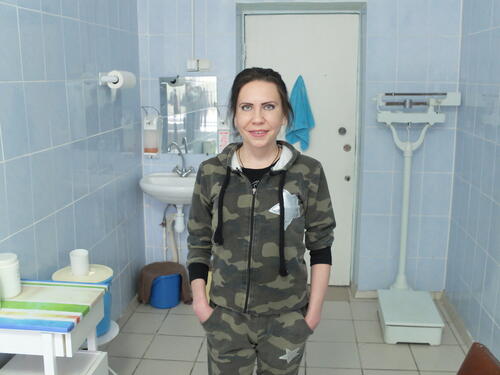
Svitlana was diagnosed with DR-TB two and a half months ago. Since starting treatment, she has already felt an improvement in her health.
Tuberculosis

MSF calls on governments and donors to speed up TB testing and treatment

A new MSF report shows that new drugs and testing for tuberculosis - the world's deadliest infectious disease - aren’t getting to people quickly enough. Press Release - 16 Nov 2020
 
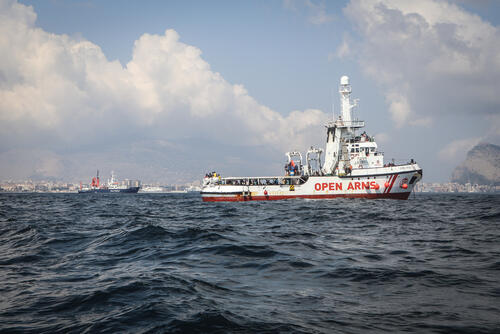
On the morning of September 17th, as Open Arms awaited instructions from authorities regarding the disembarkation of the 275 survivors rescued in the Mediterranean sea, more than 70 people jumped into the water in desperation. The Sea-Watch 4 was close by, at anchor outside the port of Palermo, and immediately responded by launching three RHIBs to provide assistance. MSF and Sea-Watch crews remained on scene until the situation stabilised.
Mediterranean migration

Carnage in the Mediterranean is the direct result of European state policies

Four separate shipwrecks in the central Mediterranean in less than 72 hours has cost the lives of more than 100 people - the result of EU migration policies. Press Release - 13 Nov 2020
 
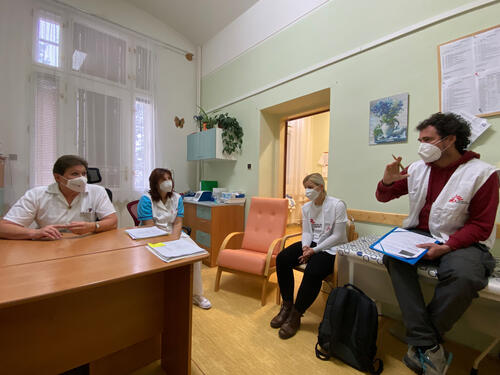
As a part of COVID-19 response in Czech Republic, MSF mobile team (consisted of a nurse and a logistician) visited care home in Božice, Southern Moravian region, Czech Republic. During the day, MSF staff with the care home's staff assessed and discussed improving IPC measures to protect clients of the home from COVID-19.
Coronavirus COVID-19 pandemic

MSF supports COVID-19 response in nursing homes in Czech Republic

MSF has started activities for the first time in the Czech Republic, where mobile teams are visiting nursing homes as part of the response to coronavirus COVID-19. Project Update - 13 Nov 2020
Four mothers posing in a corridor of the Hospital in Bili. All four of them are staying in the hospital with their child, that's suffering from a severe case of malaria. Since the beginning of the project in 2016, the pediatric ward already treated more than 4.000 cases of complicated/severe form of malaria.
Médecins Sans Frontières (MSF)

Independent medical humanitarian assistance

We provide medical assistance to people affected by conflict, epidemics, disasters, or exclusion from healthcare. Our teams are made up of tens of thousands of health professionals, logistic and administrative staff - most of them hired locally. Our actions are guided by medical ethics and the principles of independence and impartiality. We are a non-profit, self-governed, member-based organisation.

Learn more