



Ebola disease in DRC: find out how we're responding
Learn more
8000 Results
 
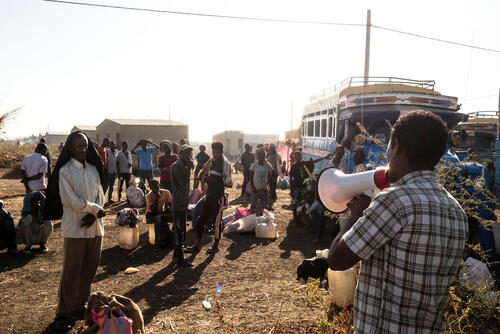
Refugees are getting ready to board the buses that will transfer them from Al Hashaba transit camp to Um Rakuba refugee camp.

Ethnic Tigray, Ethiopian, refugees who fled the central goverment's military offensive against what is perceived as separatism by the Tigray regional governement and its military branch TPLF.
When crossing into Sudan the refugees settle in unoccupied, unfinished houses at Al Hashaba Village 8, built for local Sudanese being resettled after the building of a Tekeze river dam.
Some Sudanese families and military live in the camp, village Al Hashaba.
The Sudanese governement tries to move the refugees into the Um Rakuba camp.
MSF runs the water supplies and has an emergency clinic in the camp.

SUDAN, Gedaref Region, Eastern border with Ethiopia/Tigray Region. Al Hashaba. 2020/12.
Ethiopia Tigray crisis

“Services for the refugees need to increase, otherwise it will be a disaster”

MSF’s acting emergency coordinator in Sudan describes the situation in Um Rakuba camp, where 15,000 people who fled violence in Ethiopia are sheltering. Voices from the Field - 23 Dec 2020
 
Neglected crisis in central Mali, and especially in Mopti region. In this area, an important humanitarian disaster and the harsh realities that populations face remain unknown to national and international public opinion. Civilians are abused and caught in fighting between different actors. Some of them are also target of daily attacks, sometimes suspected to have links with armed groups identified as terrorists as a result of counter terrorism. This explains why public health providers have reduced their activities or left the region, especially in rural areas where the armed conflict is at its most intense.
Mali

Central Mali: no choice but to flee

Civilians in central Mali face extreme violence every day and armed conflict has displaced many. They have limited access to basic services. Project Update - 22 Dec 2020
 
msf-placeholder
The knock-on effects of COVID-19

Page 4

msf.org - 21 Dec 2020
 
msf-placeholder
The knock-on effects of COVID-19

Page 3

msf.org - 21 Dec 2020
 
msf-placeholder
The knock-on effects of COVID-19

Page 2

msf.org - 21 Dec 2020
 
msf-placeholder
The knock-on effects of COVID-19

Page 1

msf.org - 21 Dec 2020
 
MSF has been working in the Amhara Region of Ethiopia since 1997. Activities started in the hospital in the town of Humera in Tigray region, on the border to Sudan, and in 2003 shifted to nearby farming town in Amhara region. The focus of MSF in the region is the treatment, diagnosis and prevention of kala azar and snakebite - two neglected tropical diseases. In the area MSF mostly treated migrant workers, who work barefoot on the vast farms during harvest season in one of the most fertile regions in northern Ethiopia. 

In early November, tensions between the national government in Addis Ababa and the northern region of Tigray escalated into a full-blown military conflict. One month into the conflict, the humanitarian situation continues to deteriorate. 

On 5 November 2020, our MSF team in the Amhara region heard shelling and bombing of the first military escalation. They quickly started to support a Ministry of Health-run health centre receiving an influx of war wounded from the border areas. In just a few hours, the team had to switch from our regular medical project activities to emergency medical assistance for treating wounded. Within only a week, our team treated 265 casualties, many of them with severe war injuries.
Ethiopia Tigray crisis

“They saw soldiers and civilians coming in, wounded or dead”

MSF and Ministry of Health staff in Ethiopia’s Amhara region, next to Tigray, treated many people with severe injuries. It deeply affected them. Project Update - 18 Dec 2020
 
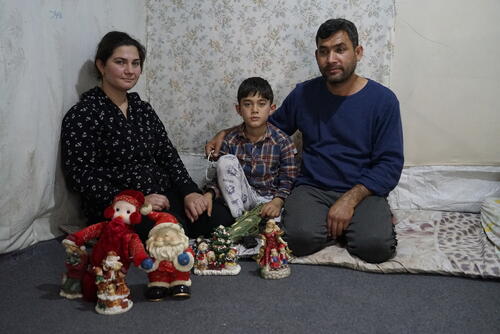
Harin Halil, a mother of two from Syria, is among the most severe patients of MSF in Samos.
“I became more scared in this camp. I was not like that before. I was not well but I wasn’t like now. I could talk, but now I cannot even talk in a normal way. Because of the fear I feel, every once in a while, I have a crisis (panic attack), for example when there is a fight in the camp, and that is happening very often, or when there is a fire in the camp, these incidents affect me a lot. I have deteriorated in here. During the last fire in Samos camp I felt like never left Syria. It was a very traumatic experience for me because the first time when Daesh attacked us, there were bombings and fire, so it reminded me a lot of what I experienced there.”
Greece

Alarming mental health distress among asylum seekers on Greek islands

Four months after the fire that destroyed Moria, 15,000 people are still trapped in inhumane conditions on Greece's islands. Project Update - 17 Dec 2020
 
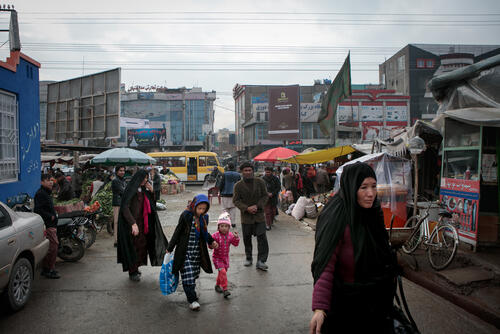
Streets and shops in Dahst-e-Barchi neighborhood.
Afghanistan

Patients face persistent insecurity amid “peace process”

Persistent insecurity remains a near-constant barrier to accessing healthcare in Afghanistan and has increased since the intra-Afghan talks in Doha began. Project Update - 16 Dec 2020
 
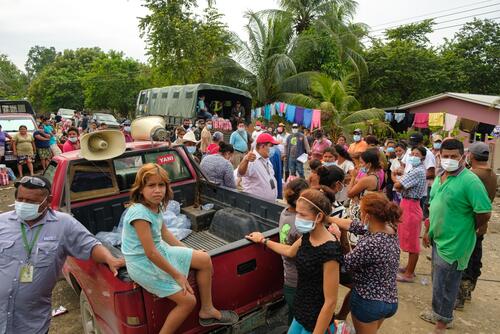
MSF’s response is being led by three multidisciplinary health teams, with a focus on community shelters and people living on the streets. In addition to this, the services in regular MSF projects, sexual and reproductive health in Choloma and comprehensive healthcare for survivors of violence in Tegucigalpa, are still active.

The teams have identified the lack of access to priority sexual violence comprehensive medical care inside the shelters, and MSF is the only organisation caring for mental health in Choloma for people affected by the hurricanes.
Honduras

MSF steps up medical care in response to humanitarian crisis in Honduras

Hurricanes Eta and Iota have left 250,000 people in Honduras with limited access to healthcare. Many health centres are closed or not fully operational. Press Release - 16 Dec 2020
Four mothers posing in a corridor of the Hospital in Bili. All four of them are staying in the hospital with their child, that's suffering from a severe case of malaria. Since the beginning of the project in 2016, the pediatric ward already treated more than 4.000 cases of complicated/severe form of malaria.
Médecins Sans Frontières (MSF)

Independent medical humanitarian assistance

We provide medical assistance to people affected by conflict, epidemics, disasters, or exclusion from healthcare. Our teams are made up of tens of thousands of health professionals, logistic and administrative staff - most of them hired locally. Our actions are guided by medical ethics and the principles of independence and impartiality. We are a non-profit, self-governed, member-based organisation.

Learn more