



Ebola disease in DRC: find out how we're responding
Learn more
2094 Results
 
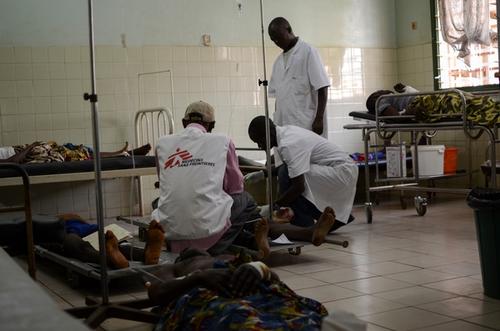
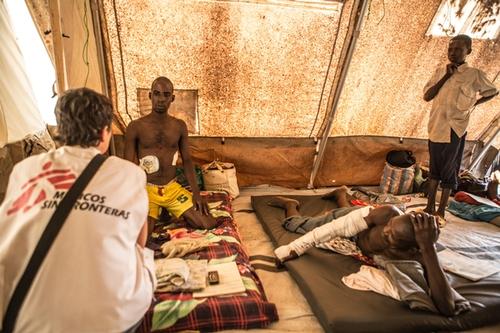
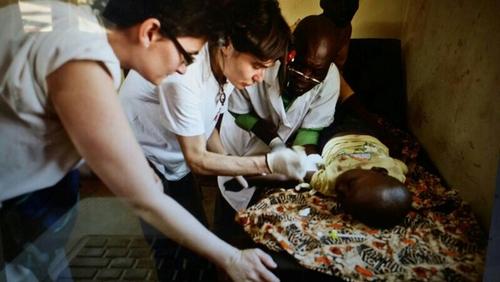
MSF doctor Christine Mimansha checks on a young patient in observation.

Two MSF emergency teams comprised of medics, logistics staff and water treatment specialists are running medical activities for people displaced by the recent fighting in Juba, the capital of South Sudan. An estimated 35,000 people fled to two UN compounds and to other gathering points around the city, seeking refuge from the intense fighting that erupted in Juba. After conducting an independent assessment of the needs, two MSF teams are working to address the medical needs of the displaced. "A few patients have direct violence wounds, such as gunshots, but the situation has calmed now in Juba and trauma medicine no longer seems to be the main need," says Forbes Sharp, MSF Emergency Coordinator in Juba. "The displaced people do not yet feel safe to return to their homes and they are unwilling to cross town to seek healthcare in regular hospitals and clinics. So we are taking healthcare to them."
South Sudan

These people need assistance, more than ever

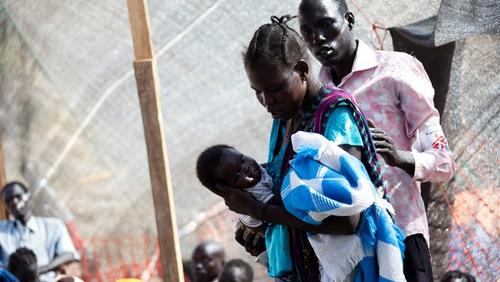
Christine Bimansha, a medical doctor from Congo, is one of MSF’s experienced emergency staff in South Sudan. She is currently working with the MSF team in the capital Juba, providing medical care in two UN (UNMISS) bases where 35,000 people have sought safety following a wave of violence. Voices from the Field - 29 Dec 2013
 
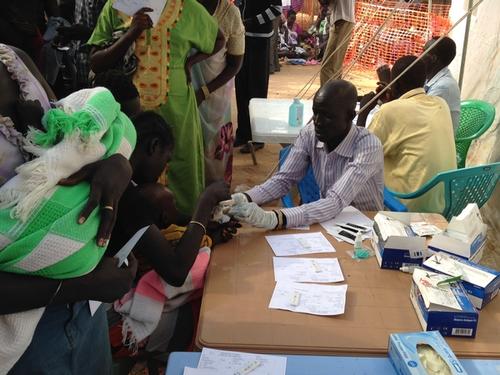
MSF nurse Carmelita gives an injection to treat a young patient with malaria.

Two MSF emergency teams comprised of medics, logistics staff and water treatment specialists are running medical activities for people displaced by the recent fighting in Juba, the capital of South Sudan. An estimated 35,000 people fled to two UN compounds and to other gathering points around the city, seeking refuge from the intense fighting that erupted in Juba. After conducting an independent assessment of the needs, two MSF teams are working to address the medical needs of the displaced. "A few patients have direct violence wounds, such as gunshots, but the situation has calmed now in Juba and trauma medicine no longer seems to be the main need," says Forbes Sharp, MSF Emergency Coordinator in Juba. "The displaced people do not yet feel safe to return to their homes and they are unwilling to cross town to seek healthcare in regular hospitals and clinics. So we are taking healthcare to them."
South Sudan

MSF teams treat people affected by violence in Malakal and Lankien

As clashes continue in South Sudan, MSF calls on all actors to respect the right to medical assistance Project Update - 27 Dec 2013
 
msf-placeholder
South Sudan

MSF responds to fast-evolving violence

Medical teams extremely concerned for those affected by the fighting Project Update - 23 Dec 2013
 
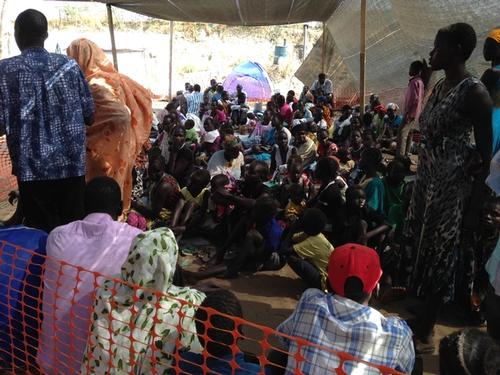
Waiting area and triage at the UNMISS camp, Juba.

Two MSF emergency teams comprised of medics, logistics staff and water treatment specialists are running medical activities for people displaced by the recent fighting in Juba, the capital of South Sudan.  An estimated 20,000 people fled to two UN compounds and to other gathering points around the city, seeking refuge from the intense fighting that erupted in Juba. After conducting an independent assessment of the needs, two MSF teams are working to address the medical needs of the displaced.  "A few patients have direct violence wounds, such as gunshots, but the situation has calmed now in Juba and trauma medicine no longer seems to be the main need," says Forbes Sharp, MSF Emergency Coordinator in Juba. "The displaced people do not yet feel safe to return to their homes and they are unwilling to cross town to seek healthcare in regular hospitals and clinics. So we are taking healthcare to them."
South Sudan

MSF emergency teams begin mobile clinics in Juba

Project Update - 22 Dec 2013
 
A family of Syrian refugees living in Istanbul. Photo for the Syrian Exodus project.
Syria

Syrian Exodus: Born in exile

This is the second chapter of the Syrian Exodus, an MSF multimedia project to follow the route of Syrians fleeing the war. See chapter one and three. Project Update - 20 Dec 2013
 
Emergency room of an MSF hospital in northern Syria (Aleppo province). The hospital has attended 601 deliveries and provided almost 15,000 consultations and 446 surgical operations up to April 2013. It is focused on obstetric care and surgery. Photo for the Syrian Exodus project.
Syria

Chapter One: “Fear is inside your body, like an illness”

Chapter One of the Syrian Exodus series Project Update - 20 Dec 2013
 
Young man holding his luggage on his back and walking up the hill to get to the transition area where he'll be registered as refugees in Iraq. He will then be transported to one of the different refugee camps scattered in Iraq.
Syria

Urgent need for cross-border aid

Greatly increased humanitarian aid must be delivered across Syria’s borders, urges MSF in an open letter. Press Release - 18 Dec 2013
 
Dar al Shifah hospital *** Local Caption *** Aleppo (eastern part of the city held by the armed opposition), December 2012, after several months of intense fighting.
Syria

MSF calls on all parties to end targeting of schools and hospitals

MSF calls on both sides in the Syrian civil war to cease targeting schools and hospitals Press Release - 17 Dec 2013
 
People listening to health talk at the hospital in Bossangoa, CAR. The new wave of violence that is engulfing the Central African Republic has left tens of thousands of displaced people and many wounded. More than 30.000 are sheltered in precarious conditions in different locations in Bossangoa and in Bouca and the majority of towns in the area of Bossangoa are completely deserted. MSF providing emergency medical care at Bossangoa hospital, as well as emergency humanitarian support in three makeshift camps.
Central African Republic

Bossangoa remains tense as MSF teams provide emergency medical care

Voices from the Field - 17 Dec 2013
Four mothers posing in a corridor of the Hospital in Bili. All four of them are staying in the hospital with their child, that's suffering from a severe case of malaria. Since the beginning of the project in 2016, the pediatric ward already treated more than 4.000 cases of complicated/severe form of malaria.
Médecins Sans Frontières (MSF)

Independent medical humanitarian assistance

We provide medical assistance to people affected by conflict, epidemics, disasters, or exclusion from healthcare. Our teams are made up of tens of thousands of health professionals, logistic and administrative staff - most of them hired locally. Our actions are guided by medical ethics and the principles of independence and impartiality. We are a non-profit, self-governed, member-based organisation.

Learn more