


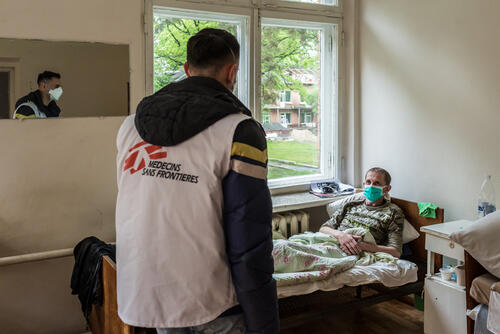
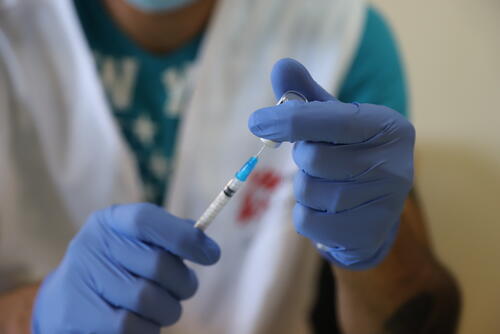
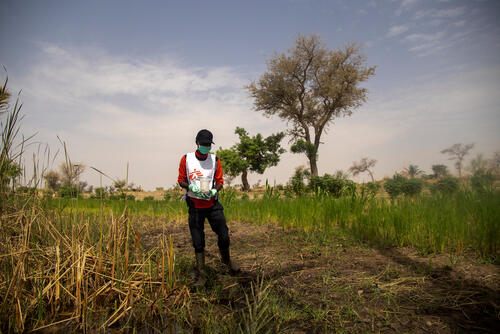

Ebola disease in DRC: find out how we're responding
Learn more
7997 Results
 
Boost hospital is the only referral hospital in the province and is a lifeline for those living in Helmand.  MSF supports the emergency room, surgical unit, inpatient department, maternity department, neonatology unit, laboratory and radiology department, as well as the 82-bed paediatric department. The hospital serves a population of around 1.3 million people and in 2020 provided over 110,000 consultations, assisted over 17,000 births and performed over 4,900 surgical interventions.
Afghanistan

As violence soars across Afghanistan access to healthcare is dangerously limited

MSF insists that all working medical facilities must be respected as fighting surges in Afghanistan and hundreds of thousands of people have fled their homes, while many others have been killed or wounded. Project Update - 10 Aug 2021
 
The Turquesa River flows through the village of Bajo Chiquito, in the Emberá-Wounaan comarca, or indigenous region, of Panama. Bajo Chiquito is one of the first populated places on the Panamanian side of the Darien Gap, a dangerous 60-mile (97-kilometer) stretch of roadless land that connects the North and South American continents between Panama and Colombia. Migrants heading north must travel for days through the jungle. They arrive in Bajo Chiquito either on foot, or, if they can pay a fee, by canoe for the last leg of the trip. Those piloting canoes have also rescued people in the jungle who were unable to continue the journey. Migrants arrive in Bajo Chiquito by the hundreds on a weekly basis.

El río Turquesa a su paso por el pueblo de Bajo Chiquito (comarca Emberá-Wounaan), en Panamá. Las personas migrantes que cruzan el peligroso Tapón del Darién, de Colombia a Panamá, llegan a Bajo Chiquito por decenas y centenares de forma diaria después de haber superado la selva. Llegan o bien caminando penosamente, o bien en ocasiones pagando un pasaje en piraguas capitaneadas por vecinos, que también tienen que realizar rescates de gente incapaz de seguir avanzando por la selva, a 3 o 4 días todavía de la población y cuyas vidas corren peligro.
Central American migration

COVID-19 forces thousands of migrants to cross perilous jungle from Colombia to Panama

As COVID-19 forces people to risk their lives while crossing the Darién jungle from Colombia to Panama in search of safety, MSF calls for the protection of migrants and safe routes for those making the journey. Project Update - 5 Aug 2021
 
Commune of Ranobe, Amboasary District.

People in the south-east of Madagascar are facing the most acute nutritional and food crisis the region has seen in recent years. MSF began setting up mobile clinics in Amboasary district in late March to screen and treat acute malnutrition in remote villages like those of Ranobe commune, providing ready-to-use therapeutic food and medical care.
Cameroon

Doctors Without Borders forced to withdraw medical teams from North-West Cameroon

After eight months of our activities being suspended by the Cameroonian authorities, we have been forced to withdraw teams from the North-West region while violence continues to divide the country. Press Release - 3 Aug 2021
 
The Gemmayze area of Beirut, once packed with bars, cafes, galleries and other businesses, was heavily damaged by the blast that annihilated the nearby port area on August 4.
Lebanon

Beirut one year after the blast: Economic crisis and COVID-19 create the perfect storm

One year after the blast in Beirut ripped apart the city and left a country already in crisis on its knees, people continue to struggle with the added pressure of COVID-19, a lack of healthcare and an economic crisis. Project Update - 3 Aug 2021
 
July 2021 marks the 10th birthday of South Sudan – the world's youngest country . In 2019, illustrator Ella Baron visited the town of Pibor to document the lengths that some mothers must go to reach maternity care in this part of the world.

The birth story of Maria and her mother Laito unravels as an extraordinary race with life-or-death stakes.

It is not, however, extraordinary at all. Their experience is a commonplace reality in areas of South Sudan where infrastructure is limited and where seemingly simple things can quickly become desperately complicated. The consequences of decades of violence are all around.

Having access to medical assistance in childbirth is important wherever you are in the world as complications can require specialist medical intervention to save the lives of both mother and baby. 

In 2020, of approximately 2,300 health facilities in South Sudan, more than 1,300 were non-functional.

Fewer than half of South Sudanese people live within five kilometres of a functional health facility. 

MSF is doing its part to help, and in 2020 MSF teams assisted 13,400 births in South Sudan.
South Sudan

South Sudan: The long walk for new life

This month, South Sudan – the world's youngest country – marks its 10th birthday. In 2019, illustrator Ella Baron visited the town of Pibor to document the lengths that some mothers have to go to reach maternity care in this part of the world. Voices from the Field - 2 Aug 2021
 
MSF Emergency room supervisor Masood Khan treats a patient for a gunshot wound at the Boost hospital. Helmand province, Afghanistan
Afghanistan

Intense fighting causes severe trauma casualties in Lashkar Gah, Afghanistan

Despite an increase in violence, MSF-supported Boost hospital remains operational in Lashkar Gah, Afghanistan, as trauma needs have significantly increased over the past week. Project Update - 2 Aug 2021
 
MSF’s al-Wahda post-operative hospital in East Mosul
Iraq

Dire needs for healthcare remain years after Battle of Mosul

Years after the battle against the Islamic State group ended in Mosul, Iraq, the city’s health system has not yet recovered - in response MSF has been providing comprehensive post-operative care to patients from the city and surrounding areas.  Project Update - 29 Jul 2021
 
Doctors Without Borders medical staff conduct their rounds in Mamfe District Hospital, South-West Cameroon.
Cameroon

Access to healthcare in Cameroon severely limited as violence and unrest rule

As the political crisis that divides Cameroon continues and access to healthcare has become ever more evasive, MSF’s ambulance service remains an essential lifeline. Project Update - 29 Jul 2021
 
A health worker wears the personal protective equipment before entering the control area of the MSF care center for mild and moderate cases of COVID-19 in São Gabriel da Cachoeira. The facility was specifically adapted to suit local traditions; over 90 percent of the population of São Gabriel da Cachoeira is of indigenous origin. In the care centre, for example, indigenous patients with COVID-19 can remain for the duration of treatment with a carer, something that is not usually allowed in hospitals. Hammocks are available for patients and companions. In addition, traditional medicines used by many people in the region are accepted at the centre and can be taken together with the treatment offered by MSF, as long as their combination does not cause any adverse effects. Shamans, spiritual leaders of indigenous communities, can visit and perform rituals. The only requirement is that they use personal protective equipment to avoid being contaminated while in contact with the patient.
Activity Report

International Activity Report 2020

Read MSF's comprehensive report of medical activities in 88 countries around the world in 2020, together with feature articles, facts and figures. Report - 28 Jul 2021
 
MSF Pharmacy Technician Toueng Sreymon distributes Hepatitis C meds at the MSF Hepatitis C clinic at Preah Kossamak Hospital in Phnom Penh, Cambodia, 18, April 2017.
Hepatitis C

Public health partnership launched to tackle silent epidemic of hepatitis C

MSF is launching a public health programme with partners to tackle the silent epidemic of Hepatitis C in low- and middle-income countries.

Press Release - 27 Jul 2021
Four mothers posing in a corridor of the Hospital in Bili. All four of them are staying in the hospital with their child, that's suffering from a severe case of malaria. Since the beginning of the project in 2016, the pediatric ward already treated more than 4.000 cases of complicated/severe form of malaria.
Médecins Sans Frontières (MSF)

Independent medical humanitarian assistance

We provide medical assistance to people affected by conflict, epidemics, disasters, or exclusion from healthcare. Our teams are made up of tens of thousands of health professionals, logistic and administrative staff - most of them hired locally. Our actions are guided by medical ethics and the principles of independence and impartiality. We are a non-profit, self-governed, member-based organisation.

Learn more