



Ebola disease in DRC: find out how we're responding
Learn more
8005 Results
 
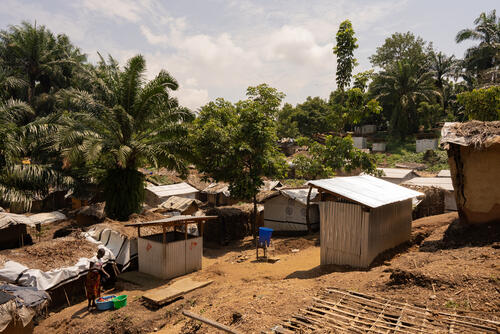
Section of the Ugudo Zii displaced people site, Angumu health zone.
Democratic Republic of Congo

Healthcare for the community by the community

As thousands of people have been displaced by natural disasters and violence in DRC, MSF is working with the community to ensure essential healthcare is still provided. Project Update - 3 Oct 2021
 
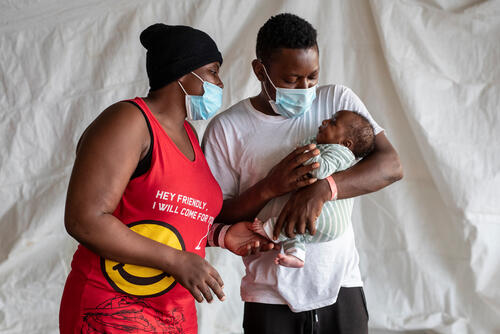
Baptiste* (24 years old), and Sophie* (27 years old), a couple from Cameroon, were rescued in September 2021 along with their 7-week-old baby, Bienvenu*. They undertook the perilous journey across the central Mediterranean to find a better place for Bienvenu to live. While safely on board the MSF-operated search and rescue vessel, the Geo Barents, they decided to share their story of a terrifying journey.

While on board the Geo Barents, Baptiste recounts the past months: “In 2021, Sophie and I arrived in Libya. I had never seen people behave in such an inhuman way. We have been treated worse than animals. En-route, I witnessed a lot of violence, sexual violence and group rape. We finally found a hangar in a neighborhood of the capital to live in. We found jobs, and we managed to eat something. These were really hard times, I felt desperately alone. I kept on living because of my family. 
During that period, I got kidnapped and detained in a small, isolated room. The kidnappers forced me to call my mother in Cameroon, to ask her to pay a ransom or I would die. My mother had to sell the small piece of land we had. It was the only thing she had left. After my family paid the ransom, they beat me again. I spent five days locked in that room before I got free. Eventually, some man dealt with them to get me out and he helped me afterwards, to take care of myself. 
I will always remember the day our child was born, on the 6th of August. My wife Sophie had to give birth to our baby at “home”, because access to health care doesn't exist in Libya for black people. I was treated like rubbish; a dog had more value than us. We had no other option than give birth at home. 
Sophie, the mother of the newborn, adds: “On the day of birth, I found myself without any medical care. During the whole pregnancy, I didn't even know whether my baby was in good health. I was frightened. The day of the birth a neighbour came to help me, but she was more nervous than me, her arms were shaking all the time. The birth was very hard. After Bienvenu's birth, we rarely went out as the risk of kidnapping was so high. My child didn't receive any medical attention. “
Baptiste finally tells us: “It was incredible when Bienvenu was born safely. Only God could do that. I saw with my own eyes this unbelievable thing. I cannot describe with words what I felt when I held him in my arms. I started working even harder to get some money for the medicines and the food for our baby. I worked on a construction site for a man. When I learnt this man was also sending people to Europe, I explained my situation to him, and he accepted to help us crossing at sea."
END

*This story was collected by MSF Communications Manager on board of the Geo Barents, in September 2021. 
* Names have been changed to protect the identity of the survivors 
* Photo credit: Pablo Garrigós Cucarella/MSF
Mediterranean migration

Stories of survival at sea

After two rescue operations, 60 people were successfully brought aboard the Geo Barents ship on 20 September. Some of the survivors shared their incredible stories. Voices from the Field - 1 Oct 2021
 
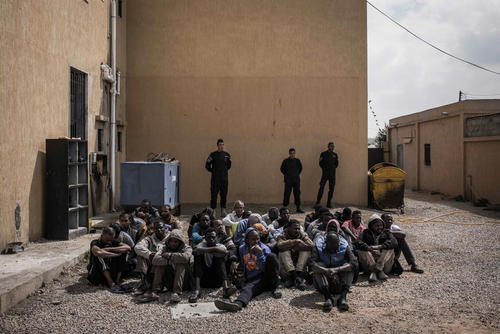
Men detained in Janzour detention centre, in the outskirts of Tripoli, Libya. Detainees spend days and months in Libyan detention centres, without knowing when they will be released.
Libya

Medical care resumes in Tripoli detention centres

Three months after we suspended our work in detention centres in Tripoli, Libya, over safety fears, our teams have returned to providing medical care to detained people after an agreement from Libyan authorities. Project Update - 29 Sep 2021
 
msf-placeholder
Access to medicines

Access to medicines project survey results

Results from the questionnaire and survey conducted on MSF's access to medicines project. Report - 29 Sep 2021
 
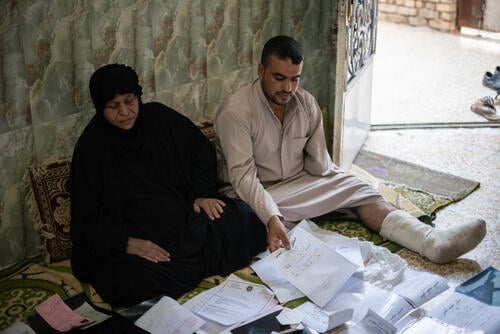
Hameeda and her son look at her medical files. She was diagnosed with tuberculosis 4 years ago, and since then had several treatment regimens, both injections and oral, and several relapses until she was cured with the new oral treatment for multidrug-resistant tuberculosis.
Al-Fathilia, Baghdad, Iraq.
---
Hamida's testimony:
---
My name is Hameeda, I am 65 years old and I am from Baghdad (Iraq). I am a mother of six daughters and three sons.

The first time I was diagnosed with tuberculosis (TB) was in 2015. At that time, we didn’t know what was wrong with me. I was coughing, had night-time fever and I wasn’t feeling well. My blood pressure and blood sugar were both high. When I went to seek medical advice I was told that I had had a light stroke, and I was given treatments to better control my hypertension and blood sugar as well as medications for the stroke. But the coughing and the night-time fever didn’t go away. 

I started noticing that I was coughing up sputum and my overall health was not improving. My son took me again to be seen by doctors, who then sent us to the National Tuberculosis Institute in Baghdad. There, I was diagnosed with TB. The medical team at the institute prescribed injections for me that made me tired and weak. 

When I first got the disease, the doctors told us that TB was an infectious disease and that I had to isolate from others. I stopped going out, visiting others or seeing anyone outside. I took my medications for about eight months, after which point the doctors told me that I was cured. However, since then, I have had three relapses. The last one was at the beginning of 2020. I was told that it was a drug-resistant form of the disease this time around and I was put on a new drug regimen which involved taking pills.

During my previous infections, I was treated with daily injectable medications, which were giving me many side effects. For example, my body was itching a lot and I had developed bruise marks on my skin. But since I started taking oral tablets, I feel better. The tablets still hurt my stomach, but they are much better and I have fewer side effects compared to the injections.

At the beginning of the treatment, I was very tired. I couldn’t walk or even move. My son was taking care of me and only with his help was I able to go to the National Tuberculosis Institute for check-ups. He is the only provider for the family, and it was a hard time for him too. Sometimes he would have to take me to private clinics for consultations for my other chronic conditions, which would also need medications that he had to buy, and they were not cheap. All of that prevented him from going to work and that in turn affected our livelihood. But now, after almost 18 months of taking medication, I’m thankful I have finished my treatment and got rid of the disease and its hardships. Now I am in a better health and I don’t need care from others.
Iraq

Tackling multidrug-resistant tuberculosis, one patient at a time

In Iraq, MSF has been working with the National Tuberculosis Institute to help cure patients with multidrug-resistant tuberculosis using an oral alternative to the painful daily injections that create severe side-effects. Project Update - 29 Sep 2021
 
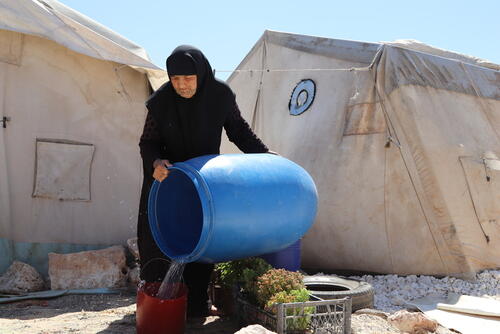
An old displaced woman filling a bucket with clean water provided by MSF in a camp in northwest Syria.
Syria

Northern Syria: Acute water crisis poses serious health risks

People are facing a desperate situation in northern Syria, as limited access to clean water has reached breaking point, creating health problems for millions of people displaced within the region. Project Update - 29 Sep 2021
 
Abortion is a common experience—people of all ages, ethnicities, nationalities, and religions decide to end their pregnancies for various reasons. Yet in many places across the globe, people who have abortions face harmful stereotypes, blame, and social stigma. Doctors Without Borders/Médecins Sans Frontières (MSF) provides safe abortion care and also treats people for the consequences of unsafe abortion, a leading cause of maternal mortality. When our teams talk to people who are deciding to have an abortion, we often hear their personal stories. To mark International Safe Abortion Day, September 28, we want to help break abortion stigma by sharing some first-person stories from women in the places where MSF works. We hear from people all over the world—from Colombia to the Democratic Republic of Congo, Greece to India, people of many religions, students, midwives, people with children, and some without children. MSF is committed to using our voice to ensure that people everywhere have access to safe abortion care. Safe abortion care is essential health care.
Safe abortion care

A revolution in safe abortion care

Self-managed abortion with pills could open up access and uphold autonomy for millions of people - a revolution in safe abortion care Opinion - 28 Sep 2021
 
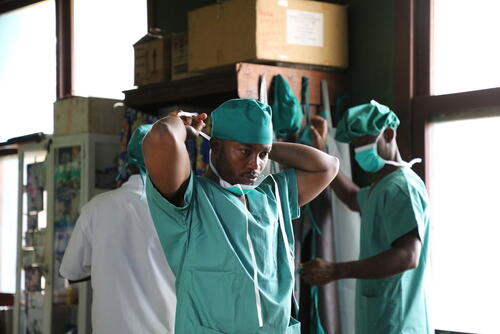
MSF doctor José Mbuta dresses up before entering the operating theatre of Popokabaka General Referral Hospital. 

From mid-July to mid-September, MSF emergency teams responded a typhoid outbreak in Popokabaka health zone, supporting treatment at the general hospital and in seven health centres, providing them with clean water, setting up sensitization activities and reinforcing epidemiological surveillance.
and reinforcing epidemiological surveillance.

In total, 2,180 patients were treated for typhoid fever and 20 surgical operations linked to complications of the disease were performed with MSF’s support. In addition to treating typhoid fever, the MSF team also operated on 11 people for surgical emergencies and treated more than 3,500 patients suffering from simple and severe malaria.
.
Democratic Republic of Congo

Deadly typhoid outbreak under control in Popokabaka

An outbreak of potentially deadly typhoid fever in Kwango province, DRC, has finally been brought under control with the help of an MSF emergency team.
Project Update - 24 Sep 2021
 
A 4-year-old Hala, Inside the MSF limb reconstruction unit at Al-Awda hospital, four-year-old Hala is taken to the operating theatre for her fifth surgery, since the car accident that crushed her foot on 14 July 2021.
Palestine

Treating child injuries in blockaded Gaza

Paediatric trauma care in Palestine: the story of four-year-old Hala's recovery at the Al-Awda hospital paediatric unit in northern Gaza. Photo Story - 22 Sep 2021
 
Mornings are the busiest time at the Regional TB Dispensary in Zhytomyr, Ukraine. MSF nurse Oleksandr Tkach along with dispensary staff start their day by preparing patient lists, joint meetings and visiting wards to consult patients with drug-resistant tuberculosis (DR-TB)
Ukraine

Fighting tuberculosis with medication, mental health and social support

For TB patients to get back on their feet and back to their normal lives, comprehensive treatment is needed, from all-oral courses of medication to mental health support. Project Update - 19 Sep 2021
Four mothers posing in a corridor of the Hospital in Bili. All four of them are staying in the hospital with their child, that's suffering from a severe case of malaria. Since the beginning of the project in 2016, the pediatric ward already treated more than 4.000 cases of complicated/severe form of malaria.
Médecins Sans Frontières (MSF)

Independent medical humanitarian assistance

We provide medical assistance to people affected by conflict, epidemics, disasters, or exclusion from healthcare. Our teams are made up of tens of thousands of health professionals, logistic and administrative staff - most of them hired locally. Our actions are guided by medical ethics and the principles of independence and impartiality. We are a non-profit, self-governed, member-based organisation.

Learn more