



Ebola disease in DRC: find out how we're responding
Learn more
4633 Results
 
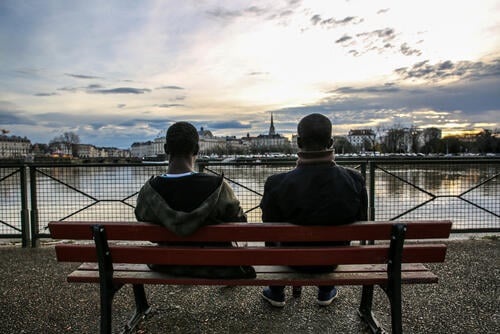
Migrants from Local Center are taking a rest in front of Adour river in Bayonne.

Des migrants logés dans le centre de transit de Bayonne se reposent face à la rivière Adour à Bayonne.
France

Migrants trapped in relentless cycle of rejection on French-Spanish border

Migrants and asylum-seekers crossing the border between Spain and France are frequently sent back to Spain by French police, leaving them helpless and vulnerable to people smugglers. Project Update - 6 Feb 2019
 
One of the CTC buildings in Abs.
Yemen

Unacceptable investigation findings into Abs health centre bombing

MSF is dismayed by several findings of the team appointed by the Saudi and Emirati-led Coalition (SELC) to investigate the bombing of an MSF cholera treatment centre in Abs, Yemen, on 11 June 2018. Press Release - 6 Feb 2019
 
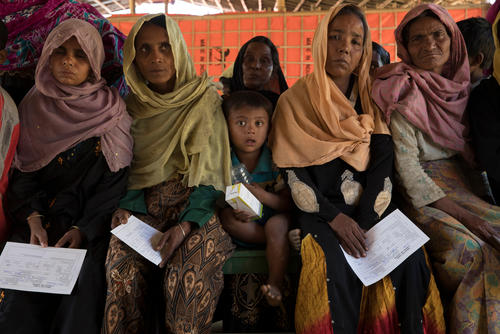
Patients wait for a consultation at MSF's primary health centre in Jamtoli.
Rohingya refugee crisis

The 5 things we've found after one million consultations in Cox’s Bazar

Between August 2017 and December 2018, MSF staff provided more than 1 million consultations to Rohingya refugees in Cox's Bazar, Bangladesh, after fleeing violence in Myanmar. Medical coordinator Jessica Patti reflects on the five things we've found in that time. Project Update - 5 Feb 2019
 
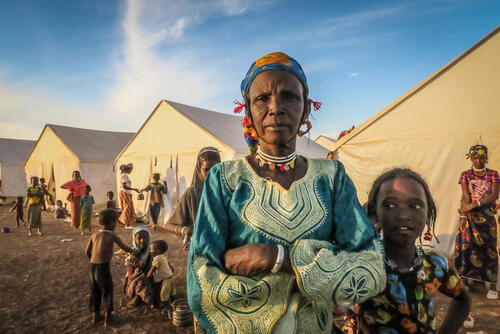
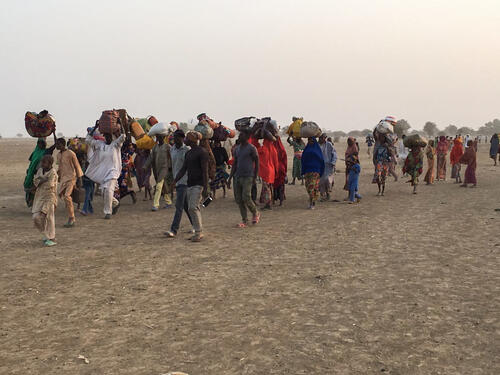
“We were seven women in the courtyard when we understood, by seeing the smoke coming from the burned houses, that massacres were happening. We ran away in the bush with our children to hide behind trees and we staid there 3 days. We walked more than 50km to arrive up to here. The village? I don’t want to hear about it anymore. Our husbands were killed. Our children’s notebook were all burnt.” Haibata /

« Nous étions sept femmes dans la cour lorsqu’on a compris que des massacres avaient lieu, à cause de la fumée qui venait des maisons brûlées. Nous nous sommes enfuies en brousse avec nos enfants pour nous cacher derrière des arbres, nous y sommes restées 3 jours. Nous avons marché plus de 50 km pour arriver jusqu’ici. Le village ? Je ne veux plus en entendre parler. Nos maris ont été tués. Les cahiers d’école de nos enfants ont tous été brûlés ». Haibata
Burkina Faso

Escalating violence leaves displaced with significant needs

In the wake of violence which has displaced thousands of people from northern Burkina Faso, water, hygiene and medical needs in camps are significant. MSF is providing help. Project Update - 31 Jan 2019
 
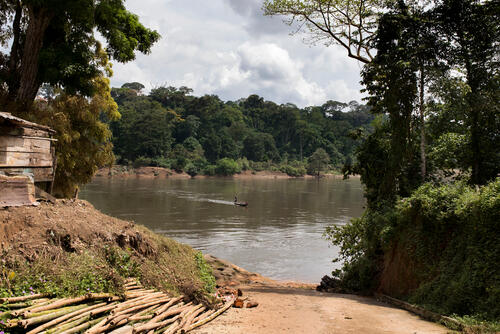
Cross River as it passes through Abgokim, in the border between Nigeria and Cameroon (in the other side of the river). Since internal unrest in the North West and South West regions of Cameroon intensified in late 2017, large numbers of refugees have crossed into Nigeria through border points like this. Around 30,000 Cameroonians are living in the villages, hosted by the local community.

Before the Cameroonian skirmishes, there used to be informal trade exchanges between both river banks, mainly fuel from Nigeria and food from Cameroon. Due to on-going unrest trade is minimal compounding difficulties faced by both host and refugee communities.
Nigeria

Cameroonian refugees in Nigeria

Tens of thousands of people flee the North-West and South-West regions of Cameroon to seek refuge in southern Nigeria’s Cross River State. Teams from MSF have launched an emergency response to provide aid to the refugees and the communities hosting them. Photo Story - 25 Jan 2019
 
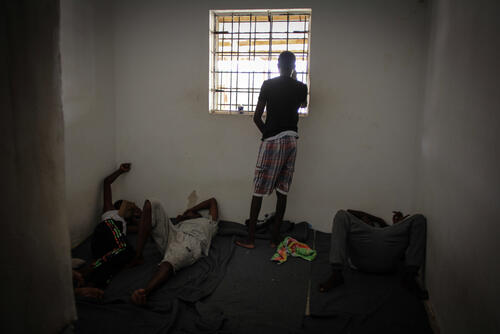
Men in the detention centre cells.

On September 2nd, 276 people were brought by the Libyan coast guard to Khoms (120 km east of Tripoli). They were then transferred to detention center where MSF works. Reportedly, they were in two rubber coats, one stopped due to engine failure, while the other boat continued to navigate for several hours before deflating and sinking. Survivors told MSF teams that over a hundred people died in the shipwreck.
Libya

Refugees returned to overcrowded Libyan detention centres

Over recent weeks, vulnerable refugees have been intercepted or rescued in the Mediterranean Sea and brought back to Libya - in violation of international law - and are now locked up in dire conditions in overcrowded detention facilities. Project Update - 23 Jan 2019
 
Mental health consultation in the MSF hospital in Nduta refugge camp, Tanzania.
Mental health

Displaced and distressed: people’s mental health in East Africa

MSF teams in Ethiopia, South Sudan, Sudan, Tanzania and Uganda are seeing the numbers of patients seeking treatment for mental health issues is increasing – in some cases even doubling – because of violence and displacement. Project Update - 22 Jan 2019
 
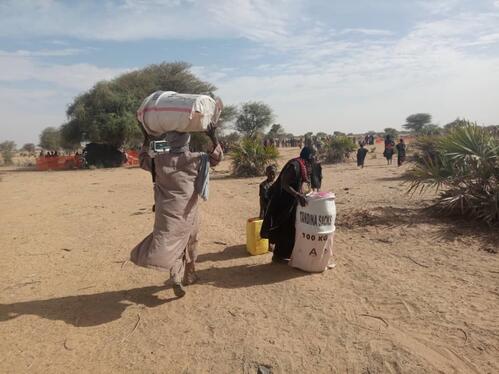
MSF carried out an emergency intervention in the rural area of Dessa, in Tillabéry region. Our teams assisted more than 1,280 displaced people, victims of double violence: community conflicts on the one hand and the threat of armed groups considered as jihadists on the other.
MSF carried out 170 primary health consultations, 20 prenatal consultations and 131 measles vaccinations for children. Our teams also distributed essential items (blankets, cooking utensils, washing kits, mosquito nets and jerry cans) to 220 families of displaced persons.
Niger

“These displaced people live in fear of being attacked at any time”

After increased insecurity in the Tillabéry region of Niger caused large numbers of people to flee their homes, MSF carried out an emergency response in early January 2019. Interview - 17 Jan 2019
 
January 15, 2018.
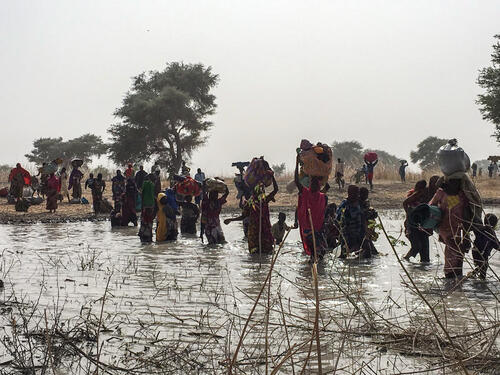
Some 8000 people who fled Rann after attack last night seek shelter in Bodo, Cameroon.
An MSF medical team arrived in Bodo today. There they found more than 8’000 people, (estimate) mostly women and young children. 1’200 people have been able to settle inland and more than 7’000 people are still at the river (border).  But people continue to arrive. They have no shelter, no fresh water and fled Rann with no belongings. The local community organized solidarity to provide them with some food. MSF teams are bringing medical supplies and are preparing to support the local health centre there. MSF teams are planning to return tomorrow with emergency food, shelter and a watsan team to support them. This is devastating news for the people in Rann who have already suffered so much.
Nigeria

Rann was attacked – and was left “like a graveyard”

MSF nurse Isa Sadiq Bwala describes what he saw in Rann, northeastern Nigeria, following a devastating attack on the town on 14 January. Voices from the Field - 16 Jan 2019
 
January 15, 2018.
Some 8000 people who fled Rann after attack last night seek shelter in Bodo, Cameroon.
An MSF medical team arrived in Bodo today. There they found more than 8’000 people, (estimate) mostly women and young children. 1’200 people have been able to settle inland and more than 7’000 people are still at the river (border).  But people continue to arrive. They have no shelter, no fresh water and fled Rann with no belongings. The local community organized solidarity to provide them with some food. MSF teams are bringing medical supplies and are preparing to support the local health centre there. MSF teams are planning to return tomorrow with emergency food, shelter and a watsan team to support them. This is devastating news for the people in Rann who have already suffered so much.
Nigeria

Thousands fleeing Rann attack seek refuge in Cameroon

A devastating attack on Rann, northeast Nigeria, has sent thousands of people fleeing across the border to Bodo, Cameroon, needing assistance with food, shelter, water and medical treatment. MSF teams have arrived in Bodo to provide help. Project Update - 16 Jan 2019
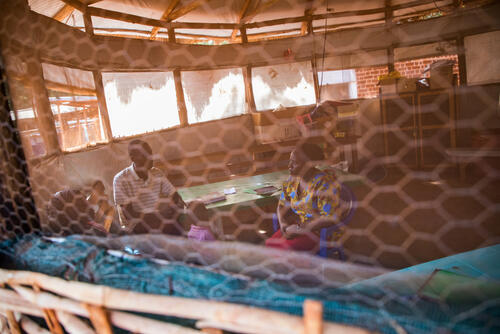
Four mothers posing in a corridor of the Hospital in Bili. All four of them are staying in the hospital with their child, that's suffering from a severe case of malaria. Since the beginning of the project in 2016, the pediatric ward already treated more than 4.000 cases of complicated/severe form of malaria.
Médecins Sans Frontières (MSF)

Independent medical humanitarian assistance

We provide medical assistance to people affected by conflict, epidemics, disasters, or exclusion from healthcare. Our teams are made up of tens of thousands of health professionals, logistic and administrative staff - most of them hired locally. Our actions are guided by medical ethics and the principles of independence and impartiality. We are a non-profit, self-governed, member-based organisation.

Learn more