



Ebola disease in DRC: find out how we're responding
Learn more
2094 Results
 
12 days ago, Mazen Abdu of Sa’ada, his wife and three children escaped Sa’ada on his motorbike. The family keeps the motorbike in the classroom where they live since they arrived Khamer.  
“When the airstrikes were so close from our house, we decided to go to a safer place and leave everything behind,” says Mazen. His only way to escape was his motorbike.
“The five of us travelled from Sa’ada to Khamer on this motorbike. We could only take 10 kilos of flower and a small blanket. Our trip from Sa’ada to Khamer was not easy. We spent two days and one night travelling. We did not have money to stay in a hotel or buy food and to crown it all, one of the motorbike’s tires was punctured. I was waiting hopelessly in the road with my family until somebody helped me fix it and we continued our way to Khamer. Some good people offered us food and hosted us in their home for the night.”
Mazen’s wife, Um Alia, said that her children were scared of the bombings that they lost their appetite and that when she tried to force her two daughters to eat when they were travelling, they both vomited. “My daughters were terrified by the sound of the bombings and were shivering.”
The family lives now in a classroom in one of Khamer schools. Some 500 IDP families live in public places and some of them live in tents.
“We left everything behind; our home, our neighbors, our life. In fact, I doubt there is life in Sa’ada and I still ignore what happened to our house.”
Yemen

Testimonies from displaced people in Khamer

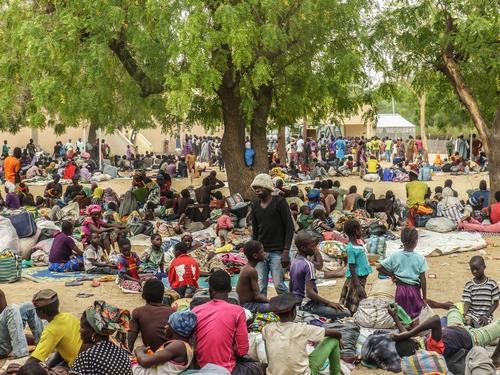
There has been an influx of IDPs from Sa’ada to Khamer, fleeing their homes due to the deteriorating situation and airstrikes in Sa’ada governorate. Many have been living with families in Khamer or in rented houses, while some occupy public places such as schools, and others live in tents on the outskirts of the town. Voices from the Field - 3 Jun 2015
 
An overview of Taiz during an airstrike.The situation in Taiz is extremely tense, with fighting continuing between different armed groups.
Yemen

“Many civilians are injured and killed by the ongoing crisis.”

Dr Ahmad Bilal, MSF’s medical coordinator in Yemen, describes the situation Voices from the Field - 3 Jun 2015
 
msf-placeholder
Yemen

Crisis update – 2 June 2015

In terms of access for humanitarian aid to Yemen, we have been able to send in staff and supplies by sea and air, but more is needed. Crisis Update - 3 Jun 2015
 
Dr. Claire Kilbride, MSF Physician, providing resuscitation education to the emergency room staff at MSF's hospital in Old Fangak, South Sudan.
South Sudan

A nurse in Old Fangak

Nurse Jillian Loveland on her second mission with MSF in Old Fangak, South Sudan. Voices from the Field - 1 Jun 2015
 
July 1995
Tuzla: Refugees from the Srebrenica enclave (women, children and elderly), just one day after it's fall.
Juillet 1995
Tuzla: Arriv e des r fugiers (femmes , enfants et vieillards) de l'enclave de Srebrenica le lendemain de sa chute.
MSF Speaking Out

MSF and Srebrenica 1993-2003

The case study ‘MSF and Srebrenica 1993-2003’ explores the constraints, questions and dilemmas raised when MSF spoke out about the events that occurred in Srebrenica’s Muslim enclave. The enclave was besieged in 1993 and then seized by Bosnian Serb forces in July 1995. 8,000 men and young men over the age of 16 were massacred, despite the presence of the United Nations Peacekeeping forces supposedly providing protection in what had been declared a "security zone". Speaking Out Case Studies - 1 Jun 2015
 
July 1995

Tuzla: Refugees from the Srebrenica enclave (women, children and elderly), just one day after it's fall.

Juillet 1995

Tuzla: Arriv e des r fugiers (femmes , enfants et vieillards) de l'enclave de Srebrenica le lendemain de sa chute.
MSF Speaking Out

MSF and Srebrenica 1993-2003

The case study ‘MSF and Srebrenica 1993-2003’ explores the constraints, questions and dilemmas raised when MSF spoke out about the events that occurred in Srebrenica’s Muslim enclave. The enclave was besieged in 1993 and then seized by Bosnian Serb forces in July 1995. 8,000 men and young men over the age of 16 were massacred, despite the presence of the United Nations Peacekeeping forces supposedly providing protection in what had been declared a "security zone". Speaking Out Case Studies - 1 Jun 2015
 
msf-placeholder
Ukraine

The Situation in Lugansk

One year after fighting broke out in eastern Ukraine, people living in the heavily affected Lugansk region are trying to slowly get life back to a sense of normality. Schools have reopened and teams of residents have come out on the first days of spring to sweep the debris of war in the streets. However, with the healthcare system under intense strain and medical supply lines cut or severely disrupted since last summer, people continue to struggle to access basic healthcare and medicines. Project Update - 28 May 2015
 
MSF Doctor Svetlana Niekurasa consults with Svetlana Vorobyeva, 74, who suffers from hypertension and is unable to go outside. Two MSF medical teams in Debaltseve are visiting at home elderly or sick patients who are too unwell or immobile to leave their home. <br> La médecin de MSF Svetlana Niekourasa vient voir Svetlana Vorobeva, 74 ans, qui souffre d’hypertension et ne peut sortir dehors. Deux équipes médicales de MSF font des visites à domicile pour les personnes âgées ou malades qui ne sont pas en état de sortir de chez elles.
Ukraine

Gallery: Medical care in Debaltseve

Photo Story - 28 May 2015
 
An aerial view of Dagahaley refugee camp, Dadaab, Kenya.
Kenya

MSF forced to close Dadaab health posts and evacuate staff amid escalating insecurity

As violence and threats in the northeastern province of Kenya escalate, international medical organisation Médecins Sans Frontières (MSF) has evacuated 42 of its staff from Dadaab refugee camps to Nairobi. Press Release - 28 May 2015
 
msf-placeholder
Kenya

MSF staff relocated following incidents in Dadaab

MSF can confirm that following a series of recent incidents in the area of Dadaab, 40 staff has been relocated to Nairobi. Statement - 27 May 2015
Four mothers posing in a corridor of the Hospital in Bili. All four of them are staying in the hospital with their child, that's suffering from a severe case of malaria. Since the beginning of the project in 2016, the pediatric ward already treated more than 4.000 cases of complicated/severe form of malaria.
Médecins Sans Frontières (MSF)

Independent medical humanitarian assistance

We provide medical assistance to people affected by conflict, epidemics, disasters, or exclusion from healthcare. Our teams are made up of tens of thousands of health professionals, logistic and administrative staff - most of them hired locally. Our actions are guided by medical ethics and the principles of independence and impartiality. We are a non-profit, self-governed, member-based organisation.

Learn more