



Ebola disease in DRC: find out how we're responding
Learn more
2094 Results
 
Lebanon, Beirut, 2026. Msf doctors during medical consultation in the Azarieh in central Beirut, where displaced families took shelter in an abandoned building.

With over a million people registered as displaced, Lebanon is facing a deepening humanitarian crisis. Thousands have fled their homes under threat of fire - often with nothing.
War and conflict

MSF’s response to war in the Middle East

MSF teams are responding to the war in the Middle East in Lebanon and Iran, and are preparing responses in other countries. Project Update - 11 May 2026
 
Through the shattered roads of southern Lebanon, our teams move between villages devastated by Israeli bombardment, this time in Jebshit, families return under a fragile “temporary ceasefire.”

Inside one mobile medical unit, care comes together: primary healthcare, essential medication, mental health support, and stress relief sessions, bringing not just treatment, but a sense of presence where it’s needed most.
Lebanon

A ceasefire in name only: People are still being killed by Israeli forces in southern Lebanon

MSF teams in southern Lebanon are working in hospitals, alongside the Ministry of Public Health, treating people who have been wounded during the ceasefire. Project Update - 6 May 2026
 
A Directorate of Health (DoH) laboratory technician runs a microscopic test on samples at MSF-supported Darat Izza Primary Healthcare Center. 
MSF concludes three years of support at Darat Izza Primary Health Care Center. Our teams supported the primary healthcare services, including consultations, sexual and reproductive health, emergency care, medicines, laboratory services, health education, and mental health support.
Syria

Syria: MSF concludes three years of support to Darat Izza healthcare centre

After more than three years of providing care to families in Darat Izza, northwest Syria, MSF concluded our work in the town’s healthcare centre in March 2026. Project Update - 6 May 2026
 
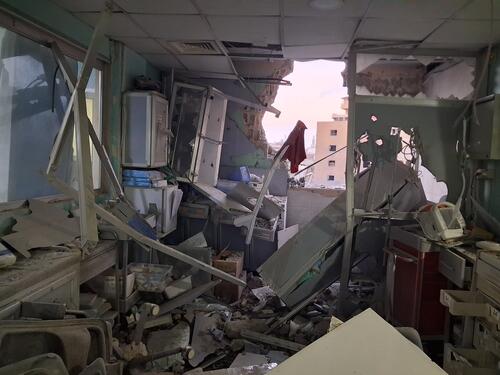
What remains of the pharmacy at Old Fangak now rusts away after it was destroyed in the 3 May 2025 bombardment.

On 3 May 2025, MSF hospital in Old Fangak, Jonglei State, was deliberately bombed by government forces, despite being clearly marked with MSF flags, and GPS coordinates shared with authorities. The attack began at around 4:30am, when two helicopter gunships first fired a missile on the pharmacy, burning it to the ground, before continuing firing on the town for the next 30 minutes. At approximately 7am, a drone bombed the Old Fangak market. At least seven people were killed, and 27 injured, including four MSF staff and two patients. 18 patients were receiving care during the time of attack.  Since late December 2025, at least 26 health facilities in Jonglei have reportedly been damaged or looted, alongside the seizure of humanitarian compounds and vehicles. 

This attack occurred in an increasingly volatile context, with rising tensions between government forces and opposition groups since late April 2025. Neighboring New Fangak fell under the government forces control, while the rest of Fangak County remained under opposition groups' control, creating a new frontline in Jonglei State.
Attacks on medical care

“Attacks on healthcare are today a standard feature of war”

Claude Maon, MSF's intersectional legal director, addressed the UN Security Council during an Arria formula meeting on the protection of medical care in armed conflict. Speech - 5 May 2026
 
Partial view of the Plaine SAVO (Fataki) displacement site. The shelters, mostly made of tarpaulins and makeshift timber, cover several hectares. Access to drinking water and sufficient food remains severely inadequate for the approximately 70,000 displaced people at the site.
South Sudan

DRC: New wave of violence deepens the humanitarian crisis in Ituri

Renewed fighting between the Convention for the Popular Revolution and the Armed Forces of the Democratic Republic of Congo is displacing hundreds of thousands of people, injuring civilians, and blocking access to care in Ituri, Democratic Republic of Congo. Project Update - 30 Apr 2026
 
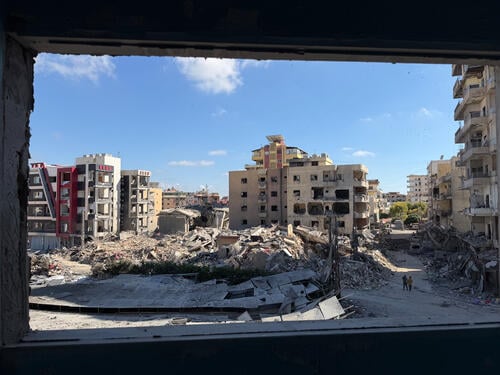
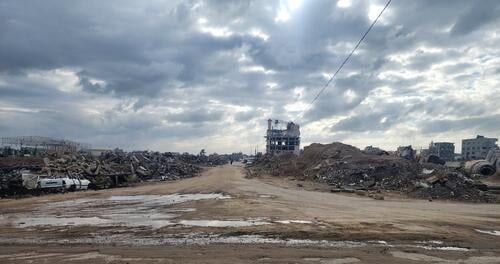
View of the seaside of Sour, southern Lebanon, and the destruction caused by the mass bombings during the 46-day period of Israel’s attacks in Lebanon.
Lebanon

Southern Lebanon after 46 days under continuous attacks by Israeli forces

In Sour, a city in southern Lebanon, MSF teams are working to bring care to families who lived under bombardment for almost two months. Project Update - 24 Apr 2026
 
The MSF hospital in Agok is the only facility providing secondary care in the entire Abyei region of South Sudan. This structure deals with emergencies, surgeries, treatments of HIV, tuberculosis, chronic diseases as well as neglected diseases, such as snake bites, a real scourge in the region. In 2019, in order to improve the quality of care, a radiology room was set up and the pharmacy was extended. A lack of specialized structures in the surrounding states forces some patients to travel very long distances to get to Agok hospital, some have to walk for up to 10 hours. This phenomenon illustrates the need for a comprehensive hospital in a country where health care is almost non-existent
Iran

Iran: Despite ceasefire, access to essential medical care remains fragile

MSF teams are working in South Tehran, Mashhad, and Kerman province in Iran, responding to people's growing medical needs. Project Update - 23 Apr 2026
 
Hanna Dudnyk, MSF emergency doctor, examines, Svitlana, 67, who was brought to the emergency room by ambulance with complaints of loss of consciousness, and severe pain. 

"Svitlana was already treated at this hospital with the same symptoms, but she needs more extensive diagnostics than this hospital can provide. We can see that the patient has lost a significant amount of weight in four months, which is alarming. But, of course, the hospital will provide all the necessary medical care here and now to stabilise the woman's condition," said Hanna Dudnyk.   

This is far from an isolated case in Mykolaiv region, in the south of Ukraine. People are admitted to hospital with complex conditions, stabilised, and recommended for further examination, but they are often unable to travel to hospital in nearest city like Mykolaiv due to financial difficulties, limited mobility, and fear of leaving their homes due to the possibility of shelling.
Ukraine

When chronic illness turns critical in Ukraine

In Ukraine, war-related insecurity and extreme stress are causing people to delay seeking medical care, leading them to develop preventable complications. Project Update - 21 Apr 2026
 
Displaced Palestinian family riding a tuktuk; coming back to settle in Beit Lahia city, north of Gaza strip.
Gaza-Israel war

Gaza, inside the war

This interactive feature compiles information and testimonies collected by Médecins Sans Frontières teams between 7 October 2023 and 1 January 2026, during the genocidal war waged by the Israeli army against the people of Gaza following the deadly attacks carried out by Hamas in Israel. MSF - 20 Apr 2026
 
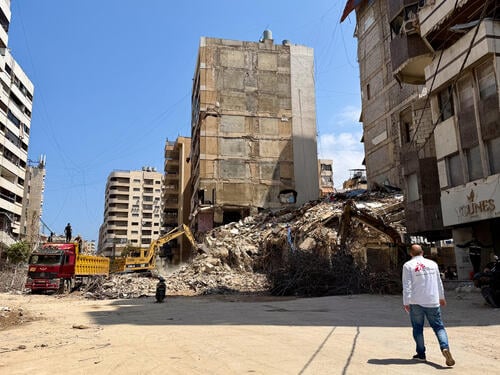
Following the announcement of a temporary ceasefire, the humanitarian and medical needs of hundreds of thousands of people in Lebanon remain overwhelming. In southern Beirut, people are moving back and forth between their shelters and homes, collecting what they can and preparing to return to the sites of displacement if the situation worsens. People, particularly in southern Beirut and south Lebanon, have lost their homes, livelihoods, and loved ones, and over a million have been forcibly displaced due to Israel’s continuous attacks.
While MSF teams across Lebanon are adapting their response and assessing needs as people continue to move across the country, we continue to call for an urgent scale-up of humanitarian aid and unhindered access of aid to people in need across the country.
Lebanon

Lebanon: Humanitarian scale-up urgently needed after almost two months of devastation

MSF teams in Lebanon are adapting our response across the country after a temporary ceasefire was announced between Israel and Lebanon. Statement - 17 Apr 2026
Four mothers posing in a corridor of the Hospital in Bili. All four of them are staying in the hospital with their child, that's suffering from a severe case of malaria. Since the beginning of the project in 2016, the pediatric ward already treated more than 4.000 cases of complicated/severe form of malaria.
Médecins Sans Frontières (MSF)

Independent medical humanitarian assistance

We provide medical assistance to people affected by conflict, epidemics, disasters, or exclusion from healthcare. Our teams are made up of tens of thousands of health professionals, logistic and administrative staff - most of them hired locally. Our actions are guided by medical ethics and the principles of independence and impartiality. We are a non-profit, self-governed, member-based organisation.

Learn more