



Ebola disease in DRC: find out how we're responding
Learn more
280 Results
 
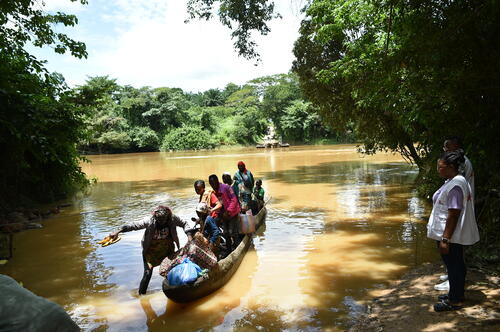
People getting out of a canoe after crossing the Rokel river, at Komrabai, Tonkolili District, Northern province of Sierra Leone. People from the communities on the other side of the river often have to cross it to access MSF-supported Integrated Community Case Management (ICCM) site in at Robis village, as well as the local market. 
MSF provides testing kits, medication and training to the Community Health Workers (CHWs) at Integrated Community Case Management (ICCM) in Robis village, as well as in 6 other villages in Tonkolili District, Sierra Leone. Patients with mild symptoms are treated at the ICCM sites while patients with severe symptoms are referred to the Magburaka Government Hospital supported by MSF.
Sierra Leone

Helping pregnant women access timely and quality maternity services

To address high maternal mortality rates in Sierra Leone, our teams are helping pregnant women access timely and quality maternity services by facilitating transportation and referrals. Project Update - 20 Sep 2023
 
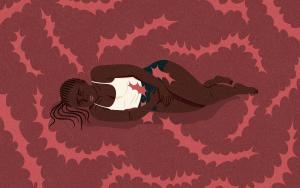
Abortion: women more at risk of death in fragile and conflict-affected settings
Women's health

Abortion: Women more at risk of death in fragile and conflict-affected settings

The AMoCo study assesses the extent and severity of abortion-related complications in hospitals located in fragile and conflict-affected settings. Project Update - 5 Sep 2023
 
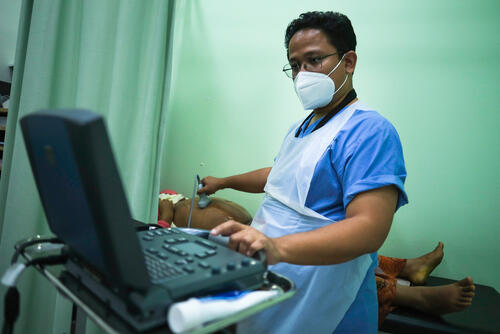
MSF’s Dr Muhammad Afiq Adnar performing an ultrasound scan on a pregnant woman from the Rohingya community who attends the MSF clinic in Butterworth, Penang.
Malaysia

Lack of maternal healthcare puts refugee women at risk in Malaysia

Access to maternal healthcare services for refugee women in Malaysia remains a challenge. Our teams provide sexual and reproductive healthcare services to refugee women at our clinic in Penang. Project Update - 19 Apr 2023
 
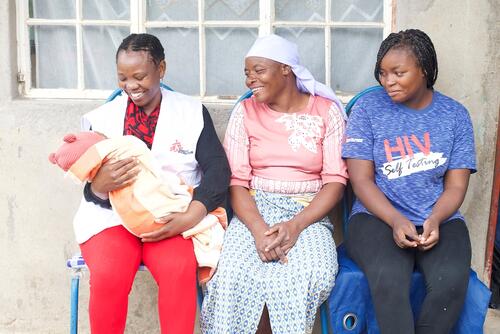
 MSF social worker Relative Chitungo welcomed Marvellous, right, the first day she stepped into MSF’s Edith clinic seeking support with her pregnancy in Mbare, Zimbabwe. © Dorothy Meck/Afro Vision Trust
International Women's Day

Overcoming taboos to ensure women's sexual health

On International Women's Day, we are championing women who support their communities to ensure everyone has access to sexual and reproductive healthcare. Project Update - 2 Mar 2023
 
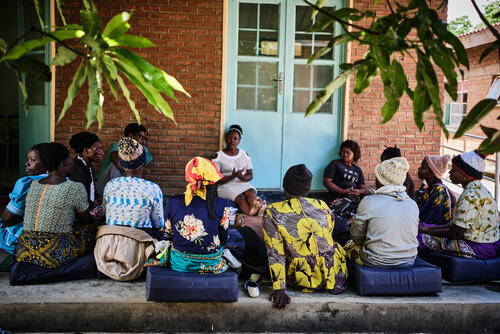
3. The high number of women dropping out of cancer treatment prompted MSF to seek strategies to get them to complete their treatment. In January 2021, patient support groups were created, a space where women can share their personal experiences of the disease.
Malawi

Three things to know about cervical cancer in Malawi

Malawi has the second highest prevalence and mortality rate of cervical cancer in the world. Our head of mission in Malawi explains what our teams are doing to prevent deaths related to the disease. Interview - 3 Feb 2023
 
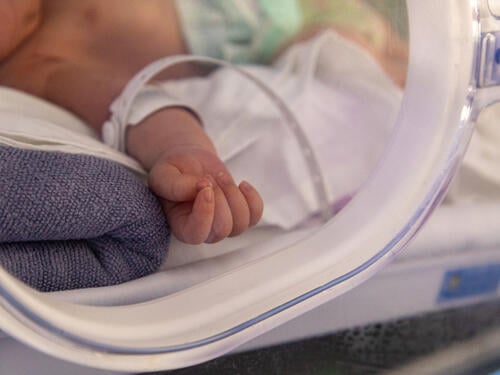
Close-up of an infant lying in an incubator in the neonatal ward of Al Jahmouri Hospital, in Taiz City, Yemen. Since May 2021, MSF together with the Ministry of Health (MoH) have been running the maternal and neonatal services in Al Jamhouri hospital (AJH), in Taiz City. MSF also offers technical support, financial incentives to Ministry of Health staff, medical and logistical supplies to run the maternity unit including services such as caesarean sections, antenatal (ANC) and postnatal care (PNC) for pregnant women, and neonatal unit for new-borns and infants.
Yemen

Giving birth in the face of persistent obstacles in Taiz

Access to vital healthcare services for pregnant women in Taiz, Yemen, remains a challenge due to years of war. Project Update - 1 Feb 2023
 
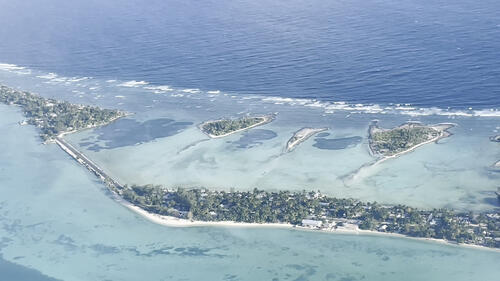
Médecins Sans Frontières/ Doctors Without Borders (MSF) officially launched medical activities in the equatorial Pacific island nation of Kiribati in October 2022. Our team there, including a paediatrician, midwife and general practitioner, support the Ministry of Health and Medical Services to improve maternal and neonatal health outcomes. 

Kiribati is among the most climate-vulnerable places on earth. The people of Kiribati (or i-Kiribati)'s fragile situation is threatened by a changing climate. 

Human health is dependent on the health and sustainability of the environment. Nowhere is this more evident than for people living within the constraints of an island. 

Seventy-five percent of deaths in the Pacific region are due to NCDs, and NCDs are now recognised as the leading cause of health problems in Kiribati. 

The rates of diabetes in Kiribati are high and increasing. Diabetes in pregnant women is of particular concern as the condition can be high risk for mums and babies, who require access to secondary (specialist) care for management during labour, delivery, and after birth. 

MSF’s work in Kiribati aims initially to improve diabetes detection and management and hypertension related to maternal health in the Southern Gilbert Islands, based at Tabiteuea North.
Kiribati

Planetary and public health collide in Kiribati

Kiribati, a group of Pacific islands, is extremely vulnerable to climate change. MSF teams have started working in the country given the challenges people have in accessing healthcare. Project Update - 19 Jan 2023
 
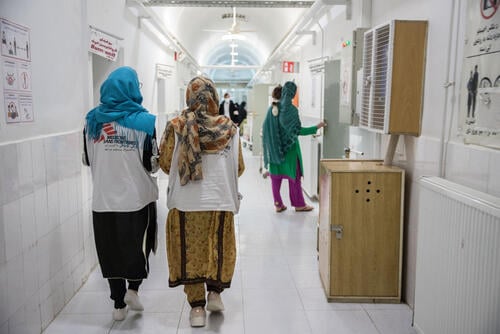
MSF staff walk down the corridor in the female inpatient department at the MSF-supported Boost hospital.
Afghanistan

Female Afghan healthcare workers hold fears for future following NGO ban

Following the ban imposed by the Taliban preventing women from working with NGOs, MSF female workers voice their fears for the future and their frustrations. Voices from the Field - 19 Jan 2023
 
MSF nurse Virginie Abdouramane (right), is talking to a patient at the MSF-supported maternity of the Community Hospital Centre (CHUC), Bangui, Central African Republic, 24 October 2022.
Central African Republic

The forgotten emergency of maternal healthcare in the Central African crisis

A lack of maternal and obstetric care is fuelling a healthcare emergency in Central African Republic. It is unacceptable that women’s and babies’ lives are being lost for reasons that are preventable. Project Update - 10 Jan 2023
 
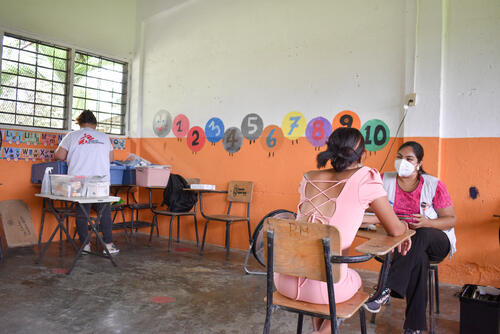
One of the Choloma mobile team doctors provides a follow-up consultation to a client in a classroom, at the Los Caraos community school. 

Una de las doctoras del equipo móvil de Choloma brinda una consulta de seguimiento a una usuaria en un salón de la escuela ubicada en la comunidad de Los Caraos.
Honduras

Addressing the dangerous gap in sexual and reproductive healthcare in Honduras

Due to a severe lack of sexual and reproductive healthcare in northern Honduras, pregnant adolescents cannot receive much-needed care. Our teams are empowering the community to bridge the gap. Interview - 2 Sep 2022
Four mothers posing in a corridor of the Hospital in Bili. All four of them are staying in the hospital with their child, that's suffering from a severe case of malaria. Since the beginning of the project in 2016, the pediatric ward already treated more than 4.000 cases of complicated/severe form of malaria.
Médecins Sans Frontières (MSF)

Independent medical humanitarian assistance

We provide medical assistance to people affected by conflict, epidemics, disasters, or exclusion from healthcare. Our teams are made up of tens of thousands of health professionals, logistic and administrative staff - most of them hired locally. Our actions are guided by medical ethics and the principles of independence and impartiality. We are a non-profit, self-governed, member-based organisation.

Learn more