



Ebola disease in DRC: find out how we're responding
Learn more
519 Results
 
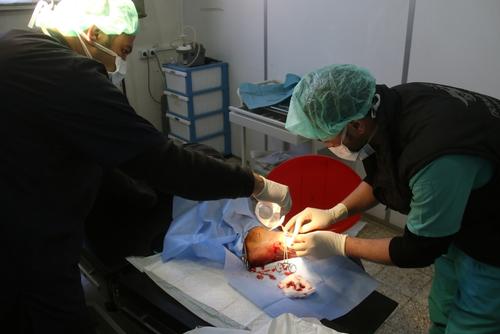
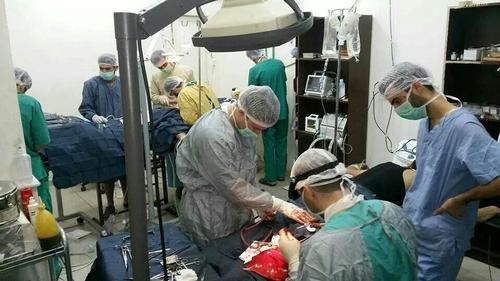
In this photo taken on March 17th, staff in MSF’s hospital in Azaz district, Aleppo governorate, northern Syria, disinfect a patient’s wound in. On April 18th MSF warned that the situation was critical for more than 100,000 people who were trapped by renewed fighting in the area, and called on all warring parties to respect civilians and health structures.
Syria

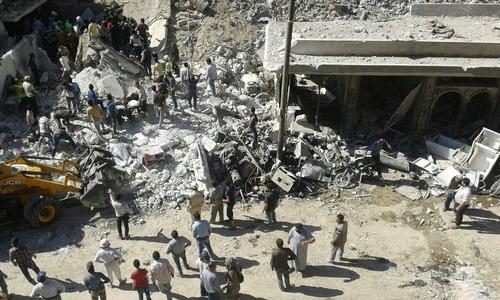
Airstrike destroys MSF-supported hospital in Aleppo killing 14

“This devastating attack has destroyed a vital hospital in Aleppo, and the main referral centre for paediatric care in the area,” said Muskilda Zancada, MSF head of mission, Syria. “Where is the outrage among those with the power and obligation to stop this carnage?" Project Update - 28 Apr 2016
 
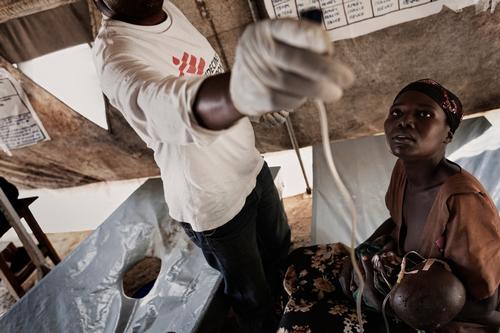
A mother and her child in the Cholera treatment Unit (CTU) of Bweru. The baby is receiving treatment.
Democratic Republic of Congo

MSF to resume medical humanitarian assistance in the Mweso health zone after 4 months absence

MSF is set to resume medical humanitarian activities in Mweso, four months after armed men attacked a convoy and abducted two of our staff members, forcing us to close our projects in the area. Press Release - 15 Apr 2016
 
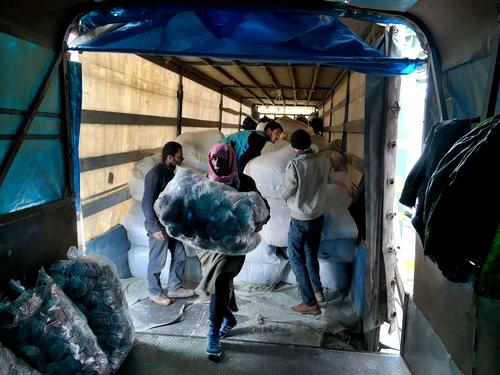
In January and February MSF teams were able to send 50 trucks with approximately 550 tons of drugs, medical material, shelters and non-food items to supported medical facilities and displacement camps in Aleppo citiy and its northern coutryside.
Syria

Despite cease fire catalogue of horror continues in besieged areas

Although the cease-fire and the humanitarian convoys have contributed to a decrease in humanitarian consequences of the conflict, the situation remains critical in many besieged areas. “The catalogue of horror continues virtually unabated in many besieged areas,” says Dr Bart Janssens, MSF Director of Operations. Project Update - 7 Apr 2016
 
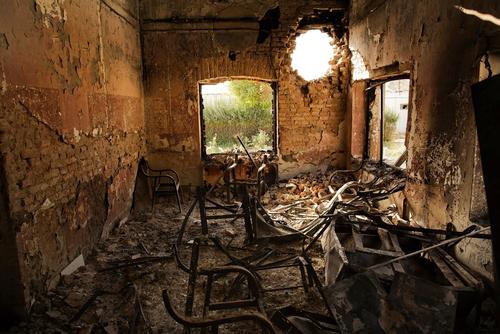
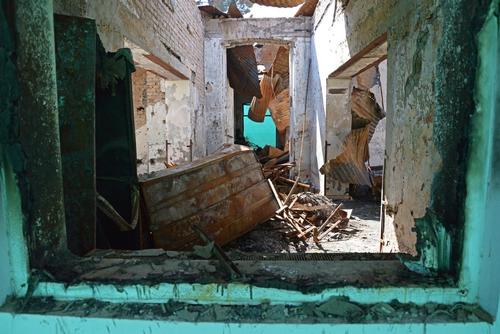
An interior view of the MSF Trauma Centre, 14 October 2015, shows a missile hole in the wall and the burnt-out remians of the the building aftera sustained attack on the facility in Kunduz, northern Afghanistan..
Kunduz hospital attack

This is my story

Voices from the Field - 3 Apr 2016
 
Interior of the Medecins Sans Frontiers (MSF) hospital in Kunduz, destroyed on the 3rd October 2016 in a sustained bombing attack by the US airforce on the facility.
Kunduz hospital attack

Kunduz: 6 months later

On 3 October 2015, MSF’s trauma hospital in Kunduz, Afghanistan, was destroyed by precise and repeated U.S. airstrikes. The attack killed 42 people, including 14 MSF staff members, 24 patients and four caretakers, and wounded dozens more. The facility was a fully functioning hospital at the time of the attack and was therefore protected under International Humanitarian Law. Project Update - 3 Apr 2016
 
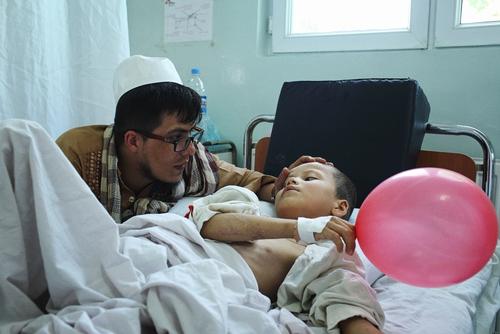
A young patient, whose leg was severly damaged when struck by shrapnel from a mortar, is visited by his father at Médecins Sans Frontières (MSF) Kunduz Trauma Centre where free treatment is provided to patients regardless of their political affiliation (ie. the side on which the fight in the war between the armed opposition group and Government forces) . MSF’s trauma  centre is the only facility of its kind in the whole north-eastern region of Afghanistan providing high level life- and limb-saving trauma care. MSF opened Kunduz Trauma Centre in August 2011 to provide high quality, free medical and surgical care to victims of trauma such as traffic accidents, as well as those with conflict related injuries from bomb blasts or gunshots.
Kunduz hospital attack

What has been lost

Voices from the Field - 3 Apr 2016
 
On 04 June, a missile strike hit a town centre in Idlib Governorate, northern Syria, and between 3pm and 7pm 130 wounded patients arrived at the small 12-bed facility. 80 were treated in the hospital, and 50 were referred to another medical facility as the nearest hospital became overwhelmed.  See the PR and the testimony for more info."
Syria

The fear is constant

Voices from the Field - 10 Mar 2016
 
Victims of a double-tap barrel bombing on Saturday 28 November on an Médecins Sans Frontières/Doctors Without Borders (MSF)-supported hospital in a besieged zone in northern Homs governorate, Syria, are treated .The bombing  caused seven deaths, the partial destruction of the hospital and an influx of 47 wounded patients needing to be transferred to nearby field hospitals, some of whom died en route.

The most critically wounded patients were transferred to three nearby hospitals. The 16 from the initial influx were immediately sent to one hospital. A second facility received 21 injured and four who arrived dead, having died on the journey, and the third facility received ten injured and one dead-on-arrival.
Syria

The feeling of powerlessness is excruciating, but I cannot abandon my people

An MSF-supported surgeon working in rural northern Homs governorate tells of the pervasive fear of permanent aerial threat, but also the commitment to stay and provide surgery. Voices from the Field - 9 Mar 2016
Four mothers posing in a corridor of the Hospital in Bili. All four of them are staying in the hospital with their child, that's suffering from a severe case of malaria. Since the beginning of the project in 2016, the pediatric ward already treated more than 4.000 cases of complicated/severe form of malaria.
Médecins Sans Frontières (MSF)

Independent medical humanitarian assistance

We provide medical assistance to people affected by conflict, epidemics, disasters, or exclusion from healthcare. Our teams are made up of tens of thousands of health professionals, logistic and administrative staff - most of them hired locally. Our actions are guided by medical ethics and the principles of independence and impartiality. We are a non-profit, self-governed, member-based organisation.

Learn more