



Ebola disease in DRC: find out how we're responding
Learn more
280 Results
 
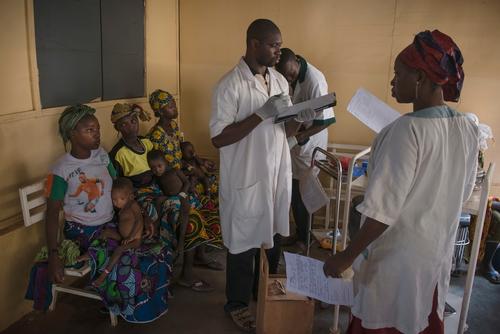
In southern Mali, children struggle with endemic malnutrition, the heavy toll of seasonal malaria, and other preventable diseases such as diarrhoea and lower respiratory tract infections. Since 2009, Medecins Sans Frontieres is partnering with the Ministry of Health to link prevention and treatment across community and hospital levels of care for the best outcomes for children under 5, in Koutiala. 
Koutiala is MSF’s most comprehensive paediatrics project, committed to strengthening prevention, early detection and diagnosis, as well as improving the quality and scope of care to treat the sickest children. It builds on the community-level “paediatric package”, addressing nutrition, vaccination, hygiene and health education via outreach and community health centres (CSCOM; currently 5) with the MSF-run paediatrics department within the Ministry of Health regional general referral hospital, Centre de Sante de Reference de Koutiala, or CSREF. In 2014 the hospital expanded to 200 beds.
Child health

A day in one of our largest paediatric programmes

Paediatrics advisor Dr David Green has recently arrived in Koutiala, southern Mali, on an extended visit to one of the largest paediatric programmes run by Médecins Sans Frontières (MSF). He describes a recent Monday working with national staff doctors, who share their wealth of experience in the six-year-old project. Voices from the Field - 11 May 2016
 
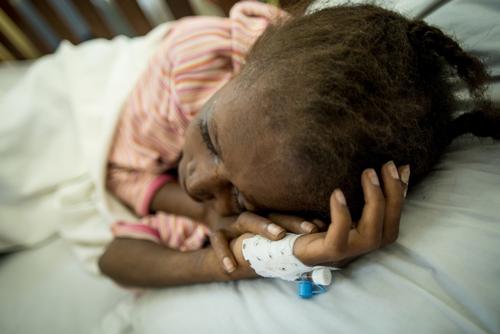
Elise, 12, is HIV positive and following a tough experience with ARV drugs she is suffering greatly.
HIV/AIDS

HIV in children is a symptom of the failures of the AIDS response

“The upcoming UN high level meeting on HIV/AIDS is a unique, and perhaps the last, opportunity to close the treatment gap, not only for children but also for all people living with HIV. Governments of countries left behind the HIV/AIDS response, particularly in West and Central Africa, should seize this chance to ask loud and clear an increased commitment from the international community to intensify the HIV response for people facing a deadly treatment gap”, says Dr Mit Philips, MSF’s health policy advisor. Report - 10 May 2016
 
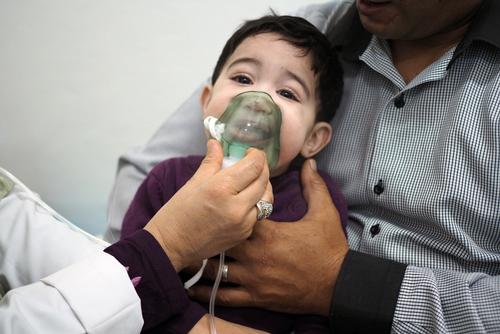
In the Jedi Ibrahim polyclinic, located in the old town of Zuwara. Sefaw, 9 months, and his father Sassi. "He caught cold and has small difficuties to breathe".
Libya

Hospitals closed or operating on a reduced schedule

Interview with Dr. Mego Terzian, President of Médecins Sans Frontières France, back from a site visit to Libya Interview - 27 Apr 2016
 
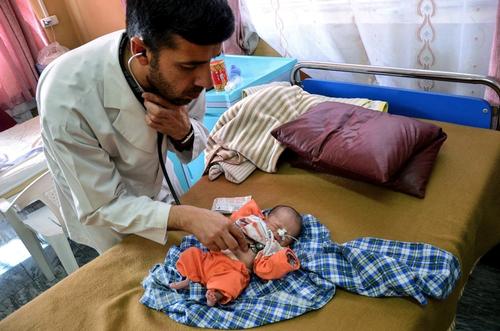
A Médecins Sans Frontières doctor listens to a premature newborn's chest, as part of the daily care and follow-up provided in the Kangaroo Mother Care unit. 

Un médecin MSF écoute la respiration d’un nouveau-né prématuré. Cela fait partie du suivi de routine dans l’unité kangourou. 

---Dasht-e-Barchi’s Kangaroo Mother Care Unit---
Afghanistan

Maternity service in the district public hospital of Dasht-e-Barchi

MSF's work in photos at the busy maternity service it runs in the district public hospital in Dasht-e-Barchi, one of the poorest neighbourhoods in Afghanistan’s capital Kabul. According to World Bank data, Afghanistan’s maternal mortality rate for 2015 was 396 per 100,000 live births. Photo Story - 26 Apr 2016
 
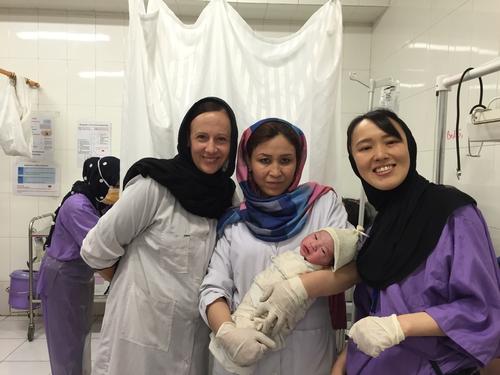
Women's Health Advisor and Midwife Kara Blackburn on the left, with colleagues Akila (Afghan national staff) and Etsuko (from Japan), on an assessment visit to MSF's comprehensive emergency obstetric and newborn care project in Dasht-e-Barchi in March 2016.
Afghanistan

The number of deliveries has doubled since the project opened

"I was asked to visit the Dasht-e-Barchi project because the number of deliveries has doubled since the project opened just over a year ago," says Kara Blackburn. "In the last 24 hours of my visit the team managed 60 deliveries – in any hospital this is a huge volume, and yet everyone kept up the pace; striving to provide a good quality of care. I was really impressed. The hospital I worked at in Australia would have struggled with such a workload." Voices from the Field - 26 Apr 2016
 
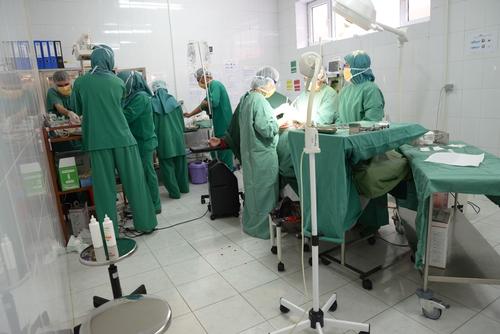
C-section performed on a patient.
Afghanistan

“A postpartum haemorrhage can happen to anyone”

In Dasht-e-Barchi, one of the poorest neighbourhoods in Afghanistan’s capital Kabul, MSF runs a busy maternity service in the district public hospital. Voices from the Field - 26 Apr 2016
 
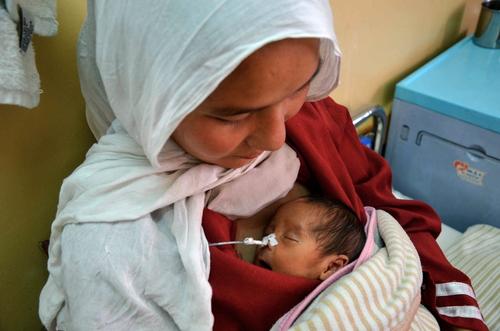
A new mother performs skin-to-skin care, which helps her pre-term baby grow by keeping it warm, promoting breastfeeding and bonding, and reducing the risk of infection.

Une mère pratique la technique « peau à peau » pour favoriser la croissance de son nouveau-né prématuré, en le maintenant au chaud. Cette technique permet aussi l’allaitement maternel et réduit les risques d'infection.
Afghanistan

Nurturing premature babies with their mothers’ embrace

Kangaroo Mother Care (KMC), or skin-to-skin care, is highly valued as a therapy that can benefit both mother and child. Dr Nikola Morton, paediatrician, and Laura Acheson, a neonatal nurse, were both passionate about consolidating skin-to-skin practice in Dasht-e-Barchi. They shared their experience of how skin-to-skin has become standard in MSF’s thriving Dasht-e-Barchi neonatal unit. Project Update - 26 Apr 2016
 
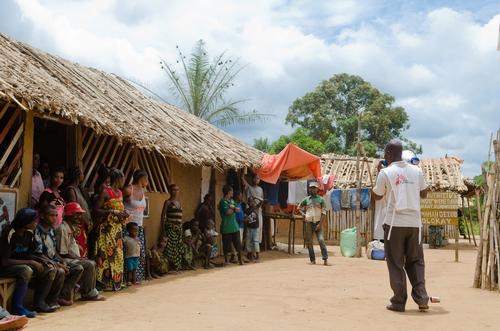
MSF health promotor during a session on sexual violence and sexually transmitted infections (STI) in Molokai village. The original inhabitants of the region are pygmies people.
Democratic Republic of Congo

In Mambasa, MSF teams provide care to four new rape survivors each day

“Our work involves changing mentalities to get rid of the taboo around sexual violence, and to be able to offer proper care to every victim,” says Mame Anna Sane, MSF medical team leader. “Of course there is a criminal and legal aspect to sexual violence, but for us it’s first of all a medical emergency.” Project Update - 25 Apr 2016
 
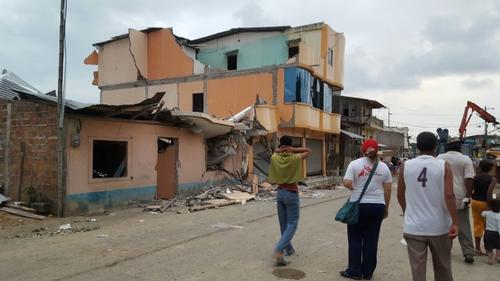
MSF teams currently responding to medical needs in Ecuador following the 7.8 magnitude earthquake which struck the northeast of the country on Saturday, April 16. According to the latest official figures, 525 people were killed in the earthquake.
Ecuador

People are very scared Many have had to leave their homes

"For now, the most critical needs are mental health support, and water and sanitation," says Concha Fernández, the project coordinator for two of the MSF teams currently responding to medical needs in Ecuador. "That’s why in the next few days, three psychologists and one logistician from the MSF team in Colombia will join us here. In Esmeralda, we will do small interventions in shelters in Chamanga, Muisne, Portete and Cabo de San Francisco." Crisis Update - 21 Apr 2016
Four mothers posing in a corridor of the Hospital in Bili. All four of them are staying in the hospital with their child, that's suffering from a severe case of malaria. Since the beginning of the project in 2016, the pediatric ward already treated more than 4.000 cases of complicated/severe form of malaria.
Médecins Sans Frontières (MSF)

Independent medical humanitarian assistance

We provide medical assistance to people affected by conflict, epidemics, disasters, or exclusion from healthcare. Our teams are made up of tens of thousands of health professionals, logistic and administrative staff - most of them hired locally. Our actions are guided by medical ethics and the principles of independence and impartiality. We are a non-profit, self-governed, member-based organisation.

Learn more