



Ebola disease in DRC: find out how we're responding
Learn more
519 Results
 
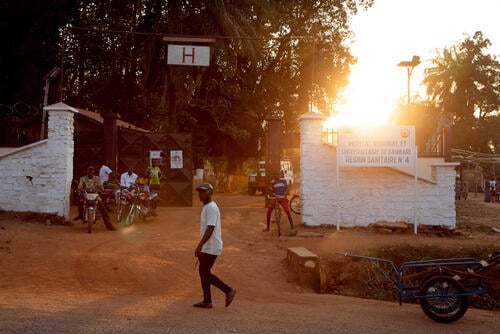
View of the entrance of Bambari hospital, the Central African Republic, on December 5th, 2020.
Central African Republic

People, medical facilities hit during violence in southern CAR

Post-election violence in Central African Republic is continuing to have an impact on people, this time in the southern city of Bambari, when people and medical facilities were hit with bullets. Project Update - 22 Feb 2021
 
MSF in Agok, South Sudan.

South Sudan faces many challenges, including ongoing conflict, displacement, food shortages/malnutrition, lack of social services including health care, and insecurity.  MSF hospitals have been under attack from different armed groups, putting the medical staff and patients at risk.
Cameroon

Ambulance fired on in South-West Cameroon

MSF reiterates that medical staff and facilities are not a target for attacks, following shots that were fired at an ambulance in South-West Cameroon. Statement - 4 Feb 2021
 
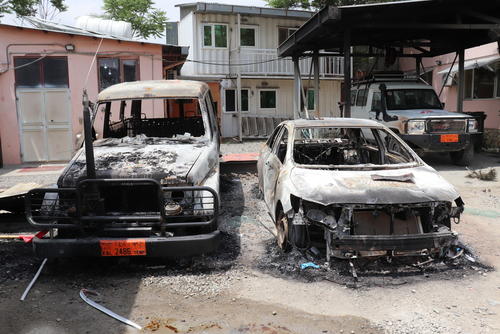
MSF car at Alek airstrip

MSF runs a large clinic offering primary healthcare and some secondary healthcare services in Gogrial town,Warrap State, South Sudan. An inpatient department and surgical capacity make this the key reference facility for miles around, and the clinic is extremely busy every day. The project is reorienting in 2013 to put a greater emphasis on maternal health owing to the high maternal mortality in South Sudan.
Mali

Patient dies after an MSF ambulance is violently detained in Mali

Following an attack on an ambulance in Mali, in which a patient died, MSF condemns the serious and violent obstruction of medical aid, and calls for the respect of humanitarian and medical action. Press Release - 7 Jan 2021
 
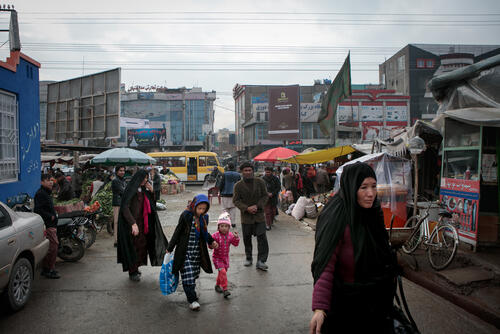
Streets and shops in Dahst-e-Barchi neighborhood.
Afghanistan

Patients face persistent insecurity amid “peace process”

Persistent insecurity remains a near-constant barrier to accessing healthcare in Afghanistan and has increased since the intra-Afghan talks in Doha began. Project Update - 16 Dec 2020
 
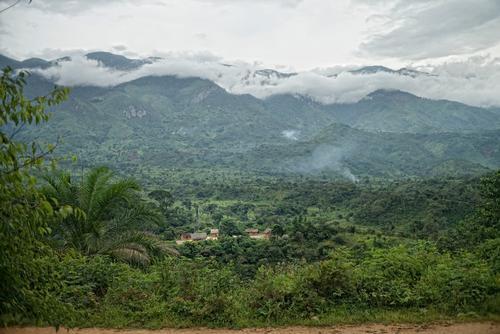
The mountains near Fizi, with few roads.
Democratic Republic of Congo

DRC: Violent attacks against staff force MSF to end projects in Fizi territory, South Kivu

Following several violent incidents against MSF teams in 2020, we have made the difficult decision to end most of our support in a territory in DRC's South Kivu province. Press Release - 1 Dec 2020
 
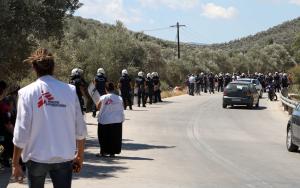
Anti-migrant attack on health facilities outside Moria camp, Lesbos, Greece
Greece

MSF statement on violent 20 August protest in Moria

MSF strongly condemns the attack on 20 August on our paediatric clinic and the new government COVID-19 facility outside Moria refugee camp, Lesbos, Greece.
Statement - 21 Aug 2020
 
MSF car at Alek airstrip

MSF runs a large clinic offering primary healthcare and some secondary healthcare services in Gogrial town,Warrap State, South Sudan. An inpatient department and surgical capacity make this the key reference facility for miles around, and the clinic is extremely busy every day. The project is reorienting in 2013 to put a greater emphasis on maternal health owing to the high maternal mortality in South Sudan.
Nigeria

MSF condemns the killing of five aid workers in northeast Nigeria

In the wake of the brutal killing of five humanitarian workers in Borno state, northeastern Nigeria, MSF strongly condemns violence against humanitarian workers and assistance. Statement - 23 Jul 2020
 
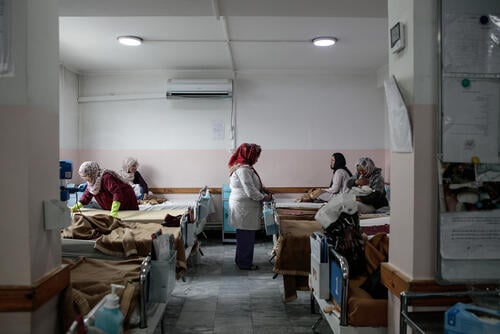
Post-partum room. Women stay around 6 hours on average, when they are not facing complications.
Afghanistan

MSF withdraws from Dasht-e-Barchi following attack on patients and staff

Following the horrific attack on our maternity wing at Dasht-e-Barchi hospital, MSF has made the difficult decision to withdraw from the area, as the attack's death toll climbs to 16 mothers killed. Press Release - 15 Jun 2020
 
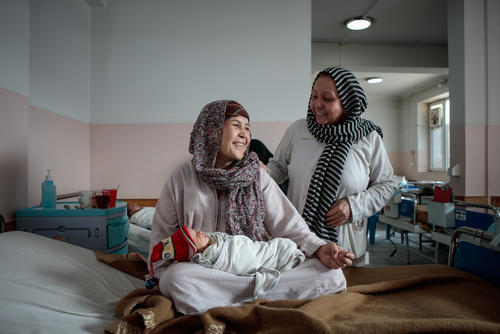
Zakia (32 years old), and her twins, Qassim and Abbas 
 
Zakia has just given birth to twins, Abbas and Qasim, born 20 minutes apart. Abbas, who came first, is also the smallest; he was hypoglycemic at birth and was placed in the incubator for a few hours.
 
Before her twins, Zakia, 32, had four other children: she is no longer a novice when it comes to newborns, but this time there are two of them. Her mother, Sakina, came to help her for a few days. When I ask her how many times she is a grandmother, Sakina needs to count... 18 times already. And not all her children are married yet. 
 
Zakia's first child was born at home, the next two in the hospital. For her fourth, finding a taxi to take her to the hospital took too long, she was already in labor and Zakia had to give birth at home. She is lucky, all her deliveries were the same: quick and easy. For her twins, once she arrived at the door of the maternity ward, she went straight to the delivery room.  
 
Six children, all boys. Zakia would have liked to have a girl, she hoped that this pregnancy would bring her one. Her mother would also have wanted her to have a daughter, to help her with her daily chores. Raising girls is more difficult according to both women: they have more to learn from the prospect of being married. More rules to follow too, more responsibilities. In Afghanistan, even though both parents are educating, mothers are more involved. 
 
Zakia and her family come from Ghazni. Ten years ago, they preferred to leave their region because they were afraid that the Taliban would recruit their husbands, both of whom have no permanent jobs. When the family arrived in Kabul, like many Hazara families arriving from the provinces, they lived in Dasht-e Barchi. A few years ago, the neighbourhood was accessible and very cheap. They had their own house for 2000 Afghanis per month (25 euros). Two years ago, their landlord wanted to take over the house and they moved here, to Karte Sakhi. They pay 2500 afghanis (30 euros) in rent but are three families sharing the house. Each family has its own room.
Afghanistan

“As midwives in Afghanistan, we are the silent leaders of our country.”

Nearly a month after the attack on MSF's maternity wing at Dasht-e-Barchi hospital in Kabul, which killed 15 mothers and an MSF midwife, MSF midwife supervisor Zahra Koochizad describes why midwives are so critical in Afghanistan. Voices from the Field - 10 Jun 2020
 
MSF Cars in parking lot.
Afghanistan

Fifteen mothers confirmed killed in Kabul maternity wing attack

Three weeks after an horrific, brutal attack on MSF's maternity wing at Dasht-e-Barchi hospital in Kabul, Afghanistan, we seek an inquiry as we confirm 15 mothers were killed. Project Update - 3 Jun 2020
Four mothers posing in a corridor of the Hospital in Bili. All four of them are staying in the hospital with their child, that's suffering from a severe case of malaria. Since the beginning of the project in 2016, the pediatric ward already treated more than 4.000 cases of complicated/severe form of malaria.
Médecins Sans Frontières (MSF)

Independent medical humanitarian assistance

We provide medical assistance to people affected by conflict, epidemics, disasters, or exclusion from healthcare. Our teams are made up of tens of thousands of health professionals, logistic and administrative staff - most of them hired locally. Our actions are guided by medical ethics and the principles of independence and impartiality. We are a non-profit, self-governed, member-based organisation.

Learn more