



Ebola disease in DRC: find out how we're responding
Learn more
1993 Results
 
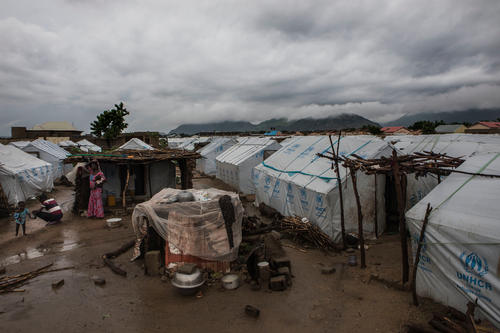
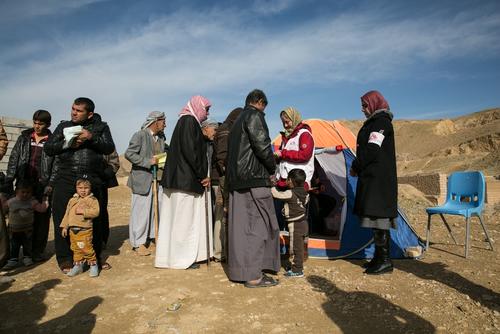
Camp for internally displaced people (IDPs) in the Nigerian town of Pulka, in the northeastern Borno state, close to the border with Cameroon.
Nigeria

What’s happening in the northeast?

More than two million people have fled their homes, with little chance of returning in the near future. An unknown number of people are out of reach of any humanitarian assistance. Project Update - 23 Nov 2017
 
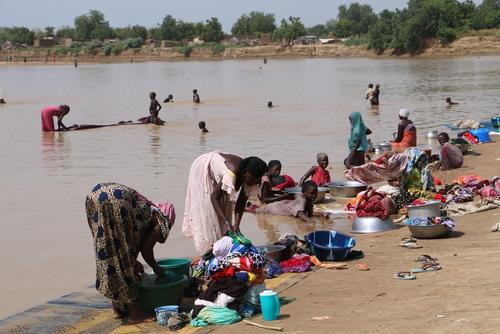
Life along the Barh-Azoum River – used by many for washing, bathing and even drinking.
Chad

Misinformation and lack of resources hamper cholera response

"They are afraid to say they have cholera because it has a stigma attached to it” Project Update - 16 Nov 2017
 
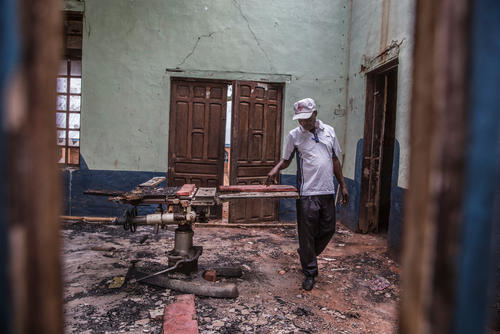
The former operating theatre in the Mayi Munene health centre. This was built by the Belgians in early 20th century and served as a referral centre for the whole health district, covering 128,000 people. In April 2017 armed militiamen took over Mayi Munene, looted the health centre and later set fire to the building. All the patients and medical staff fled, including the only doctor, who has not yet been replaced.
Democratic Republic of Congo

The work of mobile medical teams in Kasai

MSF mobile teams are travelling to villages across Kasai province to treat people in need of medical care, particularly malnourished children. Project Update - 8 Nov 2017
 
Jean Paul Buana, nurse and director of the Mayi Munene health centre, examines the damage to the operating theatre. 
“When we first saw what they had done to the centre, we cried. There was nothing else to do but cry. All our work has been lost. Between March and June, the centre did not function at all. We only came back in July because the security improved. Now there are six of us working here, but the needs are huge. We lack medicines and equipment, and safe space to work.”
Democratic Republic of Congo

Testimonies from Kasai

Although the violence that has affected the central Greater Kasai region of the Democratic Republic of Congo for more than a year has abated, the humanitarian needs of local communities and the hundreds of thousands of displaced people are immense. Project Update - 31 Oct 2017
 
From October 19 2012, following the suspicious deaths of five people from the same family, cases of Marburg have been confirmed in Kabale District, southwest Uganda. In support of the Ministry of Health, a team of Doctors Without Borders (MSF) ensure health checks and care for infected patients to the hospital Kabale.In banda and Mbarara where few cases of fever were detected MSF has provided some trainings to medical staff and made donations of equipment and drugs.
Uganda

MSF responds to an outbreak of Marburg fever

MSF is focusing its intervention around case management, and support to contact tracing and mapping. Project Update - 30 Oct 2017
 
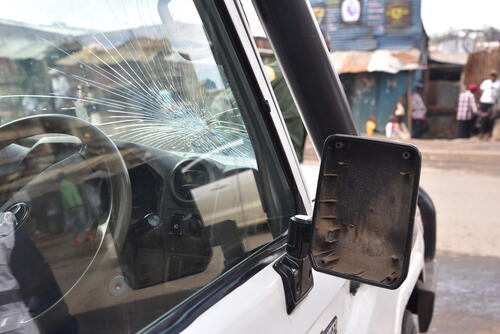
Shattered side mirror and cracked windshield of an MSF ambulance after it was attacked by protestors.
Kenya

MSF calls for safe access to wounded by medical teams

“I call on all communities to provide and ensure unconditional and safe access to those affected and to medical teams." Project Update - 26 Oct 2017
 
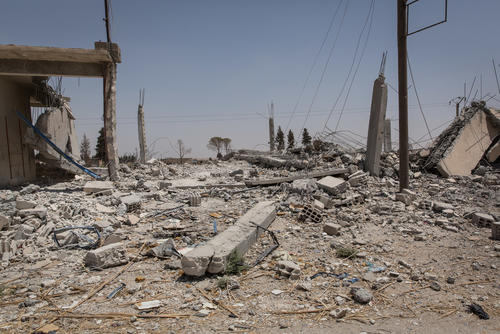
JulY 2017 - Syria - Raqqa - Eastern Quarter. The streets destroyed successively by Islamic State and by the heavy armed interventions of the Syrian Democratic Forces (SDF) and the international coalition.  

Jullet 2017 - Syrie - Raqqa - Quartier est - Les rues détruites successivement par L'Etat Islamique et par les interventions lourdement armées des Forces démocratiques syriennes (FDS) avec la coalition internationale.
Syria

Update on situation and humanitarian needs after Raqqa offensive

The battle for Raqqa ended on 17 October, and people left the city under frightening circumstances as the offensive drew closer. Project Update - 20 Oct 2017
 
Innocente, 33 years old, is a Doctor in a Hospital 45 km away from Tamatave, where MSF is supporting the local hospital.

“For five days, I was really tired; I had aches, headaches and chest pain. I thought I was suffering from angina. On 5 October, I had an alarming symptom: I started spitting blood. As I had done training about pneumonic plague with some colleagues, I went to Tamatave’s hospital to do some tests. I was clearly a suspect case, and then they confirmed that I was infected by the plague. I got an injection and stayed at the hospital. My family was panicked. From the second day, the symptoms began to disappear: swollen glands, headaches etc… As I was feeling better, I began to help the medical staff here even though I was still recovering. There were a lot of patients, a lot of plague cases the first week of the epidemic. Now, it has slowed down. The medical staff told me to take two weeks off to rest. I don’t know if my family is ready for me to come back home. They say they are but I can feel that they’re still afraid of me. So I stay away to leave my family in peace. I’m feeling positive. I don’t want to live with this secret: I had the plague and I was cured.”
Madagascar

MSF provides support in tackling plague outbreak

The plague is understandably a scary disease, but quick, hands-on action can drastically lower the number of fatalities and bring the outbreak to an end. Project Update - 19 Oct 2017
 
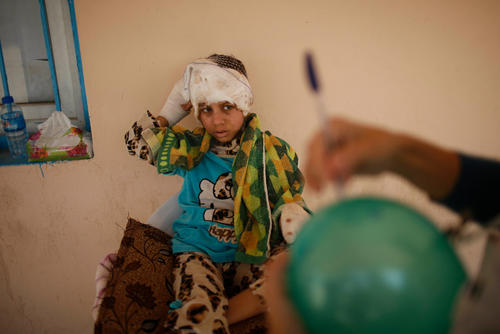
Wounded Iraqi girl Dua Nawaf, 8, who her family was killed in an airstrike in Mosul, sits at a hospital run by Medecins Sans Frontieres in Qayyara, Iraq April 6, 2017. Picture taken April 6, 2016.
Iraq

Returnees to Mosul face booby-trapped homes and destruction

“For many people, the long-anticipated return home is turning sour as they find themselves faced with daunting levels of destruction and seemingly endless misery.” Project Update - 17 Oct 2017
 
Once a week MSF mobile medical teams serve the small settlement south of the town of Tuz Kurmato in  Salaheddin governorate where 4000 displaced people have been living for the last year and a half after their village, a few miles away, became engulfed in violent fighting. Female and male medical staff provide general health care with special focus on chronic diseases, mother and child care as well as mental health support. The community is afraid to travel around in this highly militarized area, particularly men, and are reluctant to see medical care in close by urban settlement such as Tuz Kurmato or Kirkuk.
Iraq

Hawijah offensive pushes nearly 14,000 people to neighbouring districts

“Fleeing Hawijah was so dangerous that people call it the road of death.” Project Update - 12 Oct 2017
Four mothers posing in a corridor of the Hospital in Bili. All four of them are staying in the hospital with their child, that's suffering from a severe case of malaria. Since the beginning of the project in 2016, the pediatric ward already treated more than 4.000 cases of complicated/severe form of malaria.
Médecins Sans Frontières (MSF)

Independent medical humanitarian assistance

We provide medical assistance to people affected by conflict, epidemics, disasters, or exclusion from healthcare. Our teams are made up of tens of thousands of health professionals, logistic and administrative staff - most of them hired locally. Our actions are guided by medical ethics and the principles of independence and impartiality. We are a non-profit, self-governed, member-based organisation.

Learn more