



Ebola disease in DRC: find out how we're responding
Learn more
1993 Results
 
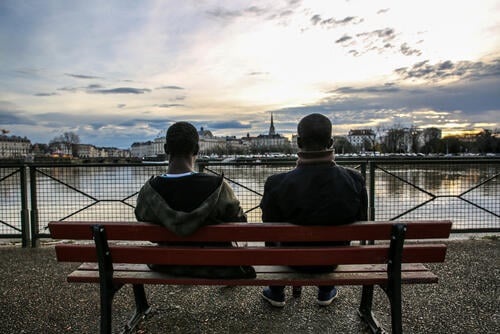
Migrants from Local Center are taking a rest in front of Adour river in Bayonne.

Des migrants logés dans le centre de transit de Bayonne se reposent face à la rivière Adour à Bayonne.
France

Migrants trapped in relentless cycle of rejection on French-Spanish border

Migrants and asylum-seekers crossing the border between Spain and France are frequently sent back to Spain by French police, leaving them helpless and vulnerable to people smugglers. Project Update - 6 Feb 2019
 
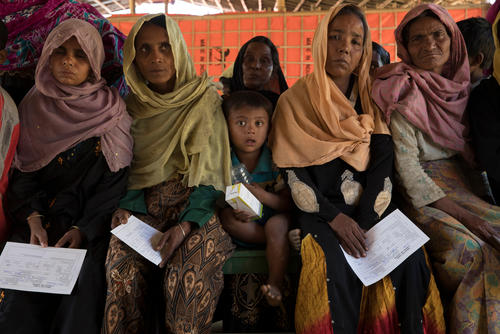
Patients wait for a consultation at MSF's primary health centre in Jamtoli.
Rohingya refugee crisis

The 5 things we've found after one million consultations in Cox’s Bazar

Between August 2017 and December 2018, MSF staff provided more than 1 million consultations to Rohingya refugees in Cox's Bazar, Bangladesh, after fleeing violence in Myanmar. Medical coordinator Jessica Patti reflects on the five things we've found in that time. Project Update - 5 Feb 2019
 
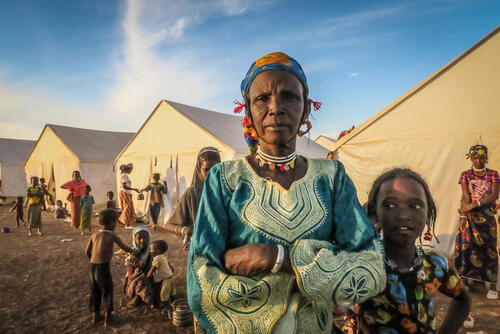
“We were seven women in the courtyard when we understood, by seeing the smoke coming from the burned houses, that massacres were happening. We ran away in the bush with our children to hide behind trees and we staid there 3 days. We walked more than 50km to arrive up to here. The village? I don’t want to hear about it anymore. Our husbands were killed. Our children’s notebook were all burnt.” Haibata /

« Nous étions sept femmes dans la cour lorsqu’on a compris que des massacres avaient lieu, à cause de la fumée qui venait des maisons brûlées. Nous nous sommes enfuies en brousse avec nos enfants pour nous cacher derrière des arbres, nous y sommes restées 3 jours. Nous avons marché plus de 50 km pour arriver jusqu’ici. Le village ? Je ne veux plus en entendre parler. Nos maris ont été tués. Les cahiers d’école de nos enfants ont tous été brûlés ». Haibata
Burkina Faso

Escalating violence leaves displaced with significant needs

In the wake of violence which has displaced thousands of people from northern Burkina Faso, water, hygiene and medical needs in camps are significant. MSF is providing help. Project Update - 31 Jan 2019
 
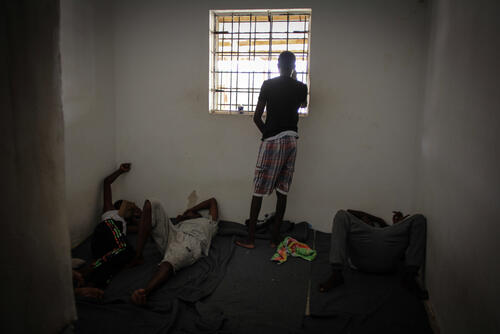
Men in the detention centre cells.

On September 2nd, 276 people were brought by the Libyan coast guard to Khoms (120 km east of Tripoli). They were then transferred to detention center where MSF works. Reportedly, they were in two rubber coats, one stopped due to engine failure, while the other boat continued to navigate for several hours before deflating and sinking. Survivors told MSF teams that over a hundred people died in the shipwreck.
Libya

Refugees returned to overcrowded Libyan detention centres

Over recent weeks, vulnerable refugees have been intercepted or rescued in the Mediterranean Sea and brought back to Libya - in violation of international law - and are now locked up in dire conditions in overcrowded detention facilities. Project Update - 23 Jan 2019
 
Mental health consultation in the MSF hospital in Nduta refugge camp, Tanzania.
Mental health

Displaced and distressed: people’s mental health in East Africa

MSF teams in Ethiopia, South Sudan, Sudan, Tanzania and Uganda are seeing the numbers of patients seeking treatment for mental health issues is increasing – in some cases even doubling – because of violence and displacement. Project Update - 22 Jan 2019
 
January 15, 2018.
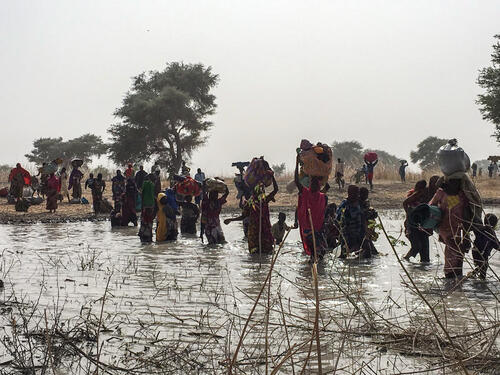
Some 8000 people who fled Rann after attack last night seek shelter in Bodo, Cameroon.
An MSF medical team arrived in Bodo today. There they found more than 8’000 people, (estimate) mostly women and young children. 1’200 people have been able to settle inland and more than 7’000 people are still at the river (border).  But people continue to arrive. They have no shelter, no fresh water and fled Rann with no belongings. The local community organized solidarity to provide them with some food. MSF teams are bringing medical supplies and are preparing to support the local health centre there. MSF teams are planning to return tomorrow with emergency food, shelter and a watsan team to support them. This is devastating news for the people in Rann who have already suffered so much.
Nigeria

Thousands fleeing Rann attack seek refuge in Cameroon

A devastating attack on Rann, northeast Nigeria, has sent thousands of people fleeing across the border to Bodo, Cameroon, needing assistance with food, shelter, water and medical treatment. MSF teams have arrived in Bodo to provide help. Project Update - 16 Jan 2019
 
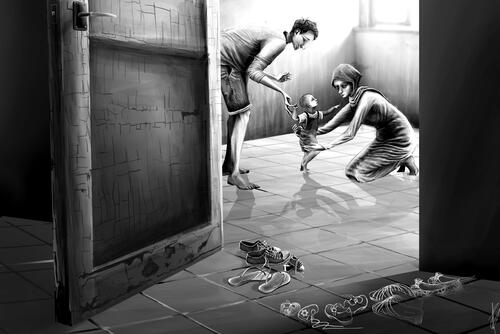
Patient: When the bomb fell on our home, it trapped my legs. I couldn’t do anything; I watched my family die in front of my eyes. My mother, sister, my two children, dying and I did nothing. Since we arrived in Lebanon, most days I just stay in the room with the children. It’s been almost five weeks since my last day out.
MSF's Psychologist: I try to help her to let go of this guilt, to see that her family would understand she did everything she could. We’re still working on the difference between forgetting and moving on.

Patiente: Quand la bombe s’est écrasée sur notre maison, mes jambes se sont retrouvées coincées sous les gravats. Je ne pouvais rien faire et j’ai vu ma famille mourir devant moi. Ma mère, ma sœur, mes deux enfants… ils sont morts et je n’ai rien fait. Depuis que l’on est arrivé au Liban, je passe la plupart de mes journées enfermée à la maison, avec les enfants. Cela fait presque cinq semaines que je ne suis pas sortie. 
Psychologue MSF: J’essaie de lui faire oublier ce sentiment de culpabilité, de lui dire que sa famille aurait compris qu’elle ne pouvait rien faire. Nous travaillons encore sur la différence entre le fait d’oublier et celui d’aller de l’avant.
Lebanon

“To see one smile on a broken face is enough to know that this work is worthwhile”

MSF has been working with refugees in Shatila refugee camp, Lebanon, since 2013. Illustrator Ella Barron visited our clinic in late 2018 and took refugees' testimonies and illustrated their stories, while MSF psychologist Miriam Slikhanian shares her experience of working on mental health issues in the camp. Project Update - 15 Jan 2019
 
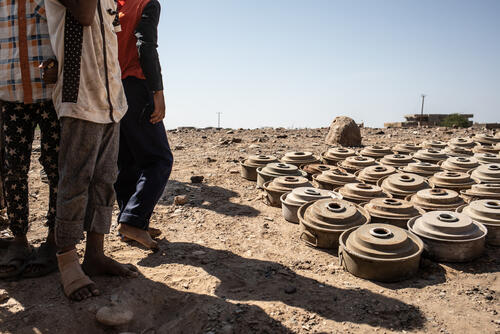
Yemen, Mawza, 13 December 2018 – Defused landmines. Mawza is located in Taiz governorate, a 45 minutes-drive to the east of Mocha city. This is a very poor and rural area, people are depending on their land to eat and to earn money. The area was taken over from Ansar Allah’s control by forces loyal to President Hadi, supported by the Saudi and Emirati-led coalition, in the beginning of 2018. Fighting damaged the fields and thus, the livelihood of the 13,000 inhabitants of Mawza. While military troops were withdrawing, thousands of landmines and improvised explosive devices (IED) were planted in the area. Between August and December, MSF teams in Mocha received around 150 people injured by landmines or IED, mainly children playing in the fields. Landmines and IEDs are defused by military forces. Local NGOs are in charge of locating these devices.
Yemen

Trapped by landmines

Landmines and explosive devices urgently need clearing from civilian areas in southwest Yemen – not only places where people live, but also agricultural land. Project Update - 10 Jan 2019
 
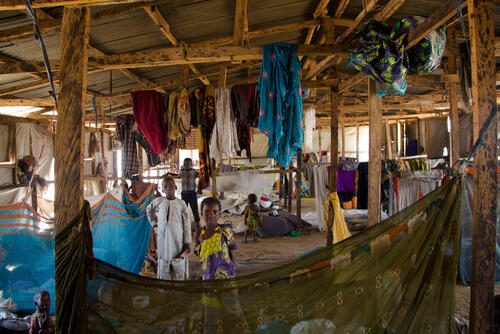
Constant influx of newly arrived people have left IDPs living in overcrowded communal shelters (60 to 70 people) or camping in the open under trees. They can stay there for several months before being allocated a personal shelter for their family.
Nigeria

“All I have in this world are the clothes on my back”

People continue to be displaced by violence in northeast Nigeria, where MSF has been providing lifesaving medical care since 2014. Many are dependent on aid to survive, and there is often not enough to go around. Project Update - 8 Jan 2019
 
Amana is a village of around 6,000 people, close to the Cameroonian border. Since the conflict in the North West and South West regions of Cameroon began in November 2017, more than 4,000 refugees have arrived in the village and have been hosted by the local community.
Nigeria

Tens of thousands of Cameroonians seek refuge in southern Nigeria

MSF has launched an emergency response to provide aid to people fleeing the English-speaking regions of Cameroon to seek refuge in southern Nigeria’s Cross River State, and to support the communities hosting them. Project Update - 21 Dec 2018
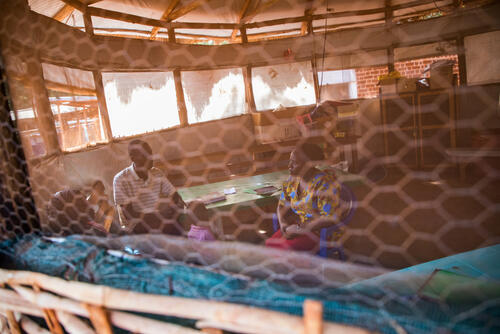
Four mothers posing in a corridor of the Hospital in Bili. All four of them are staying in the hospital with their child, that's suffering from a severe case of malaria. Since the beginning of the project in 2016, the pediatric ward already treated more than 4.000 cases of complicated/severe form of malaria.
Médecins Sans Frontières (MSF)

Independent medical humanitarian assistance

We provide medical assistance to people affected by conflict, epidemics, disasters, or exclusion from healthcare. Our teams are made up of tens of thousands of health professionals, logistic and administrative staff - most of them hired locally. Our actions are guided by medical ethics and the principles of independence and impartiality. We are a non-profit, self-governed, member-based organisation.

Learn more