



Ebola disease in DRC: find out how we're responding
Learn more
1993 Results
 
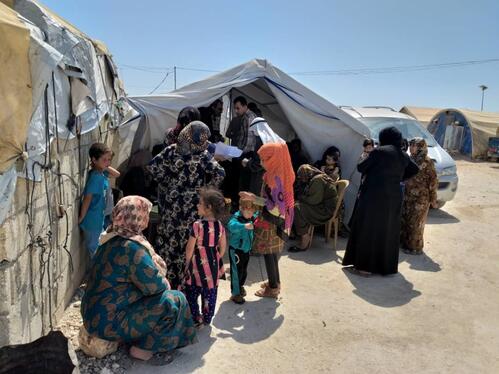
In northern rural Idlib, MSF is running a mobile clinic in a camp in Deir Hassan where the number of IDPs has increased by 10 500 people in two months, following the bombing and shelling on the southern Idlib and northern Hama countryside.
Syria

Escalating conflict in Idlib leaves increasing numbers dead, wounded or displaced

The level of conflict in Idlib and Hama governorates has increased exponentially over the last three months, resulting in hundreds of deaths, thousands of people injured, and forced nearly half a million from their homes and into camps in appalling conditions. Project Update - 31 Jul 2019
 
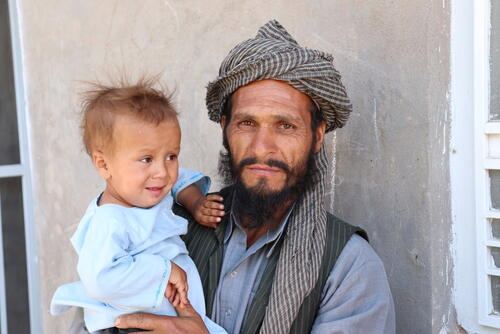
Mohammad Naeem, 35, is with his two year-old son, Yousuf, who has fever and is suffering from tongue rashes. He brought his child to the MSF clinic in Kahdistan camp. He left Shakh, a remote village in Qaisar district of Faryab, a year ago and is now living in a tent in the camp.

“I came to this clinic twice. My child received a good treatment here, and we are very happy with this clinic,” he says.
Afghanistan

Living conditions deteriorate for displaced people in Herat

With humanitarian assistance being reduced and water supplies running out, conditions are becoming increasingly difficult for some 100,000 displaced Afghans in Herat. Project Update - 24 Jul 2019
 
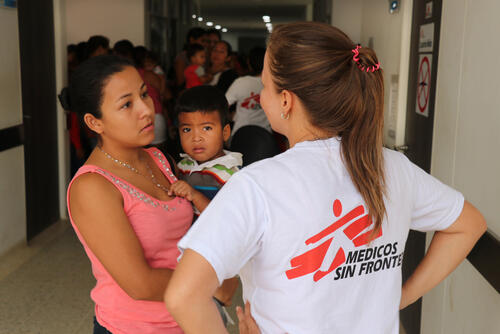
MSF provides primary healthcare, sexual and reproductive healthcare and mental healthcare to migrants and asylum-seekers from Venezuela and to Colombians unable to access to the health system in the provinces of La Guajira, Norte de Santander and Arauca.
Colombia

The uncertain lives of Venezuelan migrants on the Colombian border

Venezuelans who have fled their country's severe economical and political crisis are struggling to have their healthcare needs met in Colombia. There, MSF teams are plugging the gaps in a system which is struggling to cope with the new arrivals. Project Update - 17 Jul 2019
 
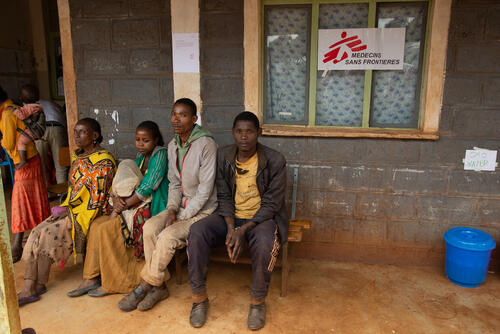
Patients wait their turn at the entrance of the MSF-supported health centre in Banko Gotiti, in the Gedeo area of southern Ethiopia.
Ethiopia

The constant cycle of displacement

Thousands of people have shuttled back and forth between the Gedeo and Guji areas of southern Ethiopia. Displacement camps have closed, but many are unable to return home, and are surviving in difficult conditions. MSF is providing assistance. Project Update - 12 Jul 2019
 
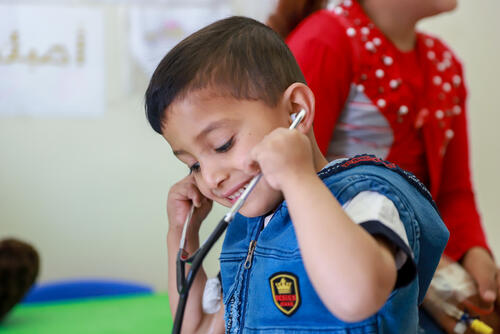
Abbas, 4 years old, playing inside MSF’s Kids Zone.
Abbas & his brother Youssef are both Thalassemia patients receiving treatment at MSF’s paediatric ward at the Elias Hraoui Government Hospital in Zahle. MSF’s Thalasemia services include, medical consultation and follow up, medical treatment and blood transfusion in addition to social and educational follow up for the children and their families.
A children’s visit to the hospital to receive treatment for Thalassemia could last for a full day. To make it an enjoyable experience, MSF prepared a Kids’ Zone, a safe space for thalassemia children to play, draw and have fun with their friends, as the mental well-being of the kids are an important factor in their physical health.
Lebanon

Treating Syrian children suffering from thalassemia

Thalassemia is a hereditary blood disorder which affects primarily people from the Mediterranean basin, including Syria. In Lebanon, MSF is treating Syrian refugee children with the disease, who usually lack access to treatment. Project Update - 5 Jul 2019
 
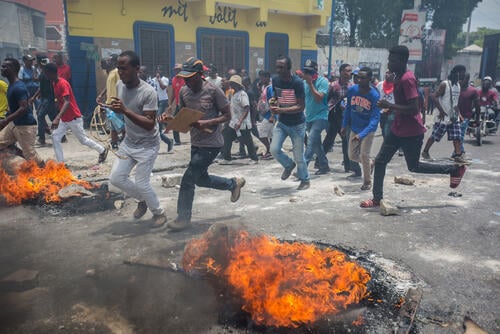
Haitian protesters run near burning tires during a demonstration in Port-au-Prince calling for the departure of President Jovenel Moïse on 9 June, 2019.

For months, Haitians have seen a steady decline in their purchasing power as the national currency devalued and fuel prices increased, against a backdrop of seemingly endless political stalemates and scandals. 

Since 9 June, tensions have escalated and there have been almost daily demonstrations and outbursts of violence in cities including Port-au-Prince, Les Cayes and Gonaïves.
Haiti

People’s healthcare in danger amidst worsening anger and despair

The streets of Haiti have spiralled even deeper into violence in recent weeks, jeopardising the ability of both MSF teams and the Haitian healthcare system to provide emergency medical care. Project Update - 5 Jul 2019
 
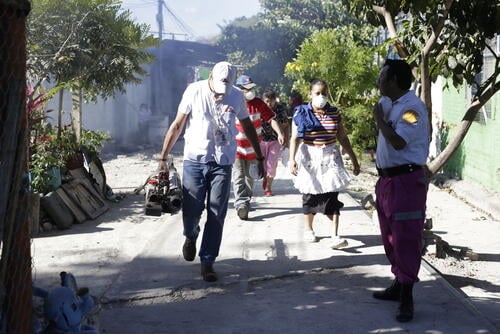
Activities such as water disinfection, fumigation to reduce the presence of mosquitoes, cleaning days or first aid courses are some of the activities carried out by the new Health Committee, in which MSF also participates.
El Salvador

La Peralta: a community organised by health

La Peralta, a community in the capital of El Salvador, has been affected by violence, which has hindered access to health services. MSF teams began making regular visits to the neighbourhood and the community has organised a health committee, which has managed to get healthcare activities starting again. Project Update - 27 Jun 2019
 
Dhi Sufal district is located at the south of Ibb governorate, in borders with Taiz governorate. In addition to MSF supported hospital, and due to the increase of the cholera cases in the area. MSF started Cholera treatment centre at the same district. MSF cholera treatment centre is receiving patients from Ibb, Taiz, and other IDPs from Hodeidah as well. Since Jan 2019, MSF has received 5466 of patients, between moderate and severe cases and has been working since the opening on 2017.
Yemen

The indirect consequences of war for people in Yemen

More than four years since the start of the war in Yemen, the indirect consequences of the conflict on ordinary Yemenis are high. Among them, people struggle to reach medical care and hospitals in time, which can have serious repercussions on their health. Project Update - 25 Jun 2019
 
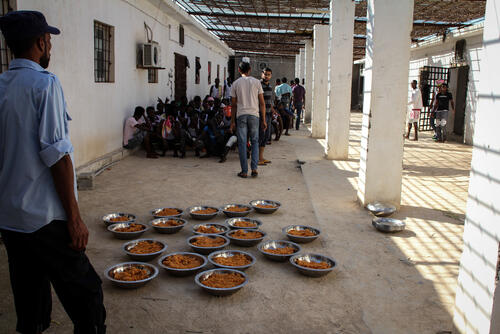
Refugees and migrants detained in this detention centre get rice or pasta for lunch and dinner. For breakfast people receive bread with some cheese. Meals often have to be shared by many people. Food is prepared in-house and is served in large metal bowls to be shared by five to 10 people.
Libya

“Healthwise, it was a disaster” in Libya’s Zintan and Gharyan detention centres

MSF staff who were recently granted access to two detention centres in Libya found a catastrophic medical situation among the people detained there. Project Update - 21 Jun 2019
 
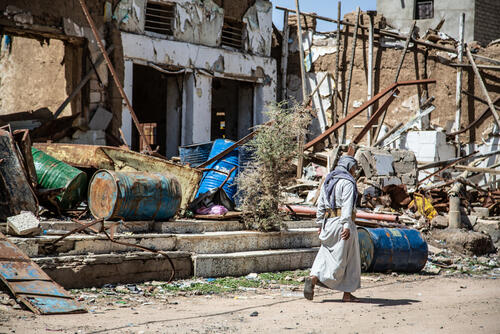
Yemen, Saada city, 22 April 2019 - A man walking in front of destroyed buildings near the old city of Saada.
Yemen

Aerial bombardments in Sa'ada

Video report on life in Sa'ada, the most bombed governorate of Yemen. With almost a quarter of all recorded coalition air raids since March 2015, the MSF hospital that was bombed in 2015 and reopened in April 2018 had admitted more than 1,500 patients by the end of the year. Project Update - 20 Jun 2019
Four mothers posing in a corridor of the Hospital in Bili. All four of them are staying in the hospital with their child, that's suffering from a severe case of malaria. Since the beginning of the project in 2016, the pediatric ward already treated more than 4.000 cases of complicated/severe form of malaria.
Médecins Sans Frontières (MSF)

Independent medical humanitarian assistance

We provide medical assistance to people affected by conflict, epidemics, disasters, or exclusion from healthcare. Our teams are made up of tens of thousands of health professionals, logistic and administrative staff - most of them hired locally. Our actions are guided by medical ethics and the principles of independence and impartiality. We are a non-profit, self-governed, member-based organisation.

Learn more