



Ebola disease in DRC: find out how we're responding
Learn more
1993 Results
 
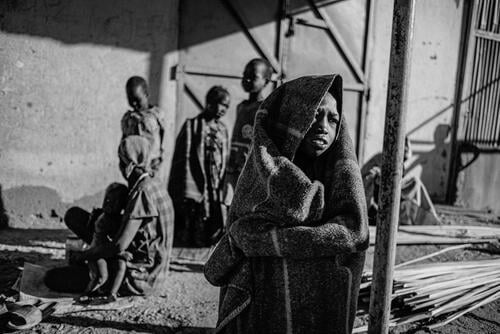
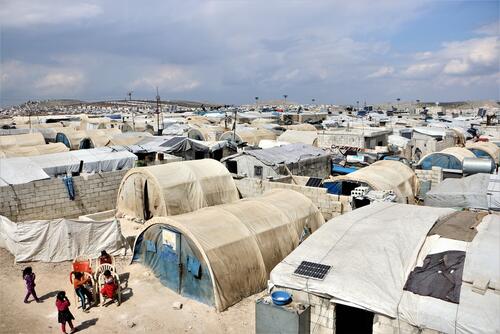
Families seeking shelter in abandoned shops and factories in Bentiu town, in South Sudan. January 2020.
South Sudan

Fear of violence, poor living conditions in South Sudan’s largest displacement camp

People in South Sudan's Bentiu Protection of Civilian's site fear regional violence and worry that the UN mission's withdrawal will leave them unprotected. Project Update - 3 Dec 2020
 
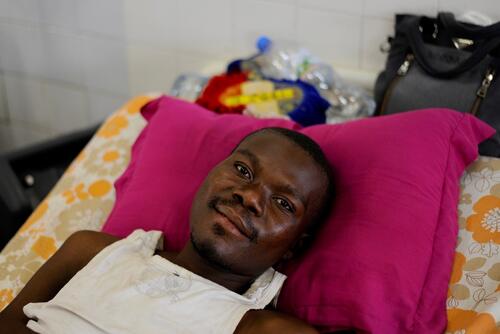
(EN) Benjamin was admitted to the advanced HIV unit of the Centre Hospitalier Universitaire Communautaire (CHUC) in Bangui. He just received a visit from the doctors who are responsible for his care. He has been admitted to the hospital following complications linked to an opportunist infection.

(FR) Benjamin, patient admis à l'unité VIH avancé du Centre Hospitalier Universitaire Communautaire (CHUC) de Bangui, vient d’avoir la visite des médecins qui assurent le suivi de sa prise en charge. Il a été admis suite à des complications liées à une maladie opportuniste.
HIV/AIDS

HIV is in a state of silent crisis in Central African Republic

While CAR has the highest HIV prevalence in West and Central Africa, access to information, early detection, treatment and care remains extremely scarce for people. Project Update - 30 Nov 2020
 
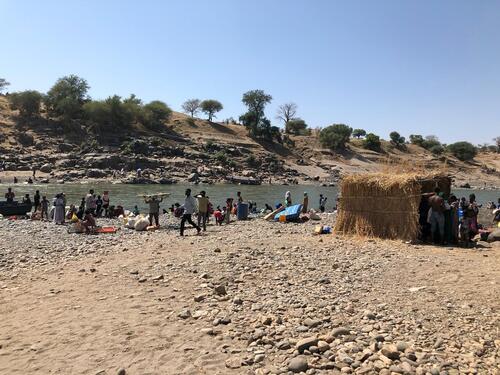
The Hamadayet border crossing, where refugees from Ethiopia cross the river into Sudan. New arrivals take whatever belongings they can carry with them, some have their livestock’s and  others left with nothing.
Ethiopia Tigray crisis

MSF providing medical care and assistance in Sudan to people fleeing violence in Ethiopia

In the wake of fresh conflict in northern Ethiopia, thousands of people have fled north into neighbouring Sudan, where MSF is providing medical care and assistance. Project Update - 27 Nov 2020
 
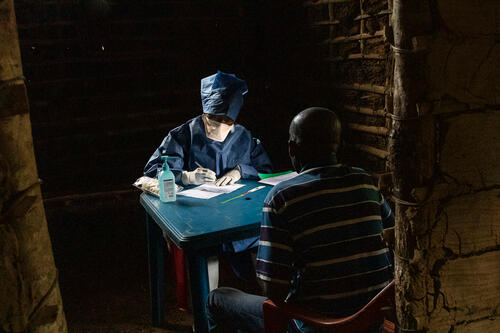
Dr Tathy, an MSF doctor, sees patients considered as non-Ebola suspects in consultation, as part of the mobile intervention clinic and training of local medical staff in the Ebola context, in the village of Bobua. This decentralization-based device aims to detect and isolate, if necessary, any person presenting symptoms close to Ebola (fevers, diarrhea, headaches, bleeding, etc.). But at the same time to treat other pathologies which are rife in the area, such as malaria or severe acute malnutrition. This is in order to increase the acceptance of MSF by the population in the area, and to avoid the stigmatization that affects Ebola patients, by getting as close as possible to the patients, and taking care of them where they live. Bobua.

***

Dr Tathy, médecin MSF, reçoit en consultation des patients considérés comme non suspects Ebola, dans le cadre des activités de clinique d'intervention mobile et de formation du personnel médical local en contexte Ebola, dans le village de Bobua. Ce dispositif axé sur la décentralisation, a pour but de déceler, et isoler le cas échéant, toute personne présentant des symptômes proches d'Ebola (fièvres, diarhhées, céphalées, saignements...). Mais de soigner en même temps d'autres pathologies qui sévissent dans la zone, telles que le paludisme ou la malnutrition aïgue sévère. Ceci afin d'augmenter l'acceptance de MSF par la population dans la zone, et d'éviter la stigmatisation qui affecte les patients Ebola, en se rapprochant au plus près des patients, et en les prenant en charge sur leur lieu de vie. Bobua.
DRC Ebola outbreaks

Improved medical response sees the end of DRC’s eleventh Ebola outbreak

Almost six months since the eleventh outbreak of Ebola was declared in DRC, new tools and an improved medical response have seen the epidemic come to an end. Project Update - 19 Nov 2020
 
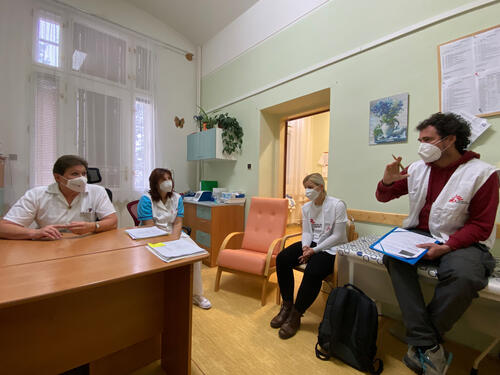
As a part of COVID-19 response in Czech Republic, MSF mobile team (consisted of a nurse and a logistician) visited care home in Božice, Southern Moravian region, Czech Republic. During the day, MSF staff with the care home's staff assessed and discussed improving IPC measures to protect clients of the home from COVID-19.
Coronavirus COVID-19 pandemic

MSF supports COVID-19 response in nursing homes in Czech Republic

MSF has started activities for the first time in the Czech Republic, where mobile teams are visiting nursing homes as part of the response to coronavirus COVID-19. Project Update - 13 Nov 2020
 
Most of the people admitted to Covid+ centres are homeless people sent from emergency shelters. When MSF mobile teams who intervene in these shelters diagnose someone as possibly having contracted the virus they try to test them——if they have the necessary kits.
From the medical perspective, we know the symptoms of the virus, so we can identify anyone suspected of having the disease. The Regional Health Authority then calls on the Red Cross, which handles transportation, to take them to Covid+ centres set up across Paris and the suburbs. 

In Chatenay-Malabry Covid+ centre (Paris suburbs), there are places for 50 people with confirmed or suspected Covid-19. We provide social support and paramedical/medical care in partnership with NGO Alteralia. This includes checking vital signs: blood pressure, temperature and oxygen saturation to see whether people are breathing properly. We also give advice on hygiene, wearing a mask and hand washing to prevent the infection spreading to other people. We also give medical examinations and, when necessary, take care of patients requiring long-term treatment for other conditions. We monitor them regularly, so if all of a sudden someone who’s really struggling to breathe—remember, this isn’t a hospital so we don't necessarily have the equipment to keep them on oxygen for any length of time—requires further tests, this is the kind of person we call the emergency services for so that they can take them to the hospital. 

MSF teams are on hand throughout the care chain: from the mobile teams, mobile clinic and care provided in the emergency centres through to the medical team who treat patients admitted to the Covid-19 treatment centres.
Coronavirus COVID-19 pandemic

MSF supports nursing home staff as urgent appeal for medical personnel in France launched

MSF is providing support to nursing home staff, and appealing for more medical staff to come forward, as the second wave of the coronavirus pandemic mounts in France. Project Update - 11 Nov 2020
 
Abou Obaida area in Deir Hassan.
Syria

Taking risks to survive as COVID-19 spreads in the northwest

Three displaced people in northwest Syria recount their struggles, frustrations and fears as COVID-19 cases rise against the backdrop of an economic crisis. Project Update - 11 Nov 2020
 
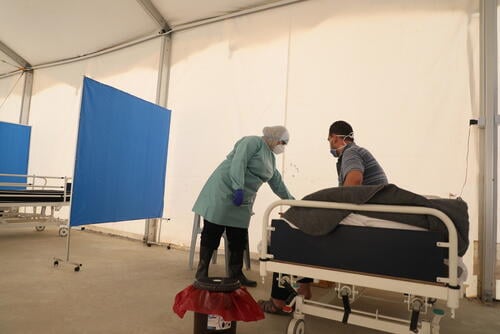
Majd Osama, 23 years old from Syria, married and has a daughter. Majd is receiving medical care in COVID-19 treatment centre in Zaatari camp for Syrian refugees. “One day I woke up feeling feverish and I was referred to MSF COVID-19 hospital, I have been in the MSF hospital for two days, I don’t cough and I do not have a runny nose and the fever is gone. God will help me, I’m not worried.”
Coronavirus COVID-19 pandemic

MSF responds as COVID-19 arrives in Jordan’s largest refugee camp

Given the often rapid spread of diseases inside refugee camps, MSF is providing medical care for coronavirus COVID-19 to refugees in Zaatari camp, Jordan. Project Update - 28 Oct 2020
 
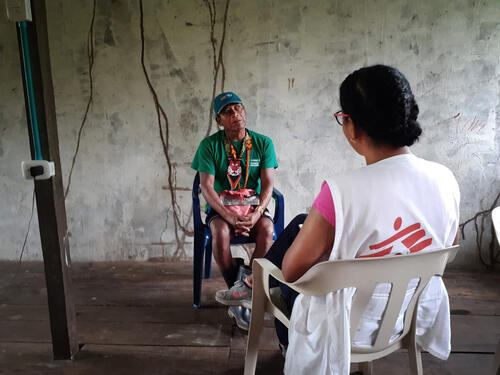
MSF in Nariño
Colombia

MSF responds to a resurgence of violence in Norte de Santander and Nariño

MSF is providing general and mental healthcare in Colombia’s Norte de Santander and Nariño, where violence has led to mass displacements and confinements Project Update - 28 Oct 2020
 
A consultation at MSF’s mobile clinic, in an IDP camp in Northwest Syria.
Syria

Dozens of people treated following an airstrike in Idlib

Dozens of people have been treated at a hospital co-managed by MSF, following an airstrike in a relatively stable part of Idlib governorate, northwest Syria. Project Update - 26 Oct 2020
Four mothers posing in a corridor of the Hospital in Bili. All four of them are staying in the hospital with their child, that's suffering from a severe case of malaria. Since the beginning of the project in 2016, the pediatric ward already treated more than 4.000 cases of complicated/severe form of malaria.
Médecins Sans Frontières (MSF)

Independent medical humanitarian assistance

We provide medical assistance to people affected by conflict, epidemics, disasters, or exclusion from healthcare. Our teams are made up of tens of thousands of health professionals, logistic and administrative staff - most of them hired locally. Our actions are guided by medical ethics and the principles of independence and impartiality. We are a non-profit, self-governed, member-based organisation.

Learn more