



Ebola disease in DRC: find out how we're responding
Learn more
1993 Results
 
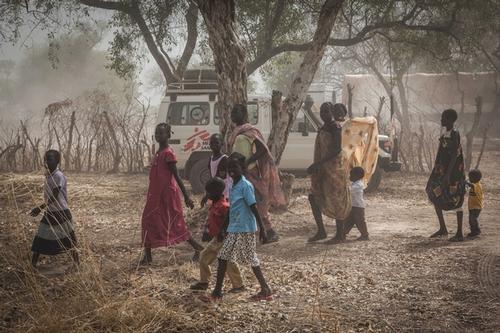
*** Local Caption *** Yida.<br/>
Dans l?Etat d?Unity, au nord du Soudan du Sud, MSF fournit depuis octobre 2011 des soins de santé dans le camp de réfugiés de Yida, où sont installés ceux qui fuient les combats entre les forces armées soudanaises (SAF) et le Mouvement pour la libération du peuple soudanais (SPLM-Nord) dans la province du Kordofan du Sud. A partir d?avril 2012, la population du camp a connu une forte augmentation suite à l?arrivée de nombreux nouveaux réfugiés. En mai 2013, 75,000 personnes vivaient à Yida. La saison des pluies débute et MSF se prépare à une augmentation des maladies infectieuses au cours des prochains six mois. <br/>
Entre mai 2012 et mars 2013, 2,784 enfants sévèrement malnutris ont été soignés dans le programme nutritionnel thérapeutique. Pendant cette même période, les équipes MSF ont également effectué près de 90,000 consultations de santé primaire tandis que l?hôpital MSF installé dans le camp a admis près de 3,000 patients, dont les deux-tiers avaient moins de 5 ans. Les pathologies les plus diagnostiquées sont les infections respiratoires, les diarrhées et le paludisme.
South Sudan

Humanitarian deadlock in Yida

Sudanese refugees are stranded at the centre of complex political agendas that threaten to worsen their dire situation. Project Update - 23 May 2013
 
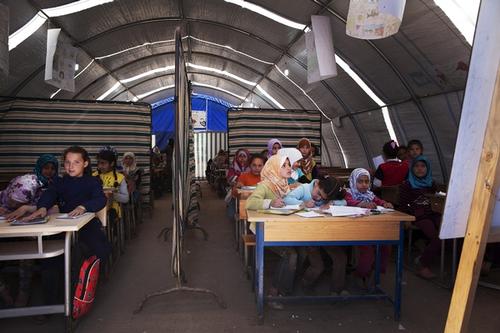
A school in a transit camp in Aleppo province, next to the Turkish border. Around November 2012, 4,000 displaced people were staying in this temporary settlement – in April 2013, there were around 10,000.
Syria

10,000 people at the gates of Turkey

MSF is working in a transit camp in northern Syria with a growing population - from 4,000 to 10,000 internally displaced people in half a year. Project Update - 21 May 2013
 
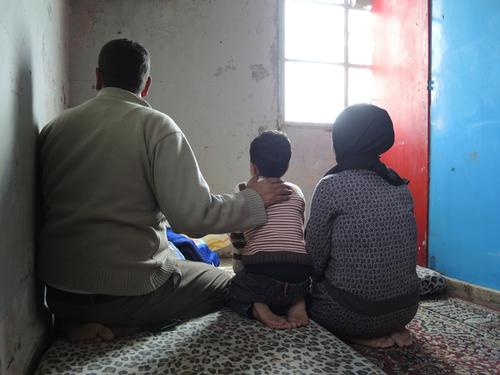
In a small house building, two families live in one room, separated in half: 
Mahmood, Siham and their son Mahmood (6) came from Syria 45 days ago. Mahmood lost two of his five children. “I’m very sad inside but I need to look strong. It’s very difficult. I used to live in Yarmouk camp, I was happy before the crisis started. I used to own a blacksmith shop and help people. But then the camp started to be bombed. My son disappeared. I searched for him everywhere but couldn’t find him. I’m sure he’s dead. One month later, my brother disappeared. I kept looking for them. Seven members of my family were killed by the bombings and shootings. We saw their mutilated bodies. I buried them myself. I also buried my neighbours. My two daughters told me to go to Lebanon, or I would get killed. They are searching for their brother. I don’t know where they live, but they say they are ok. As a Palestinian, I went to seek refuge in a Palestinian camp as I have no family in Lebanon. I have no news of the rest of my family, I’m sure they got killed and this is causing me a lot of sadness”.
Lebanon

From Syria to Ain el-Helweh: Alleviating the suffering of refugees in Saida

MSF runs a mental health program in Ain el-Helweh, in Saida, Lebanon. More and more patients are Palestinian refugees who fled Syria and suffer from a high level of trauma. Project Update - 17 May 2013
 
msf-placeholder
Syria

MSF activities inside the country

Within Syria, the MSF operations are scaling up as fast as is safely possible, but are still limited to four pockets where MSF is able to have teams on the ground running high quality medical activities. Project Update - 8 May 2013
 
msf-placeholder
Syria

An overview of MSF programmes in and around the country

An overview of MSF programmes inside Syria and for Syrian refugees in neighbouring countries. Project Update - 8 May 2013
 
msf-placeholder
Syria

MSF activities for Syrian refugees

Project Update - 8 May 2013
 
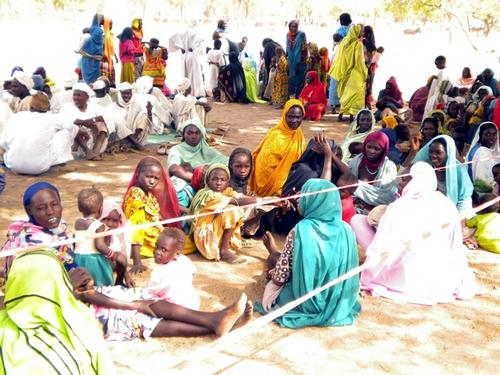
Since early 2013, violent clashes have erupted between several tribes in Darfur, leading to the displacement of thousands of people. About 70 000 persons, mainly women and children, have crossed the border to seek refuge into neighboring Chad, in Tissi, a village located accross Chadian, Sudanese and Central African borders. Deprived from any assistance for several weeks, families live under makeshift shelters or trees, without food and drinkable water. An MSF team came to assess their medical needs, conduct consultations et transfer the most serious cases to Goz Beida hospital. <br/> Depuis le début de l'année 2013, de violents combats opposent plusieurs tribus du Darfour et provoquent le déplacement de dizaines de milliers de personnes. Près de 70 000 personnes, dont une majorité de femmes et d'enfants, ont traversé la frontière pour se réfugier au Tchad voisin, dans la région de Tissi, village situé à la croisée des frontières soudanaise, tchadienne et centrafricaine. Privées d'assistance pendant plusieurs semaines, les familles vivent dans des abris de fortune ou sous des arbres, sans nourriture ni eau potable. Une équipe de Médecins Sans Frontières s'est rendue auprès d'elles pour évaluer leurs besoins médicaux, mener des consultations et transférer les cas les plus graves vers l'hôpital de Goz Beida.
Chad

More than 10 000 refugees arrived in Tissi

Project Update - 11 Apr 2013
 
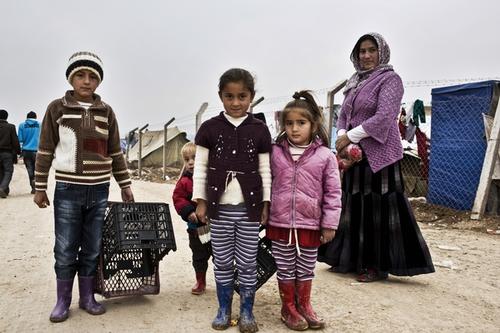
Syrian Kurdish refugee children stand with their mother on a road in the Domeez camp in northwest Iraqi Kurdistan, January 25, 2013.  Approximately 32,000 people who have fled conflict and economic insecurity in Syria live in the camp. Housing in the camp ranges from tents for newly-arrived refugees to concrete structures for those who have been living longer in the camp.
Iraq

Growing number of Syrian refugees in Domeez

The registered number of refugees gathering at the Domeez camp, near the city of Dohuk in the Kurdish region of Iraq, is increasing daily. While 700 to 1,000 newcomers are registering every day the services provided in the camp remain insufficient to cope with mounting needs. Project Update - 10 Apr 2013
 
As the opposition group Seleka took power in CAR in March 2013, MSF teams support surgery activities at the community hospital in Bangui where victims of violence receive medical treatment. OCP, OCA and OCBA and present in the country.
Central African Republic

The situation stabilises but remains tense

Ten days after the takeover of Bangui by the opposition group Seleka, life in the capital is gradually returning to normal. Médecins Sans Frontières (MSF) continues its medical activities and strengthens its teams across the country. Project Update - 4 Apr 2013
 
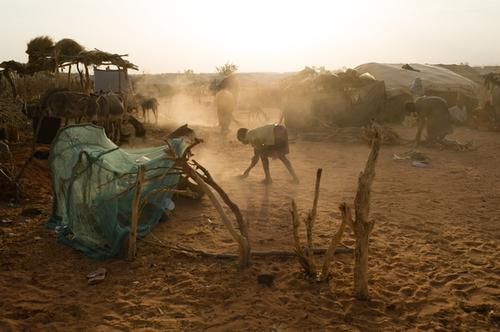
A girl and her mother sweep the area around their tent at the Mbera camp for Malian refugees in Mauritania on 3 March 2013.

As of January 2012, the Malian crisis has resulted in population movements. Nearly 150,000 refugees now live in refugee camps in Burkina Faso, Mauritania and Niger, where MSF teams are providing maternal, primary and secondary health care. Since the beginning of 2013, MSF has recorded nearly 12,000 consultations and 5,000 vaccinations in these three countries. Mauritania is the country with the largest number of refugees.  Mbera camp nearly 70,000 refugees who have fled for fear of reprisals or lack of access to food since the beginning of the conflict. In February 2013, the border post of Fassala (Mauritania) recorded an average of 300 arrivals per day. They are mostly women and children from Timbuktu, Lere, Goundam Larnab and Nianfuke. These Malian refugees continue to live in precarious conditions with no future prospects.
Mali

Deadly clashes in Timbuktu

Project Update - 4 Apr 2013
Four mothers posing in a corridor of the Hospital in Bili. All four of them are staying in the hospital with their child, that's suffering from a severe case of malaria. Since the beginning of the project in 2016, the pediatric ward already treated more than 4.000 cases of complicated/severe form of malaria.
Médecins Sans Frontières (MSF)

Independent medical humanitarian assistance

We provide medical assistance to people affected by conflict, epidemics, disasters, or exclusion from healthcare. Our teams are made up of tens of thousands of health professionals, logistic and administrative staff - most of them hired locally. Our actions are guided by medical ethics and the principles of independence and impartiality. We are a non-profit, self-governed, member-based organisation.

Learn more