



Ebola disease in DRC: find out how we're responding
Learn more
62 Results
 
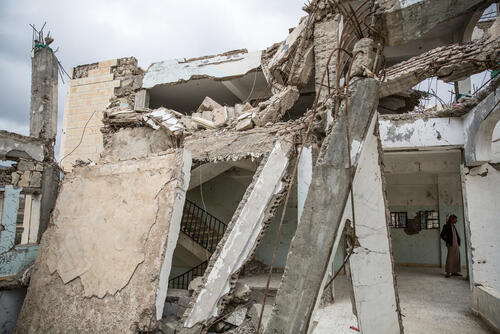
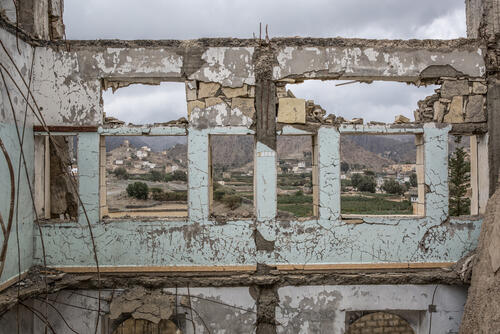
Yemen, gouvernorat de Saada, Haydan, mars 2018. A l'intérieur de l'école de Haydan, bombardée en 2016 par la coalition internationale dirigée par l'Arabie Saoudite.


Saada governorate in Yemen, Haydan, March 2018.Inside Haydan school, bombarded in 2016 by the international coalition led by Saudi Arabia.
Yemen

Health structures threatened by fighting in Hodeidah

MSF teams have treated more than 500 war-wounded people in two weeks. We are extremely worried for the patients and staff threatened by fighting very close to our facilities. Press Release - 21 Nov 2018
 
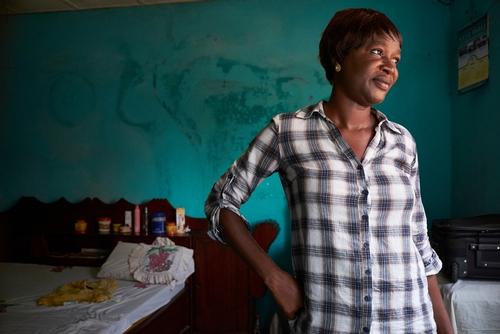
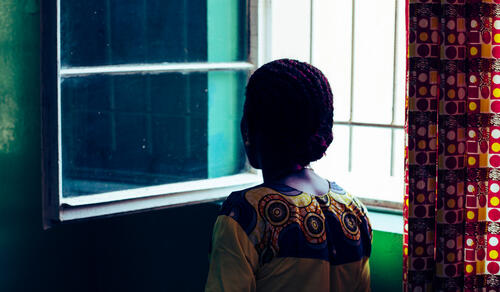
Portrait of Odia at her home in Conakry, Guinea on March 18, 2016. 

"I learnt in 2005 that I was HIV positive when I for a medical checkup. But the first time, it was my father who received the results from my tests and he did not tell me what they were. I returned to the hospital again with a friend of my mother and was tested again. That’s when I learnt I was HIV positive. I was stigmatised by my Aunty at first, today though I don't face problems. I am a counsellor in an MSF treatment centres for those who come for HIV tests."

MSF launched a HIV testing campaign in Conakry with the support of health authorities moving throughout several neighbourhoods throughout 2016.

In Guinea, only one in four people living with HIV are on life-saving antiretroviral treatment. Lack of voluntary HIV testing, estimated at only 5% from the latest study dating from 2012, hampers the necessary increase of people on ART.
Access to medicines

HIV and TB treatment at risk as countries gradually lose Global Fund support

MSF calls on the Board of the Global Fund to Fight AIDS, TB and Malaria to make urgent changes to prevent drug stock-outs and quality issues with HIV and tuberculosis medicines for countries gradually losing donor support. Press Release - 13 Nov 2018
 
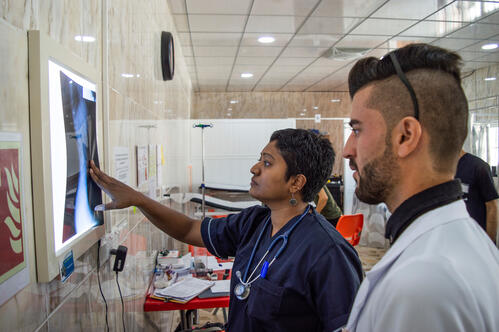
SF’s Dr Punidha examines X-ray results in the emergency room of Sinuni general hospital in Sinjar.
Iraq

Rehabilitated hospital improves access to healthcare in Sinjar district

MSF has started activities in Sinuni, the most densely populated town in Sinjar district, where access to healthcare has been drastically compromised by severe damage to medical infrastructure, the displacement of health professionals, and ongoing insecurity in parts of the governorate. Press Release - 8 Nov 2018
 
Yemen, gouvernorat de Saada, Haydan, mars 2018. A l'intérieur de l'école de Haydan, bombardée en 2016 par la coalition internationale dirigée par l'Arabie Saoudite.


Saada governorate in Yemen, Haydan, March 2018. Inside Haydan school, bombarded in 2016 by the international coalition led by Saudi Arabia.
Yemen

Influx of war wounded as fighting intensifies in Hodeidah, Hajjah, Saada and Taiz

As fighting intensifies in Hodeidah and other parts of the country, MSF is extremely concerned for patients and staff at its health facilities, as well as for the thousands of people who live near frontlines. Press Release - 7 Nov 2018
 
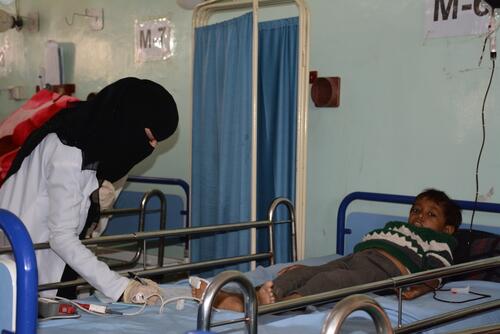
In Patients Department, at Alnasr General Hospital was supported by MSF in Ad Dhale.
Yemen

Projects in Ad Dhale close due to insecurity and threats

After multiple security incidents directly targeting patients, staff and MSF-supported medical facilities in the area, we are left with no choice but to close all medical and humanitarian activities in Ad Dhale governorate. Press Release - 7 Nov 2018
 
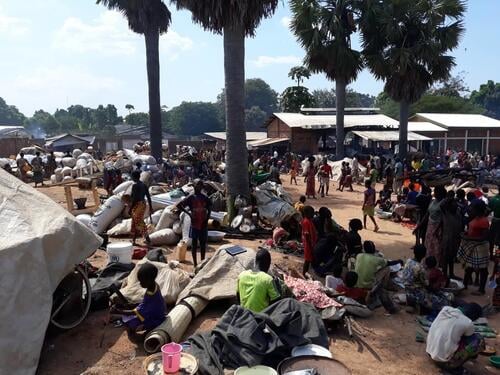
On Wednesday, 31 October 2018, violent clashes in Batangafo, in the northern Central African Republic, led to 10,000 people fleeing to seek shelter in an MSF-supported hospital. Violence also affected Bambari, in the centre of the country. In total 32 wounded people received treatment at MSF facilities.
Central African Republic

More than 10,000 seek refuge in Batangafo hospital

Following clashes between armed groups that took place on Wednesday, 31 October 2018 in the north and centre of the Central African Republic (CAR), more than 10,000 people fled to seek refuge in the compound of a hospital supported by Médecins Sans Frontières (MSF). Press Release - 2 Nov 2018
 
"I was at home with my husband that day. It was during the violence and fighting. We heard screams outside and neighbours crying. “I think they’ve killed someone,” my husband said. So we shut ourselves inside. We didn’t want to open the door. Armed men threw tear gas through the window to force us out. Eight people came into our home. They threatened to kill my husband and tried to force him to rape our daughter. She was 17. He refused and they murdered him. Then they raped our daughter, and me.

When they left, I hid in the forest next to the village with my children. I didn’t sleep or eat. For a year, before coming to the clinic, I was terrified by the thought that I could have HIV.

When I went back to Kananga – my father was very sick so I decided to return with my children – I went to see MSF at the hospital where they looked after victims of sexual violence. They examined me and told me that I didn’t have HIV."

//

"J’étais à la maison avec mon mari ce jour-là. C’était pendant le conflit et les affrontements. Nous avons entendu des cris de dehors et les voisins qui pleuraient. Mon mari m’a dit : « je crois qu’ils ont tué quelqu’un ». Nous nous sommes alors enfermés dans la maison et n’avons pas voulu ouvrir la porte. Des hommes armés ont lancé du gaz lacrymogène par la fenêtre pour nous obliger à ouvrir. Huit personnes sont entrées dans la maison. Ils ont menacé de mort mon mari et l’ont obligé à violer notre fille de 17 ans. Il a refusé et ils l’ont tué. Ensuite, ils ont violé notre fille, et moi aussi.

Quand ils sont partis, je suis partie dans la forêt, à côté du village, avec mes enfants. Je ne dormais pas et ne mangeais pas. Pendant un an, avant que je ne vienne à la clinique, j’étais très angoissée à la pensée d’avoir peut être contracté le VIH.

Mais quand j’ai dû rentrer à Kananga – mon père était très malade et j’ai donc décidé de m’y rendre avec mes enfants. Je me su
Democratic Republic of Congo

Sexual violence committed by armed men in Kasai

Between May 2017 and September 2018, MSF treated 2,600 victims of sexual violence in the town of Kananga in Kasai Central, Democratic Republic of Congo (DRC). Eighty per cent reported having been raped by armed men. Press Release - 1 Nov 2018
 
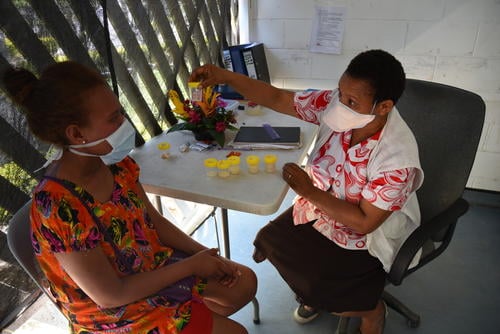
Giakila, left, has been diagnosed with drug-resistant TB. Here she talks to MSF's counsellor about her medication. The counsellor uses the rice in the sample jars to explain how the amount of sputum in her lungs will reduce each month as she continues to take medication.
Tuberculosis

High prices restrict access to best drug-resistant tuberculosis treatment

MSF calls on US pharma corporation Johnson & Johnson to halve the price of the newer TB drug bedaquiline. Press Release - 23 Oct 2018
 
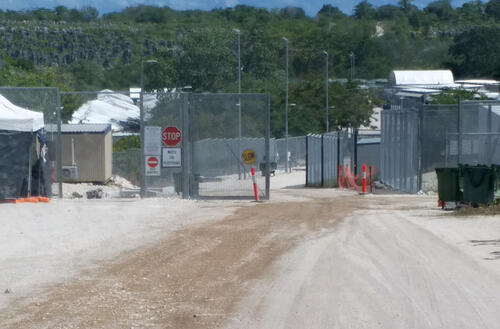
The regional processing centres known as RP3 and Anijuo, September 2017.
Nauru

Refugees' lives in danger with MSF forced to end mental healthcare activities

After almost a year of activity in Nauru, MSF has been informed by the government that our mental health activities were “no longer required”. We are extremely concerned for the impact this decision will have on our patients. Press Release - 11 Oct 2018
 
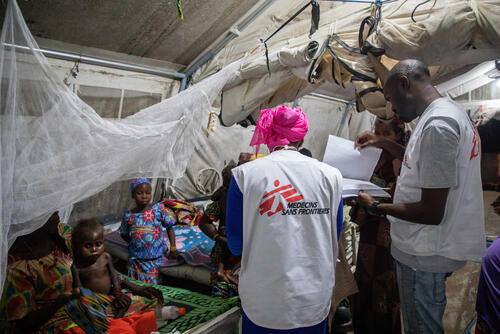
Fatouma Adamou and Iscander Raingou-Mounchili are doing the evening visit in a phase 2 tent.
Niger

One of the world’s biggest paediatric intensive care units is full

The 200-bed paediatric intensive care unit in Magaria, Niger, is overwhelmed as MSF teams tackle an unprecedented malaria peak in a hospital that covers a region of one million people.

Press Release - 25 Sep 2018
Four mothers posing in a corridor of the Hospital in Bili. All four of them are staying in the hospital with their child, that's suffering from a severe case of malaria. Since the beginning of the project in 2016, the pediatric ward already treated more than 4.000 cases of complicated/severe form of malaria.
Médecins Sans Frontières (MSF)

Independent medical humanitarian assistance

We provide medical assistance to people affected by conflict, epidemics, disasters, or exclusion from healthcare. Our teams are made up of tens of thousands of health professionals, logistic and administrative staff - most of them hired locally. Our actions are guided by medical ethics and the principles of independence and impartiality. We are a non-profit, self-governed, member-based organisation.

Learn more