



Ebola disease in DRC: find out how we're responding
Learn more
1390 Results
 
Humanitarian assistance in East Daraa, Syria
Syria

MSF reports show more assistance is needed to meet healthcare needs

Our data shows women and children have the most difficulty in accessing adequate healthcare. Humanitarian assistance must be increased. Report - 20 Dec 2017
 
Madhor
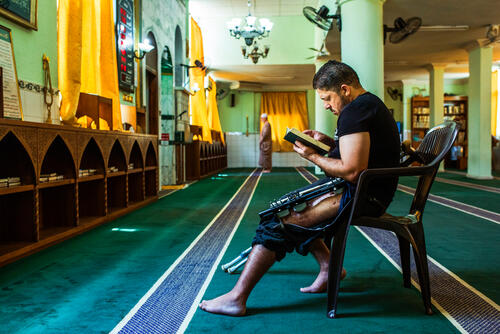
“Russian, Syrian… I don’t know. There were so many aeroplanes dropping bombs in those days in 2016,” says Madhor. A farmer from rural Hama governorate, in Syria, Madhor was sitting under an olive tree  with his seven children when a barrel bomb hit them, killing two of the children. He remembers the moment that the bomb dropped, but then he lost consciousness for three days. He awoke in a hospital in Hama to find he had lost an eye and his left leg was bloody and broken. “I just thought I would die,” says Madhor. “I also lost my teeth, and for three months I almost didn’t eat.” 
Madhor can now walk with crutches, but it remains painful. After multiple operations at MSF’s hospital in Amman, the intensive physiotherapy has had positive results: Madhor can now enjoy days away from the hospital visiting his wife Layla and their five remaining children in Jordan’s Azraq refugee camp. He can also walk the couple of hundred metres to the hopsital’s nearest mosque, for a calm moment of prayer in his ongoing recovery.
Jordan

A decade of healing at MSF’s reconstructive surgery hospital

Surgeons at our Amman-based reconstructive surgery hospital operate on victims of conflicts in the Middle East whose wounds are inflicted by bomb blasts, bullets, shrapnel and burns. Research and innovation are an important part of the hospital’s programme. Project Update - 20 Dec 2017
 
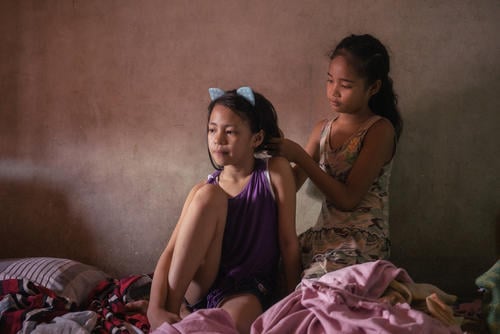
Young girls Elyes and Diana fix each other's hair before posing for a portrait in their tenement home near Smokey Mountain, Manila. Both girls are recipients of free vaccinations from Likhaan clinic, which provides free healthcare for low income communities.
Photo story

A year in pictures 2017

MSF's Pictures of the Year collection looks back on a year of providing medical care in extreme conditions and contexts across the globe. Through the lens of its photojournalists, MSF remembers and pays tribute to those who have struggled, those who have persevered and those who have perished. Photo Story - 18 Dec 2017
 
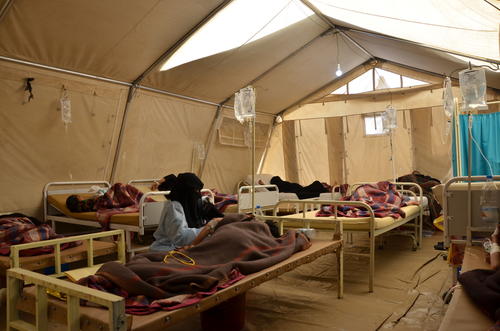
The female inpatient department at MSF cholera treatment center in Khamer. MSF is receiving an increased number of cholera patients in Yemen since the beginning of May 2017. This cholera treatment center alone, treated more than 1200 patients in less than two weeks. The center is still receiving patients.
Yemen

From cholera to diphtheria – shattered health system battles a new threat

Yemen’s healthcare system cannot afford another outbreak. Statement - 12 Dec 2017
 
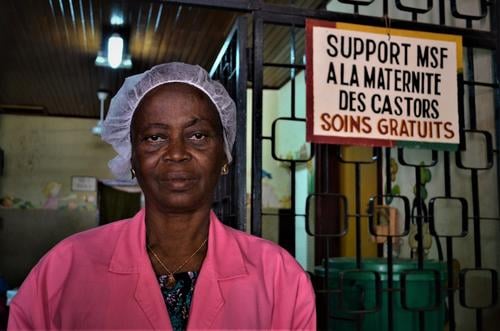
Ms Marie-Josée Yakité, MSF midwife at the Castors HRUB since 2014

"I’ve been working here with MSF at Castors since 2014. For 20 years, I worked at Castors before the arrival of MSF, and also at the Hôpital de l’Amitié – a big hospital in Bangui, the capital of the Central African Republic.
We often look after patients who can’t get treatment elsewhere because they don’t have the money. People know that here we offer quality care to everyone, free of charge. In health centres that are not managed by international organisations like MSF, you have to pay for everything. If a patient can’t pay, they send them here. I remember one lady who was referred to us from one of the main hospitals in Bangui. This woman had already been monitored for pre-eclampsia. When the medical staff realised that there was foetal distress, they referred her to us. Not because the hospital couldn’t treat this kind of complication – it was just a matter of money.
In the health centres where patients have to pay for their care, when women arrive in labour, the staff make an assessment of all the tests and the procedures that need to be performed, and an estimate of how much it will cost. And then they make them pay. And if they realise that the woman doesn’t have the money, and that she needs treatment she can’t afford, they prefer to refer her here at Castors because we don’t ask for any money for our services.
We also have women who show up here ready to give birth, but who, for lack of money, have not had any prenatal examinations or tests, for syphilis, toxoplasmosis or HIV for example. We see this very often, especially women who are HIV-positive. These women come to us in labour, without having had a prenatal HIV test. And in theory this test should be free, as it is covered by the Global Fund. Yet sometimes they force women to pay for a whole raft of prenatal tests and they refuse to do the HIV test if the women don’t do the other tests, for which they have to pay. They ask them to pay for the medical supplies, the gloves, the health card, everything.
Because of these financial questions, some people refuse to go to hospital. They prefer to stay at home and rely on traditional medicine. Not long ago, we treated a young woman of 19 who had taken traditional oxytocics. She wanted to give birth at home, she didn’t want to go to a health centre because she didn’t have the money to pay. But the dose of the medicine she took was too high – she ruptured her uterus and her baby died. When the family saw she had suffered a haemorrhagic shock, she was taken to the health centre near her home, which then referred her here to Castors. By the time she came here, three days had already passed. Luckily we managed to save her, but we had to carry out a hysterectomy. She already has a healthy child, but sadly for her, she can’t have any more.
It’s the referrals from other health centres that are the most complicated. Very often, these women come to us in a very serious condition. Sometimes they bring us a woman on the back of a motorbike, and she dies before making it to the door. I suspect that sometimes the health centres keep patients longer than they should in the hope that they might still squeeze something out of them. I tell all the women to come here to Castors as soon as they feel their first labour pains. Here we have qualified staff who can guarantee high-quality care to all patients, irrespective of who they are and where they come from."
Access to Healthcare

8 ways user fees for health are harmful to people

When people simply don’t have the means to pay either formal or informal healthcare fees, they are de facto excluded or delayed from receiving care and aren’t treated in time. This can lead to death or complication from treatable diseases such as malaria and can happen even when seemingly small amounts are requested. Project Update - 11 Dec 2017
 
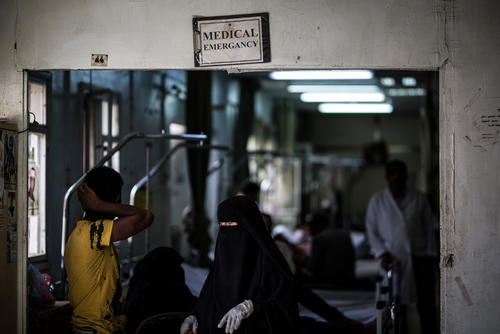
For more than a year, civil servants salaries haven’t been paid in Yemen. Despite this, many health workers continue to bear their duties despite growing difficulties. Emergency room of the Al Koweit university hospital in Sana’a - Yemen.
Yemen

“Just living has become more difficult”

Monia Khaled is water and sanitation supervisor for MSF in Yemen. This is her account of the dramatic changes in everyday life she has witnessed over the past two and a half years. Voices from the Field - 11 Dec 2017
 
msf-placeholder
Yemen

Crisis update - January 2018

MSF is in Yemen to support the Yemeni populations affected by the conflict on all sides of the frontlines. We work in 13 hospitals and health centres and provide support to more than 20 hospitals or health centres across 11 Yemeni governorates: Taiz, Aden, Ad Dhale, Sa’ada, Amran, Hajjah, Ibb, Sana’a, Abyan, Shabwa and Lahj. Crisis Update - 11 Dec 2017
 
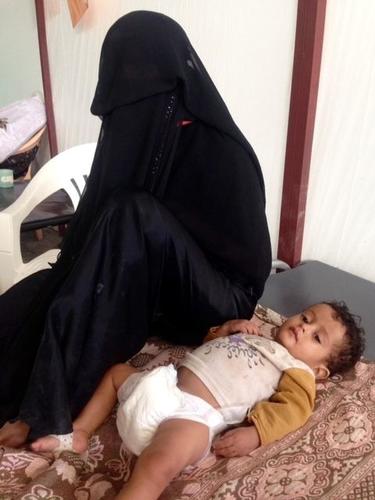
Fatima sits on the bed next to her 18-month-old son Ishaq, who is being treated at one of MSF's cholera treatment centres in Kilo, southern Ibb governorate. 

Fuel costs have risen dramatically since the imposition of a blockade by the Saudi-led Coalition in November, and Fatima cannot afford the cost of transport to and from the hospital.
Yemen

“There is food in the shops but no money to buy it”

Fatima sits on the bed next to her 18-month-old son Ishaq, her legs bent under her chin in front of her. They arrived the day before to the cholera treatment centre (CTC) operated by MSF in Al Qaeda city, Ibb governorate, after a four-hour journey from Shokan, a village located in Mawia district, in Taiz governorate, south-western Yemen.
Voices from the Field - 6 Dec 2017
 
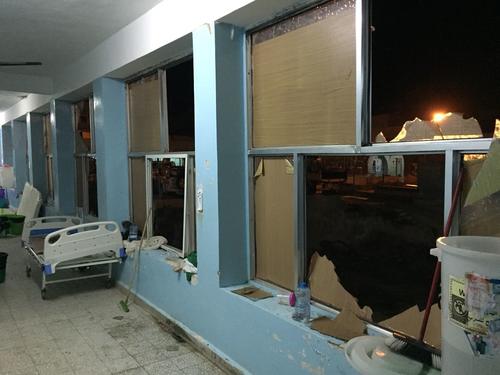
In the early hours of 4 December, an airstrike damaged the MSF-supported Al Gamhouri hospital in Hajjah city. The emergency room, operating theatre and intensive care unit were damaged and 12 ER patients were evacuated. Despite the damage, Al Gamhouri hospital received 22 casualties from the airstrikes in Hajjah shortly after. Al Gamhouri also received a total of 38 war-wounded patients between 2 and 3 December. 
“Health services have been repeatedly attacked over the course of this conflict. Yet again warring parties are not taking measures to spare medical facilities, endangering the lives of patients and medical staff,” says Steve Purbrick, MSF Field Coordinator in Hajjah. “Civilians must be able to flee or seek medical care, ambulances must be allowed to reach the injured and hospitals must be protected”.
Yemen

Intense fighting and blockade further reduce access to healthcare

A week of heavy violence, coupled with a crippling blockade preventing vital supplies entering into Yemen, shows new levels of disregard by warring parties for the civilian population, medical facilities and patients, says Médecins Sans Frontières (MSF).
Press Release - 6 Dec 2017
Four mothers posing in a corridor of the Hospital in Bili. All four of them are staying in the hospital with their child, that's suffering from a severe case of malaria. Since the beginning of the project in 2016, the pediatric ward already treated more than 4.000 cases of complicated/severe form of malaria.
Médecins Sans Frontières (MSF)

Independent medical humanitarian assistance

We provide medical assistance to people affected by conflict, epidemics, disasters, or exclusion from healthcare. Our teams are made up of tens of thousands of health professionals, logistic and administrative staff - most of them hired locally. Our actions are guided by medical ethics and the principles of independence and impartiality. We are a non-profit, self-governed, member-based organisation.

Learn more