



Ebola disease in DRC: find out how we're responding
Learn more
1390 Results
 
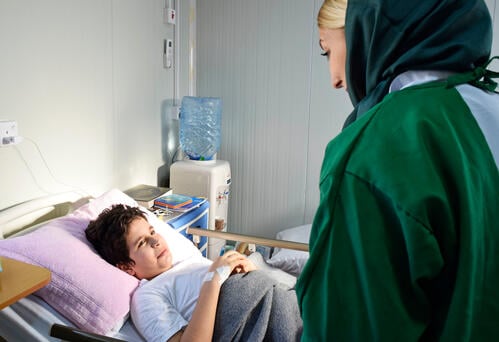
Ali Monir, 12 years old, in his room during a psychological support session in MSF’s post-operative care facility, in East Mosul. Ali has been hospitalised because of a fracture. Medical tests revealed that Ali presents a multidrug- resistant infection. In conformity with MSF’s infection prevention and control (IPC) measures, Ali has to stay in an isolation room, to avoid the spread of his infection to other patients and medical staff. MSF’s psychologist is visiting Ali regularly to help him deal with his anxiety and to ease his recovery.
Antibiotic resistance

“Without urgent action, common infections and minor injuries could be deadly again”

Ernestina Repetto, MSF advisor on infectious diseases, answers the big questions on antibiotic resistance. Interview - 17 Jan 2019
 
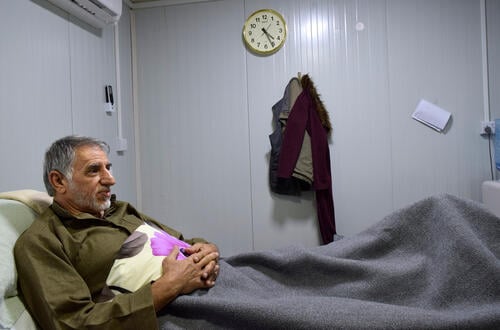
Hani Tah Suleyman, 63 years old, in his room in MSF’s post-operative care facility in East Mosul. Hani is affected by osteomyelitis and has developed a multidrug resistant infection. In conformity with MSF’s infection prevention and control (IPC) measures, Hani has to stay in an isolation room, to avoid the spread of his infection to other patients and medical staff. “When I first heard that I would be isolated I was relieved because my treatment was getting started. But when I realised that it was for 6 weeks, I felt sad because I would be separated from my family, from my home and my sons. I got teary eyed” says Hani. “No one likes to be alone, but we need to adapt. And services here are very good; the organisation takes good care of patients.”
Iraq

The invisible burden of antibiotic resistance in Mosul

Almost 40 per cent of patients admitted to MSF’s post-operative care facility in East Mosul arrive with multidrug-resistant infections, and antibiotic resistance is a problem throughout the country. Project Update - 17 Jan 2019
 
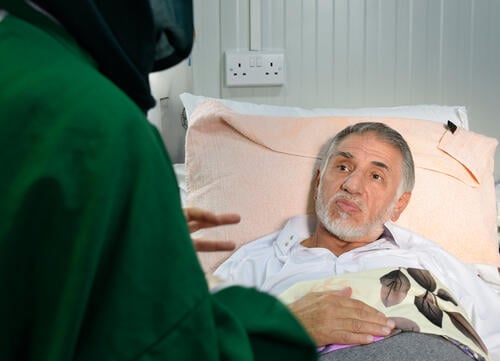
Hani Tah Suleyman, 63 years old, in his room during a psychological support session, in MSF’s post-operative care facility in East Mosul. Hani is affected by osteomyelitis and developed a multidrug resistant infection. In conformity with MSF’s infection prevention and control (IPC) measures, Hani has to stay in an isolation room, to avoid the spread of his infection to other patients and medical staff.
Iraq

“Over a third of our patients in East Mosul show antibiotic resistance”

Karam Yaseen, a health promoter at MSF’s hospital in East Mosul, Iraq, describes the rising challenge of antibiotic resistance. Voices from the Field - 17 Jan 2019
 
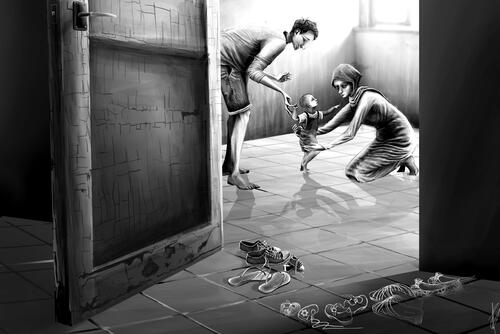
Patient: When the bomb fell on our home, it trapped my legs. I couldn’t do anything; I watched my family die in front of my eyes. My mother, sister, my two children, dying and I did nothing. Since we arrived in Lebanon, most days I just stay in the room with the children. It’s been almost five weeks since my last day out.
MSF's Psychologist: I try to help her to let go of this guilt, to see that her family would understand she did everything she could. We’re still working on the difference between forgetting and moving on.

Patiente: Quand la bombe s’est écrasée sur notre maison, mes jambes se sont retrouvées coincées sous les gravats. Je ne pouvais rien faire et j’ai vu ma famille mourir devant moi. Ma mère, ma sœur, mes deux enfants… ils sont morts et je n’ai rien fait. Depuis que l’on est arrivé au Liban, je passe la plupart de mes journées enfermée à la maison, avec les enfants. Cela fait presque cinq semaines que je ne suis pas sortie. 
Psychologue MSF: J’essaie de lui faire oublier ce sentiment de culpabilité, de lui dire que sa famille aurait compris qu’elle ne pouvait rien faire. Nous travaillons encore sur la différence entre le fait d’oublier et celui d’aller de l’avant.
Lebanon

“To see one smile on a broken face is enough to know that this work is worthwhile”

MSF has been working with refugees in Shatila refugee camp, Lebanon, since 2013. Illustrator Ella Barron visited our clinic in late 2018 and took refugees' testimonies and illustrated their stories, while MSF psychologist Miriam Slikhanian shares her experience of working on mental health issues in the camp. Project Update - 15 Jan 2019
 
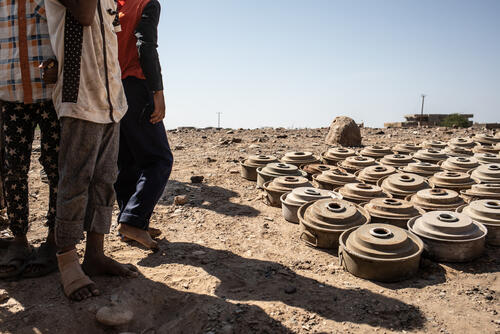
Yemen, Mawza, 13 December 2018 – Defused landmines. Mawza is located in Taiz governorate, a 45 minutes-drive to the east of Mocha city. This is a very poor and rural area, people are depending on their land to eat and to earn money. The area was taken over from Ansar Allah’s control by forces loyal to President Hadi, supported by the Saudi and Emirati-led coalition, in the beginning of 2018. Fighting damaged the fields and thus, the livelihood of the 13,000 inhabitants of Mawza. While military troops were withdrawing, thousands of landmines and improvised explosive devices (IED) were planted in the area. Between August and December, MSF teams in Mocha received around 150 people injured by landmines or IED, mainly children playing in the fields. Landmines and IEDs are defused by military forces. Local NGOs are in charge of locating these devices.
Yemen

Trapped by landmines

Landmines and explosive devices urgently need clearing from civilian areas in southwest Yemen – not only places where people live, but also agricultural land. Project Update - 10 Jan 2019
 
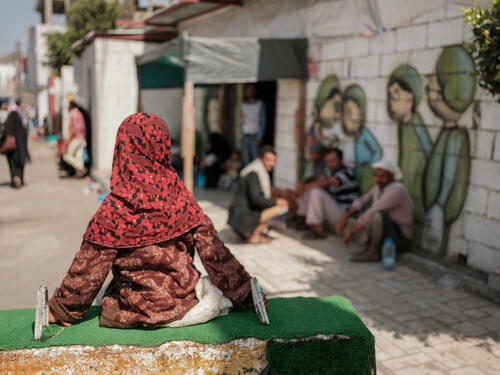
A girl is seen seated on an anti-vehicle concrete barrier built in front of the “Mother and Child” Hospital run by MSF, while some men are sitting outside the entrance of the Cholera treatment unit. Taiz Houban. Yemen
Yemen

A week in Yemen

As the conflict in Yemen enters its fourth year, MSF has put together a series of seven short videos that illustrate the devastating situation – through the eyes of our staff and patients. Campaign - 31 Dec 2018
 
مستشفى السلام في شرق الموصل في العراق
Iraq

A new emergency room for Al ‘Salaam hospital, East Mosul

MSF has completed the construction of a new emergency room (ER) in the Al ‘Salaam and Al’ Shifaa hospital complex, to increase the capacity of the health facility and improve access to high-quality emergency care for the population of East Mosul. Press Release - 18 Dec 2018
 
Thousands of Iraqis who fled IS’s iron grip and the US-led coalition’s bombing campaigns, they have all but lost hope in their country’s future. Their story is a testament to the fact that, while the Islamic State group has been crushed militarily, peace and prosperity remain a distant dream for many Iraqis.
Iraq

Iraq’s displaced see no hope on the horizon

Iraqis who fled the Islamic State group’s iron grip and the US-led coalition’s bombing campaigns have all but lost hope in the future. Their story is testament to the fact that, while the Islamic State group appears to have been defeated militarily, peace and prosperity remain a distant dream for many Iraqis. Voices from the Field - 12 Dec 2018
 
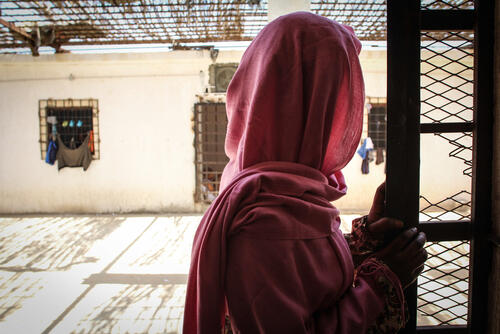
A woman in detention centre.
Her testimony: “We were abandoned at sea. People lost hope. Why did we let people die at sea? They have all the means to rescue us. We are all humans. If we try to go to Europe, it’s to have a better life. People will keep continuing taking journey by sea. There are people who are escaping war, others are escaping poverty; people should be rescued and later on each individual case is looked at. We are not in Libya to stay here, we want to go to Europe. We are not criminals”.
Libya

Open letter to the UN on the fate of refugees trapped in dangerous Libya

Open letter from MSF to Ghassan Salamé, Special Representative and Head of the UN Support Mission in Libya, on the situation of the refugees and migrants forcibly disembarked from the Nivin merchant ship and still at risk in Libya Open Letter - 10 Dec 2018
 
Majdal Anjar, Bekaa Valley, Lebanon. November 7, 2013.
Syrian refugees living on the grounds of a former prison now occupied by several Syrian refugee families on the outskirts of the village of Majdal Anjar, in Lebanon's Bekaa Valley.

(Photo by Moises Saman/MAGNUM)
Lebanon

MSF in Lebanon: Then and Now

Then and Now is the unfolding story of Médecins Sans Frontières (MSF) in Lebanon, first presented as a multimedia exhibition in Beirut on 10-13 December 2018 to commemorate the 42-year relationship between MSF and Lebanon Photo Story - 7 Dec 2018
Four mothers posing in a corridor of the Hospital in Bili. All four of them are staying in the hospital with their child, that's suffering from a severe case of malaria. Since the beginning of the project in 2016, the pediatric ward already treated more than 4.000 cases of complicated/severe form of malaria.
Médecins Sans Frontières (MSF)

Independent medical humanitarian assistance

We provide medical assistance to people affected by conflict, epidemics, disasters, or exclusion from healthcare. Our teams are made up of tens of thousands of health professionals, logistic and administrative staff - most of them hired locally. Our actions are guided by medical ethics and the principles of independence and impartiality. We are a non-profit, self-governed, member-based organisation.

Learn more