



Ebola disease in DRC: find out how we're responding
Learn more
1390 Results
 
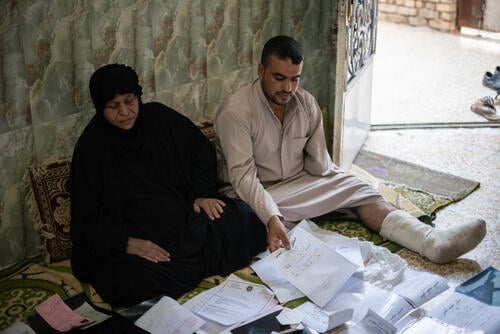
Hameeda and her son look at her medical files. She was diagnosed with tuberculosis 4 years ago, and since then had several treatment regimens, both injections and oral, and several relapses until she was cured with the new oral treatment for multidrug-resistant tuberculosis.
Al-Fathilia, Baghdad, Iraq.
---
Hamida's testimony:
---
My name is Hameeda, I am 65 years old and I am from Baghdad (Iraq). I am a mother of six daughters and three sons.

The first time I was diagnosed with tuberculosis (TB) was in 2015. At that time, we didn’t know what was wrong with me. I was coughing, had night-time fever and I wasn’t feeling well. My blood pressure and blood sugar were both high. When I went to seek medical advice I was told that I had had a light stroke, and I was given treatments to better control my hypertension and blood sugar as well as medications for the stroke. But the coughing and the night-time fever didn’t go away. 

I started noticing that I was coughing up sputum and my overall health was not improving. My son took me again to be seen by doctors, who then sent us to the National Tuberculosis Institute in Baghdad. There, I was diagnosed with TB. The medical team at the institute prescribed injections for me that made me tired and weak. 

When I first got the disease, the doctors told us that TB was an infectious disease and that I had to isolate from others. I stopped going out, visiting others or seeing anyone outside. I took my medications for about eight months, after which point the doctors told me that I was cured. However, since then, I have had three relapses. The last one was at the beginning of 2020. I was told that it was a drug-resistant form of the disease this time around and I was put on a new drug regimen which involved taking pills.

During my previous infections, I was treated with daily injectable medications, which were giving me many side effects. For example, my body was itching a lot and I had developed bruise marks on my skin. But since I started taking oral tablets, I feel better. The tablets still hurt my stomach, but they are much better and I have fewer side effects compared to the injections.

At the beginning of the treatment, I was very tired. I couldn’t walk or even move. My son was taking care of me and only with his help was I able to go to the National Tuberculosis Institute for check-ups. He is the only provider for the family, and it was a hard time for him too. Sometimes he would have to take me to private clinics for consultations for my other chronic conditions, which would also need medications that he had to buy, and they were not cheap. All of that prevented him from going to work and that in turn affected our livelihood. But now, after almost 18 months of taking medication, I’m thankful I have finished my treatment and got rid of the disease and its hardships. Now I am in a better health and I don’t need care from others.
Iraq

Tackling multidrug-resistant tuberculosis, one patient at a time

In Iraq, MSF has been working with the National Tuberculosis Institute to help cure patients with multidrug-resistant tuberculosis using an oral alternative to the painful daily injections that create severe side-effects. Project Update - 29 Sep 2021
 
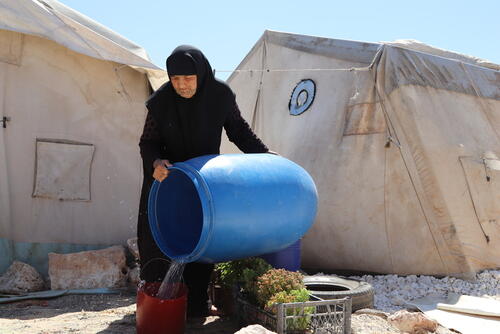
An old displaced woman filling a bucket with clean water provided by MSF in a camp in northwest Syria.
Syria

Northern Syria: Acute water crisis poses serious health risks

People are facing a desperate situation in northern Syria, as limited access to clean water has reached breaking point, creating health problems for millions of people displaced within the region. Project Update - 29 Sep 2021
 
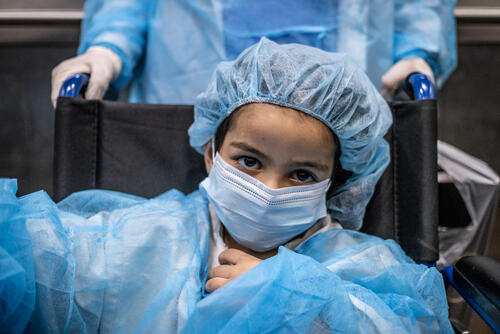
A 4-year-old Hala, Inside the MSF limb reconstruction unit at Al-Awda hospital, four-year-old Hala is taken to the operating theatre for her fifth surgery, since the car accident that crushed her foot on 14 July 2021.
Palestine

Treating child injuries in blockaded Gaza

Paediatric trauma care in Palestine: the story of four-year-old Hala's recovery at the Al-Awda hospital paediatric unit in northern Gaza. Photo Story - 22 Sep 2021
 
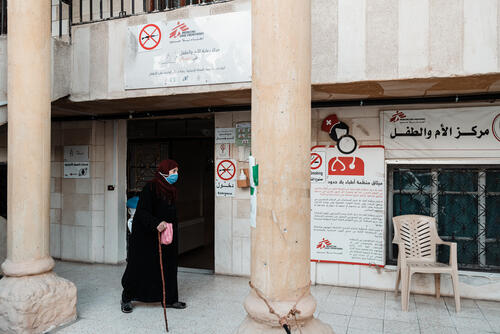
An old lady comes out of her consultation at the MSF's clinic in Arsal. 

MSF has been providing free primary healthcare to vulnerable communities in Arsal, in the north of Bekaa Valley, since 2012. MSF’s clinic in Arsal offers medical care for patients with non-communicable chronic diseases (NCD), acute paediatric consultations, sexual and reproductive health services and mental health support.
Lebanon

Healthcare system in Lebanon disintegrates as political vacuum persists

As the situation in Lebanon deteriorates and the economic crisis worsens, the healthcare system has been pushed to its limit, leaving the most vulnerable without access to essential treatment. Project Update - 1 Sep 2021
 
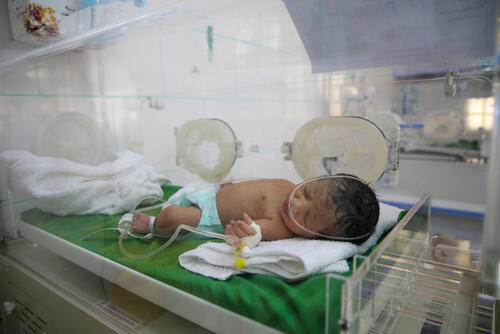
Newborn daughter of Aiesha*, admitted to the special care unit for critical care for respiratory distress at Al-Jamhouri hospital supported by MSF in Taiz City, Yemen.

*name of the patient changed upon her request.
Yemen

Seeking healthcare in Taiz, a city split by a frontline

More than six years of war has split the city of Taiz in two, with a frontline dividing the city from people who need access to healthcare - something often inaccessible and unaffordable in Yemen. Project Update - 24 Aug 2021
 
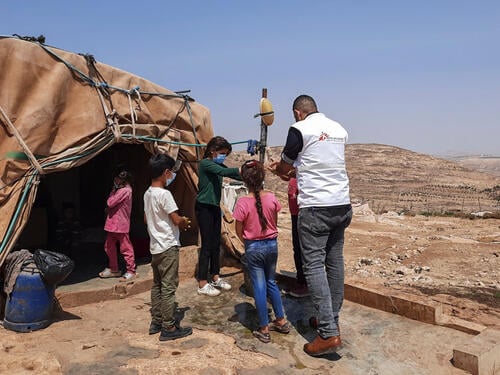
Nader Owidat (Counselor Educator) is conducting a COVID-19 health promotion activity with children in Masafer Yatta, a collection of 19 Palestinian hamlets in the Hebron Governorate (West Bank).
Palestine

“We are all afraid”: Settler attacks against Palestinians in Hebron on the rise

As Palestinians in Hebron have witnessed an increase in attacks by settlers since the beginning of the year, MSF continues to provide psychological treatment to people suffering from the impacts of living under occupation. Project Update - 16 Aug 2021
 
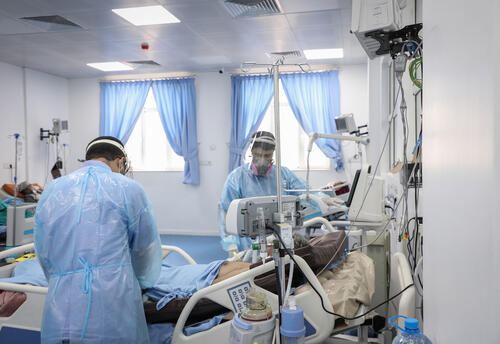
Health workers in the intensive care unit (ICU) of Al Jumhouri isolation centre
Yemen

Treating COVID-19 in Yemen amongst fear, stigma and misinformation

In Yemen, we are responding to COVID-19 through treatment centres and health promotion but there are many obstacles that make treating the disease in such a complex context particularly challenging. Project Update - 11 Aug 2021
 
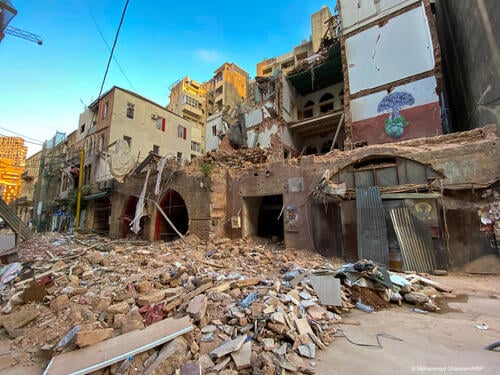
The Gemmayze area of Beirut, once packed with bars, cafes, galleries and other businesses, was heavily damaged by the blast that annihilated the nearby port area on August 4.
Lebanon

Beirut one year after the blast: Economic crisis and COVID-19 create the perfect storm

One year after the blast in Beirut ripped apart the city and left a country already in crisis on its knees, people continue to struggle with the added pressure of COVID-19, a lack of healthcare and an economic crisis. Project Update - 3 Aug 2021
 
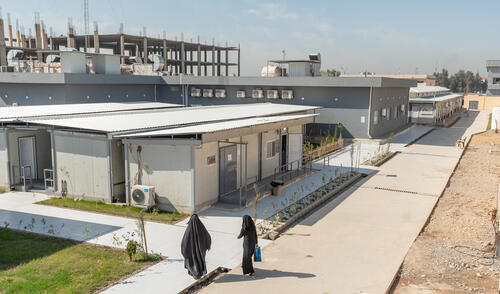
MSF’s al-Wahda post-operative hospital in East Mosul
Iraq

Dire needs for healthcare remain years after Battle of Mosul

Years after the battle against the Islamic State group ended in Mosul, Iraq, the city’s health system has not yet recovered - in response MSF has been providing comprehensive post-operative care to patients from the city and surrounding areas.  Project Update - 29 Jul 2021
 
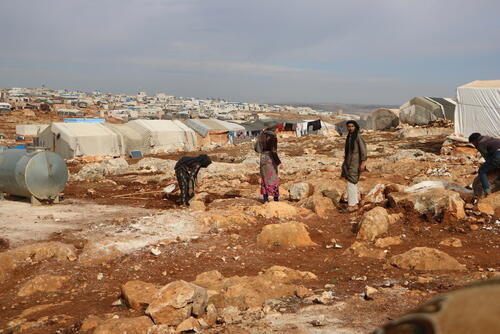
As winter approaches in northwest Syria, the already harsh living conditions of more than two million displaced people are becoming even more difficult to deal with. People living in camps across the region face the prospect of leaking tents, mud-filled streets and freezing temperatures. Whenever it rains, the roads in the camp become rivers of mud, making it difficult for people to leave their tents, either on foot or by motorbike, to buy groceries, get to work or see a doctor. 
Teams from Médecins Sans Frontières have started distributing ‘winter kits’ of warm clothes, tarpaulins, mattresses and blankets to around 14,500 families living in more than 70 camps for displaced people across northwest Syria, to help improve their living conditions over the coming winter. These distributions are accompanied by health promotion awareness sessions on winter diseases and ways to prevent being sick in settings such as this.
Syria

Millions of Syrians will lose access to vital aid if northwest border closes

The potential closure of the northwest Syrian border, Bab Al-Hawa, could be extremely harmful to the millions of people reliant on aid there. Project Update - 8 Jul 2021
Four mothers posing in a corridor of the Hospital in Bili. All four of them are staying in the hospital with their child, that's suffering from a severe case of malaria. Since the beginning of the project in 2016, the pediatric ward already treated more than 4.000 cases of complicated/severe form of malaria.
Médecins Sans Frontières (MSF)

Independent medical humanitarian assistance

We provide medical assistance to people affected by conflict, epidemics, disasters, or exclusion from healthcare. Our teams are made up of tens of thousands of health professionals, logistic and administrative staff - most of them hired locally. Our actions are guided by medical ethics and the principles of independence and impartiality. We are a non-profit, self-governed, member-based organisation.

Learn more