Ebola disease in DRC: find out how we're responding
Learn more
1390 Results
 
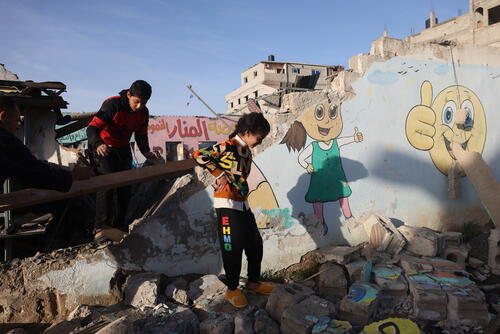
Damages in Gaza
Gaza-Israel war

Gaza: MSF condemns strike on shelter that killed staff member’s five-year-old daughter

MSF condemns in the strongest possible terms the strike on an MSF shelter in Gaza which has led to the death of the five-year-old daughter of an MSF staff member. Press Release - 9 Jan 2024
 
Aliyah*, a Palestinian woman holds tight her daughter in her arms. She lived for 25 years in the old city of Hebron, one of the most restricted areas within the West Bank, Occupied Palestinian Territories. 

“Since I became a mother, my anxiety level has only increased”

Aliyah, 25, was born and grew up in the old city of Hebron. In 2015, the Israeli army deemed her neighbourhood as a “closed military zone”. Since then, only registered residents have been allowed to enter the area. When she got married, she left and is now living outside the area while the rest of her family remained there. 

“I cannot compare the level of intensity of today with before [the war]. It has continuously gotten worse, but October 7th marked a turning point. The first weeks following that date were terrible. Restrictions of movements have increased and gotten worse. The level of violence increased as if the [Israeli] settlers and the army had no more limitations. Hence, following October 7th, people were thinking that the same situation of Gaza will come soon to the West Bank” says Aliyah. 

“I am pregnant and for example, before the war, I could negotiate at the [Israeli] checkpoint to not go through the x-ray machine for the safety of my baby. This morning, they asked me to pass through the machine three times and they would not listen about my condition” says Aliyah. “Women here need to adapt their clothing to pass the checkpoints, cause if there is any metallic thing in the bra stays or in the jean pocket, you will ring and go through a long screening,” she says. 

Tel Rumeida, Hebron’s old city area that Aliyah mentions, is one of the most restricted areas within the West Bank. In the past months, Israeli forces allowed movements in and out only for two days an hour in for a few days a week. At times, Palestinians are not permitted to go out of their homes/leave the area for four days at a time - not even to bring out the trash or open their windows. “At the beginning of the war, most of the essential goods were not accessible. Today, they only have a few hours a day to go to the shop” says Aliyah. 

“People live in constant fear. [Israeli] settlers and soldiers will come at night, knock, and yell at their doors. This has always happened but since the war, these intrusions are almost daily. Can you imagine the level of stress and insecurity this creates? Children are terrified and suffer from mental health symptoms such as bedwetting, persistent nightmares, behavioural changes, and isolation” describes Aaliyah. “I am a mom, and soon will have a second child. The moment I became a mother, my perspectives changed, and my anxiety level only continued to increase. It breaks my heart to raise children in this environment. You know what my daughter told me the other day? ‘Mom I am so scared’ – and she is only two years old” concludes Aliyah.
Palestine

Palestinians in Hebron live in constant fear as violence surges

Increased violence and harassment by Israeli settlers and soldiers against Palestinians in Hebron have created an environment filled with intimidation, forced evictions and restrictions of movements. Project Update - 3 Jan 2024
 
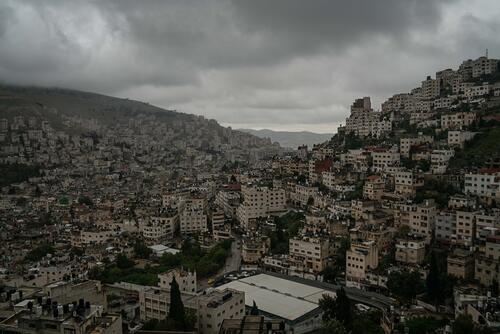
A general view of the city of Nablus on April 12, 2023.
Palestine

Attacks on Palestinians soar in the West Bank

Over 6,000 Palestinians from Gaza who used to work in Israel have become refugees in the West Bank, where violence has soared against Palestinians since the Israel-Gaza war erupted on 7 October. Voices from the Field - 29 Dec 2023
 
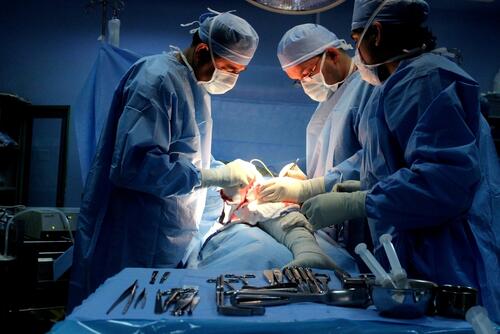
Dr Rasheed Fakhri (in the middle) and a MSF surgical team performing surgery on a patient suffering serious leg injuries in the MSF-run reconstructive surgery hospital in Amman.
Iraq

Rebuilding hope: From war-torn Baghdad to healing lives in Amman

Dr Rasheed Fakhri recounts his journey from fleeing war-torn Iraq to rebuilding lives at the MSF Reconstructive Surgery Hospital in Amman, Jordan. Project Update - 27 Dec 2023
 
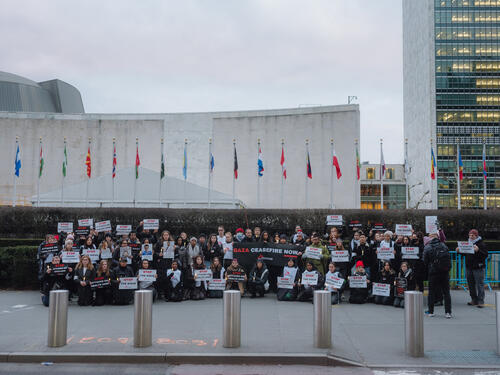
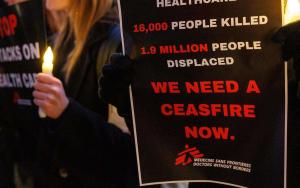
Doctors Without Borders/Médecins Sans Frontières (MSF) USA staff gather in front of UN headquarters in New York to honor colleagues who've been killed during the war in Gaza and to call for an immediate and sustained ceasefire.
Gaza-Israel war

UN Security Council resolution on Gaza crisis fails to address urgent needs

Today’s Security Council resolution falls painfully short of what is required to address the crisis in Gaza: An immediate and sustained ceasefire. Statement - 22 Dec 2023
 
Nasser hospital
Gaza-Israel war

No safe place in Gaza as people are crushed by continuous bombing

After more than two months of war, Gazans are now cornered in the south of the Strip, where Israeli strikes on what was supposed to be a safe zone prove that nowhere is safe. Project Update - 19 Dec 2023
 
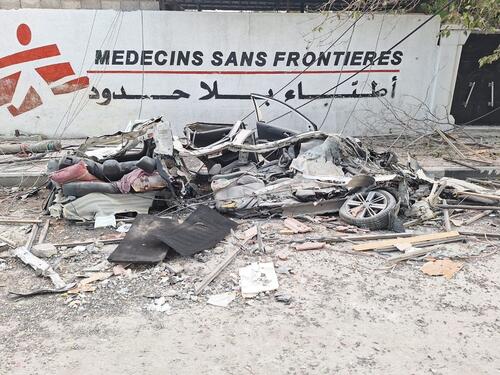
On 20 November, five MSF vehicles parked in front of our clinic in Gaza city were destroyed by the intervention of the Israeli forces. The clinic was also damaged as a result and part of the building was engulfed by fire for a few hours. The cars and the clinic were clearly identified with the MSF logo. This happened while 21 people, including an MSF staff and his family members, were sheltered in the clinic and more than 50 others were in the guesthouse across the street: luckily, they survived unscathed. The cars that were destroyed were the ones used in the aborted evacuation of our staff and their relatives on 18 November, resulting in the killing of two people. Some of the staff sheltering in the MSF premises that day were witnesses to the incident.
Gaza-Israel war

Inside Gaza: Staying alive is only a matter of luck

Ricardo Martinez, MSF Logistics coordinator in Gaza, describes the horrific situation on the ground across the Strip, where staying alive from one day to anther is simply a matter of chance. Interview - 18 Dec 2023
 
On 28 November 2023, MSF's International president, Dr Christos Christou visited Jenin refugee camp and MSF-supported Khalil Suleiman Hospital.
Palestine

Staggering increase in Israeli attacks against civilians and healthcare in Jenin

In the past months, there has been a shocking increase in Israeli attacks against civilians and healthcare in Jenin, the West Bank. It must stop now. Project Update - 15 Dec 2023
 
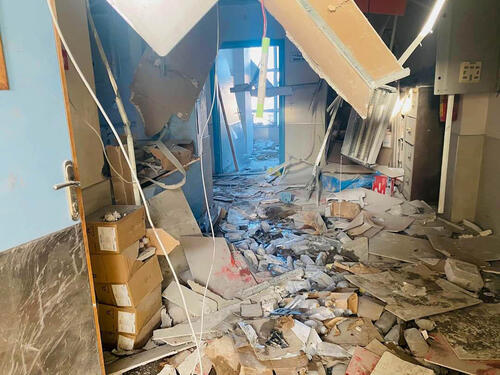
Photos from the Limb Reconstructive Surgery unit of Al-Awda hospital, in northern Gaza, following the strike on 21 November 2023 that killed three doctors, two of them are MSF staff, and injured many others. MSF first started working in Al-Awda hospital since 2018, providing reconstructive surgery for adults and trauma surgery for children.
Gaza-Israel war

Gaza: The Security Council must end its complicity in the ongoing carnage

Ahead of a UN Security Council vote, we urge the members of the Council to vote on an immediate and sustained ceasefire in Gaza to spare more bloodshed. Press Release - 8 Dec 2023
 
MSF mobilisation
Gaza-Israel war

MSF calls US veto of Gaza ceasefire resolution “a vote against humanity”

On December 8, the United States vetoed a UN Security Council resolution demanding an immediate ceasefire in Gaza. The US vote is a vote against humanity. Statement - 8 Dec 2023
Four mothers posing in a corridor of the Hospital in Bili. All four of them are staying in the hospital with their child, that's suffering from a severe case of malaria. Since the beginning of the project in 2016, the pediatric ward already treated more than 4.000 cases of complicated/severe form of malaria.
Médecins Sans Frontières (MSF)

Independent medical humanitarian assistance

We provide medical assistance to people affected by conflict, epidemics, disasters, or exclusion from healthcare. Our teams are made up of tens of thousands of health professionals, logistic and administrative staff - most of them hired locally. Our actions are guided by medical ethics and the principles of independence and impartiality. We are a non-profit, self-governed, member-based organisation.

Learn more