



Ebola disease in DRC: find out how we're responding
Learn more
1390 Results
 
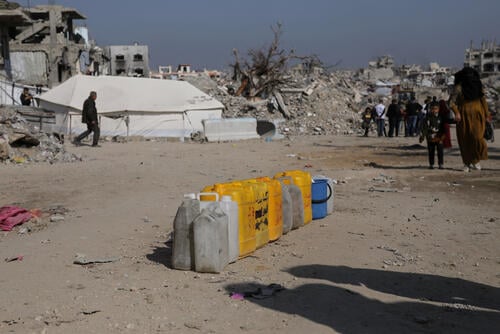
Palestinian people waiting for the water truck to arrive to Jabalya city, north of Gaza Strip, Palestine.
Gaza-Israel war

Water as a weapon: Israel’s destruction and deprivation of water and sanitation in Gaza

In this latest report, MSF documents how the Israeli authorities’ repeated weaponisation of water in Gaza, Palestine, are not isolated acts, but part of a recurrent, systematic and cumulative pattern. Report - 28 Apr 2026
 
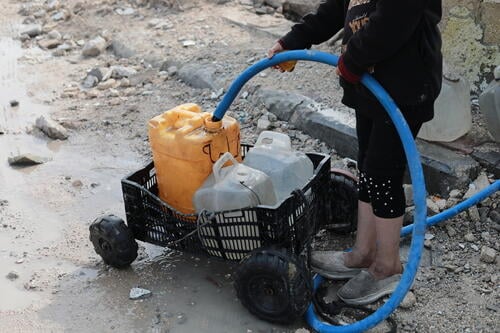
Palestinian child is collecting water in Beit Lahia city, north of Gaza strip, Palestine.
Gaza-Israel war

Israel uses water as a weapon of collective punishment against Palestinians in Gaza

MSF's latest report documents how Israeli authorities have used access to water and sanitation services as a weapon to collectively punish people in Gaza, Palestine. Press Release - 28 Apr 2026
 
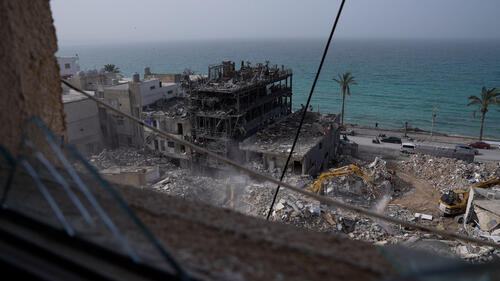
View of the seaside of Sour, southern Lebanon, and the destruction caused by the mass bombings during the 46-day period of Israel’s attacks in Lebanon.
Lebanon

Southern Lebanon after 46 days under continuous attacks by Israeli forces

In Sour, a city in southern Lebanon, MSF teams are working to bring care to families who lived under bombardment for almost two months. Project Update - 24 Apr 2026
 
The MSF hospital in Agok is the only facility providing secondary care in the entire Abyei region of South Sudan. This structure deals with emergencies, surgeries, treatments of HIV, tuberculosis, chronic diseases as well as neglected diseases, such as snake bites, a real scourge in the region. In 2019, in order to improve the quality of care, a radiology room was set up and the pharmacy was extended. A lack of specialized structures in the surrounding states forces some patients to travel very long distances to get to Agok hospital, some have to walk for up to 10 hours. This phenomenon illustrates the need for a comprehensive hospital in a country where health care is almost non-existent
Iran

Iran: Despite ceasefire, access to essential medical care remains fragile

MSF teams are working in South Tehran, Mashhad, and Kerman province in Iran, responding to people's growing medical needs. Project Update - 23 Apr 2026
 
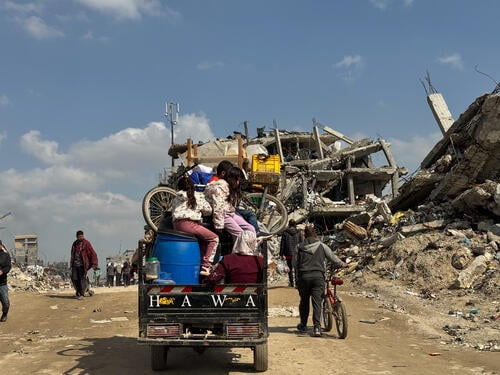
Displaced Palestinian family riding a tuktuk; coming back to settle in Beit Lahia city, north of Gaza strip.
Gaza-Israel war

Gaza, inside the war

This interactive feature compiles information and testimonies collected by Médecins Sans Frontières teams between 7 October 2023 and 1 January 2026, during the genocidal war waged by the Israeli army against the people of Gaza following the deadly attacks carried out by Hamas in Israel. MSF - 20 Apr 2026
 
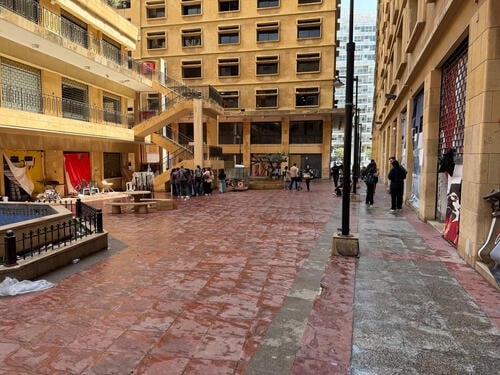
Following the announcement of a temporary ceasefire, the humanitarian and medical needs of hundreds of thousands of people in Lebanon remain overwhelming. In southern Beirut, people are moving back and forth between their shelters and homes, collecting what they can and preparing to return to the sites of displacement if the situation worsens. People, particularly in southern Beirut and south Lebanon, have lost their homes, livelihoods, and loved ones, and over a million have been forcibly displaced due to Israel’s continuous attacks.
While MSF teams across Lebanon are adapting their response and assessing needs as people continue to move across the country, we continue to call for an urgent scale-up of humanitarian aid and unhindered access of aid to people in need across the country.
Lebanon

Lebanon: Humanitarian scale-up urgently needed after almost two months of devastation

MSF teams in Lebanon are adapting our response across the country after a temporary ceasefire was announced between Israel and Lebanon. Statement - 17 Apr 2026
 
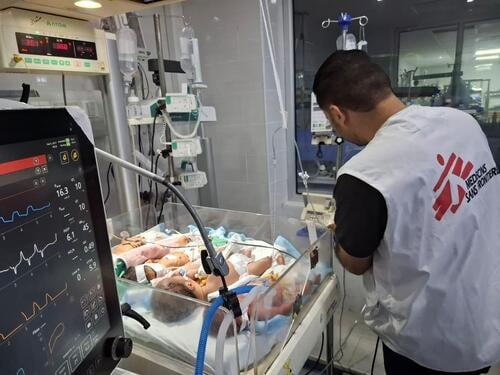
Multiple babies share one incubator in the neonatal intensive care unit of Al Helou hospital north Gaza because of a lack of incubators. Having babies sharing one incubator highly increases the chances of infection. The immune system of newborns, especially premature ones, is not yet developed.
Gaza-Israel war

Addressing frequently asked questions and allegations about MSF’s work in Gaza

MSF provides answers to frequently asked questions (FAQs) about MSF work in Gaza, Palestine, and addresses allegations. Project Update - 17 Apr 2026
 
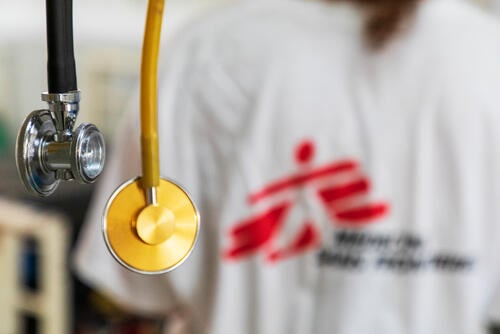
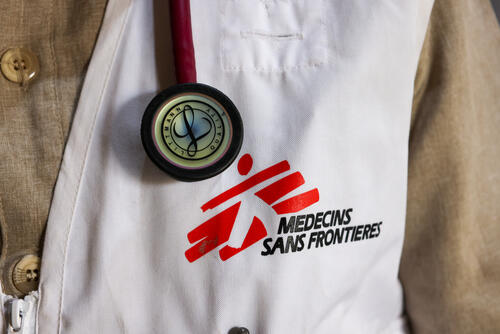
MSF doctor Daniel Garang with his stethoscope at Aweil project base.
Gaza-Israel war

MSF resumes core activities at Nasser hospital

MSF has resumed core medical activities at Nasser hospital in Gaza, Palestine. Interview - 17 Apr 2026
 
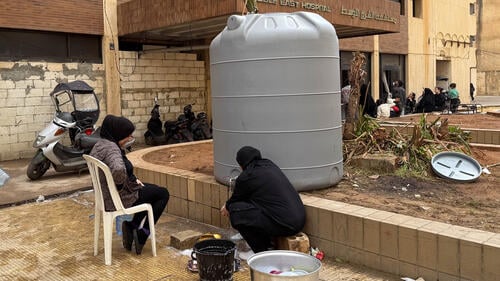
These displaced women have carried their dishes down from the 4th floor of the building they are taking shelter in to wash them near a water tank MSF fills with clean water. Meanwhile, many others, elderly and living with disabilities, cannot do so safely. Soon, these trips, often multiple a day, will no longer be needed, as MSF is rehabilitating the water system and installing communal washing points on each floor.
Lebanon

Bringing clean water and sanitation services to forcibly displaced families in Lebanon

MSF is supporting families who have been forcibly displaced by Israeli bombardments and evacuation orders in Lebanon. After visiting a shelter in Beirut, Maryam Srour reflects on the work to bring clean water and sanitation services to unfit buildings. Voices from the Field - 16 Apr 2026
 
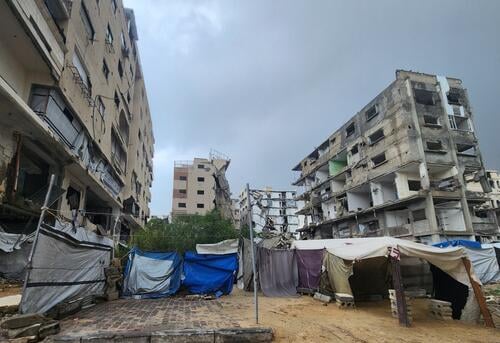
IDPs informal shelter in Gaza City
Gaza-Israel war

"This is not a ceasefire": Life in Gaza continues to be suffocated six months on

Six months since a fragile and ineffective ceasefire was implemented in Gaza, Palestine, Israeli forces continue their violent attacks and expand their military control of the Strip. Press Release - 10 Apr 2026
Four mothers posing in a corridor of the Hospital in Bili. All four of them are staying in the hospital with their child, that's suffering from a severe case of malaria. Since the beginning of the project in 2016, the pediatric ward already treated more than 4.000 cases of complicated/severe form of malaria.
Médecins Sans Frontières (MSF)

Independent medical humanitarian assistance

We provide medical assistance to people affected by conflict, epidemics, disasters, or exclusion from healthcare. Our teams are made up of tens of thousands of health professionals, logistic and administrative staff - most of them hired locally. Our actions are guided by medical ethics and the principles of independence and impartiality. We are a non-profit, self-governed, member-based organisation.

Learn more