



Ebola disease in DRC: find out how we're responding
Learn more
1758 Results
 
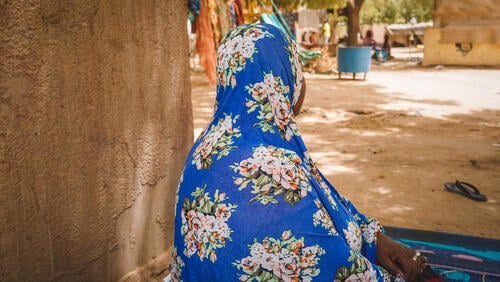
“I come from the village of Mandjebougou. I'm a trader, I'm married and I have seven children. 
The day before I fled, two of my brothers were kidnapped by armed men. They suspected my brothers of cooperating with the army. After freeing them, they announced that they needed 25 men. So all the young people in the village decided to flee.  
I also fled Mandjebougou because I was wanted. I sell couscous. One day, they came to buy some from me, but I didn't want to sell it to them. In the past, they had broken my son's phone and I asked them to fix it. They replied: ‘If you dare to ask us to compensate your son, it's only because you're free’. I think that's why they were looking for me.
One Tuesday morning in April, on my way back from the shop, I was alerted by a neighbour's phone call. I went out to the west side of the village. I reached the river and got into a pirogue. When it started, the armed men were running towards us. They asked the pirogue driver to stop, but he continued on to Niafounke. When we got to Niafounke, the piroguier told someone to take me to the site of the displaced people. I fled with what I was carrying that day.  
Today, I live at the IDP site with two of my children. I know they're still looking for me. Today, I have no source of income. I live in fear, far from my other children and my husband. I struggle to eat and my sleep is always troubled.”
Refugees, IDPs and people on the move

Violent hostilities between armed men empty villages in northern Mali

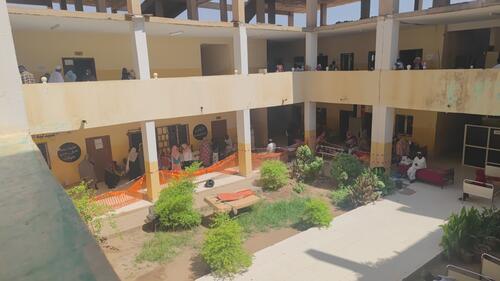
MSF is providing water and healthcare to internally displaced people arriving in the town of Niafounké from the Gourma region, Northern Mali. Project Update - 2 Aug 2024
 
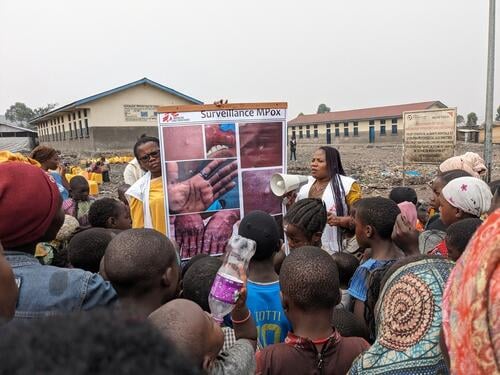
The Mpox epidemic is increasingly affecting people displaced by armed conflict in Goma, North Kivu. MSF has deployed its teams of health promoters (HP) to raise awareness of the behaviour to adopt to avoid contamination. Communities are urged to bring any suspected cases to the health centre as a matter of urgency, and to avoid discriminating against contaminated people.
Democratic Republic of Congo

Five questions about the mpox outbreak in DRC

Cases of mpox are on the rise in Democratic Republic of Congo, where MSF teams are responding to the outbreak. Interview - 30 Jul 2024
 
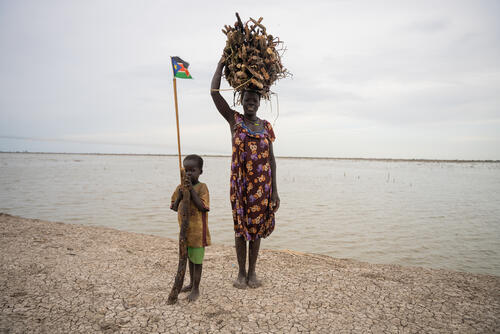
Roda Nefazal Mnot, 45 year-old carrying the wood she collected from the floodwaters for firewood. Her 5-year-old son follows her everywhere. 

Internally Displaced Camp population (IPD) camp, Bentiu, Unity State, Rubkona County, South Sudan.
South Sudan

Women and children at the forefront of climate change in South Sudan

Bentiu displaced people's camp in South Sudan hosts over 100,000 people. Among them, many single mothers are struggling to provide a better future for their children despite the climate shocks expected to become increasingly severe. Project Update - 25 Jul 2024
 
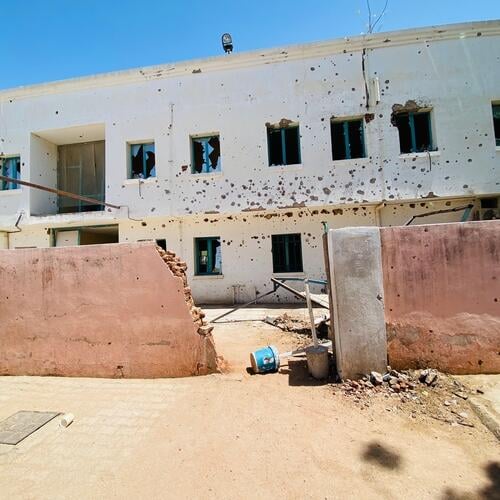
The destruction that followed the storming and looting of an MSF-supported health facility in Sudan.
Conflict in Sudan

A war on people: the human cost of conflict and violence in Sudan

Drawing on medical and operational data collected from April 2023 to May 2024, this report highlights the patterns of violence observed by our teams in Sudan. Report - 22 Jul 2024
 
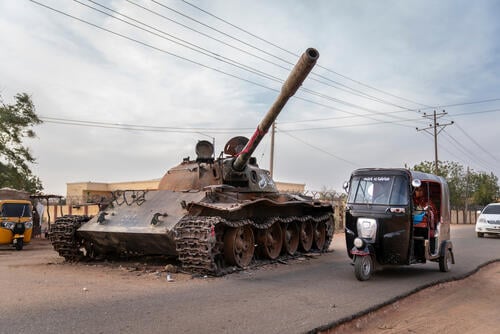
A rickshaw taxi goes around a destroyed tank belonging to the Sudanese Armed Forces, a remnant of the violent clashes that took place in El Geneina in 2023. West Darfur, Sudan. February 20, 2024. Copyright Diana Zeyneb Alhindawi
Conflict in Sudan

MSF report reveals catastrophic toll of ‘a war on people’ in Sudan

The war in Sudan has led to communities facing indiscriminate violence, amid persistent attacks on health workers and medical facilities, an MSF report finds. Press Release - 22 Jul 2024
 
Elvis Badaso, a nurse, during consultation with a patient at Garsen high school medical outpost
Kenya

MSF emergency response to flooding in Tana River County

In late March 2024, severe flooding forced more than 43,000 people from their homes in Tana River County, Kenya. In response, MSF launched an emergency response in Garsen town. Project Update - 8 Jul 2024
 
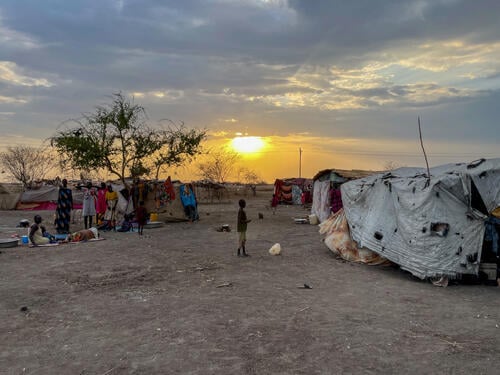
View of the precarious shelters at sunset in the Transit Centre.
South Sudan

War in Sudan exacerbates humanitarian needs in neighbouring South Sudan

South Sudan is one of the most affected countries by the war in Sudan, with almost 680,000 crossing as refugees. But despite the magnitude of this crisis, humanitarian assistance remains critically low. Press Release - 18 Jun 2024
 
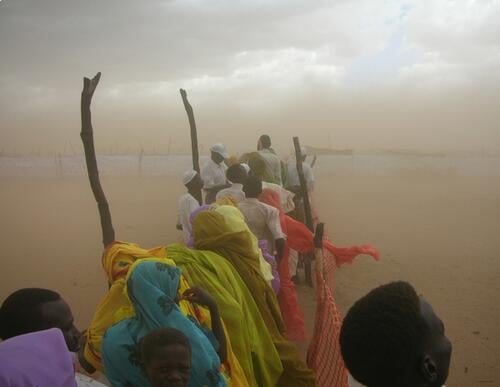
Darfur, Kalma Camp, 2007. During the rainy season there are frequent sand storms (haboob). On occasion, the wall of sand is so thick; it is dark despite of the time of day. However, the weather did not interrupt the distribution line in this photograph.
MSF Speaking Out

MSF and Darfur 2003-2009

The “MSF and Darfur 2003-2009” case study describes the constraints, questions and dilemmas faced by MSF with regards to speaking out during extreme violence against the population in the Darfur region, Sudan. - 18 Jun 2024
 
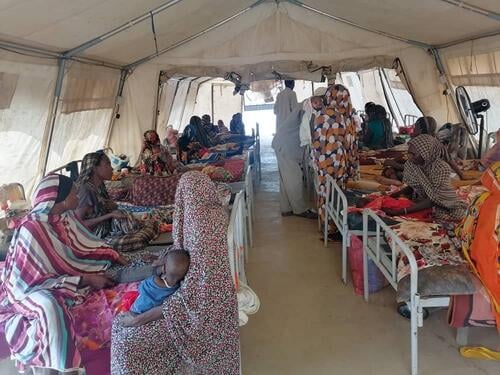
ITFC in MSF Hospital in Zamzam.
Conflict in Sudan

One by one, hospitals are damaged and closed in El Fasher as fighting rages

In the ongoing conflict in Sudan, El Fasher in North Darfur, the intense fighting has shut down hospitals, leaving access to and provision of care difficult. Press Release - 14 Jun 2024
 
Views of El Fasher Hospital in July 2023.
Sudan

Nowhere safe from violent fighting in El Fasher as hospitals are repeatedly hit

Hospitals have been repeatedly hit as violent fighting engulfs El Fasher, Sudan, leaving nowhere safe in the city. MSF calls for protection of civilians, health workers and health structures. Press Release - 28 May 2024
Four mothers posing in a corridor of the Hospital in Bili. All four of them are staying in the hospital with their child, that's suffering from a severe case of malaria. Since the beginning of the project in 2016, the pediatric ward already treated more than 4.000 cases of complicated/severe form of malaria.
Médecins Sans Frontières (MSF)

Independent medical humanitarian assistance

We provide medical assistance to people affected by conflict, epidemics, disasters, or exclusion from healthcare. Our teams are made up of tens of thousands of health professionals, logistic and administrative staff - most of them hired locally. Our actions are guided by medical ethics and the principles of independence and impartiality. We are a non-profit, self-governed, member-based organisation.

Learn more