MSF is providing water and healthcare to internally displaced people arriving in the town of Niafounké from the Gourma region, Northern Mali. Thousands sought safety after tensions between non-state armed groups and the Malian army.
At the end of April, around 2,000 internally displaced people arrived in the town of Niafounké from the Gourma region, an area of northern Mali.
Men, women and children fled due to tensions between non-state armed groups and the Malian army. Following their arrival, MSF set up a health post and distributed kits containing various essential items.
Thousands forced from home
By June, about 4,000 people had settled in Niafounké, making up 613 households. They had fled the villages of Dagodji, Fourou, Goundamtouskeli and Mandjebougou under pressure from non-state armed groups.
Some were trying to avoid being recruited, others were accused of being accomplices of parties to the conflict, and others were unable to escape in time.
Those who left did not have time to take any belongings with them; many left not only their families, but also their farms and animals.
“They came to recruit young people, and I defied them by saying that I refused to join. From then on, they wanted to eliminate me.”23-year-old man, forced to flee Dagodji
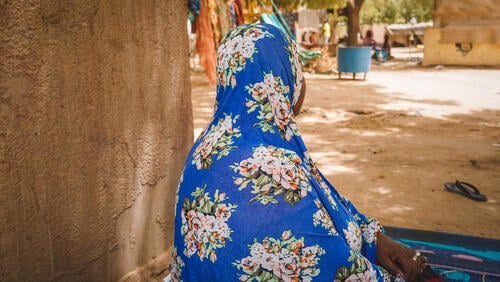
These traumatic experiences have caused major psychological problems for the people displaced. A young man aged 23 from the village of Dagodji explains.
“I'm a farmer. I fled my village under threat from armed men. They came to recruit young people, and I defied them by saying that I refused to join. From then on, they wanted to eliminate me."
"They pulled a gun on me. I got scared and dived into the water to swim to Niafounké. They fired, but fortunately I wasn't shot.”
Although the internally displaced people have found refuge in the urban town of Niafounké, some continue to live in fear and feel that they are still being pursued.
Dependent on agriculture for their livelihoods, these families no longer have enough to live on. The abandonment of their fields and animals is a major loss.
They find themselves alone, with no one to look after them. They also have no way of repaying the loans they have taken out, particularly for work in the fields.
Diseases and outbreaks increasing
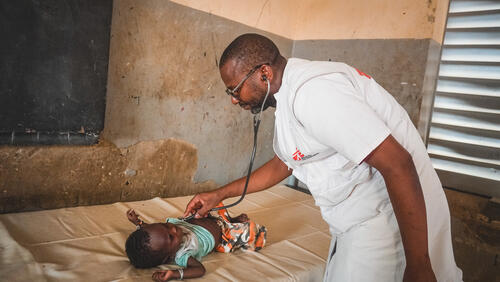
The displaced families in Niafounké, now live in crammed classrooms. Difficult living conditions such as overcrowding and lack of hygiene are factors that encourage the outbreak of certain diseases.
“We have increasing cases of respiratory infections (out of 618 people treated, 51.6% are children under 5), infectious skin diseases and cases of diarrhoea (out of 158 people treated, 87 were children under 5),” says Dr Baricomo Karembé, a clinical doctor in Niafounké.
“There are also cases of malnutrition, with 66% of the children screened in our consultations within the displacement camps being acutely malnourished.
Many of the displaced people also need mental health assistance, as they are confronted with the loss of their loved ones and their property.”
MSF response
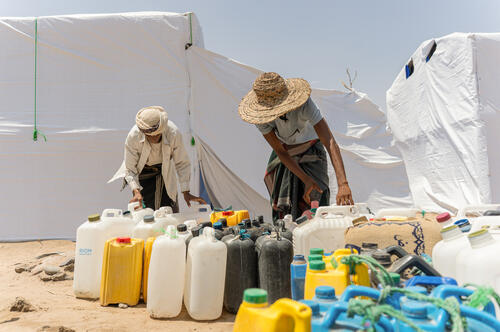
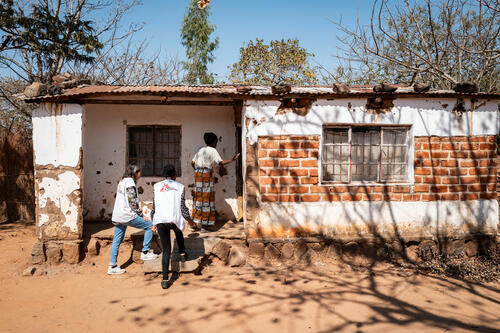
As soon as people arrived in Niafounké in April, MSF set up a health post to provide free primary healthcare, installed water points and provided 600 kits of non-food items.
Of the 4,000 residents, our teams' assessment shows that between April and June 2024, 1,202 women received care, including 96 prenatal consultations and 15 deliveries.
While MSF provides access to drinking water and healthcare, other needs remain unmet. With the start of the new school year just around the corner and families residing within classrooms, it is important to find a suitable site to provide lessons.
Mental health assistance is also urgently needed. MSF is encouraging other local and international humanitarian organisations to step up their support for these recently displaced people.