



Ebola disease in DRC: find out how we're responding
Learn more
1758 Results
 
msf-placeholder
Ebola and haemorrhagic fevers

crisis update - 17 July 2015

Though Ebola has faded from the news headlines, the epidemic in West Africa continues to claim lives today. Around 30 people become infected each week in Sierra Leone and Guinea – a number that would be considered a major disaster under normal circumstances – and the outbreak has recently reemerged in Liberia. Crisis Update - 17 Jul 2015
 
msf-placeholder
Ebola and haemorrhagic fevers

“We must finish the job”

“On Ebola, we went from global indifference, to global fear, to global response and now to global fatigue. We must finish the job.” said MSF International President Dr. Joanne Liu. “Going from hundreds of cases to 30 per week took considerable time and massive resources, yet getting from 30 to zero requires the most meticulous, difficult work of all.” Crisis Update - 17 Jul 2015
 
Mobile clinic in Bianga (CAR)
Central African Republic

Emergency team finishes 3 month intervention in Kouango after performing almost 1,500 consultations

Following a three-month presence in Kouango in the south of the country, Médecins Sans Frontières (MSF) has now ended its emergency intervention for displaced people in the area. During that time, the MSF emergency team carried out more than 1,100 medical examinations in its mobile clinics and cared for 362 patients in Kouango hospital. Project Update - 14 Jul 2015
 
msf-placeholder
Niger

critical situation in Diffa as hunger gap and malaria season approach

The already fragile condition of the population in Diffa has recently been aggravated by the escalation of the on-going armed conflict in southern Niger. The area bordering north Nigeria is facing new waves of displaced people and refugees escaping the violence raging around Lake Chad, especially since last February when the conflict spread to Niger. Living conditions are critical, with the displaced population having little access to healthcare and safe water. Project Update - 14 Jul 2015
 
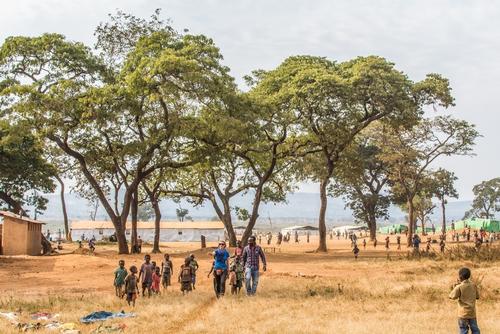
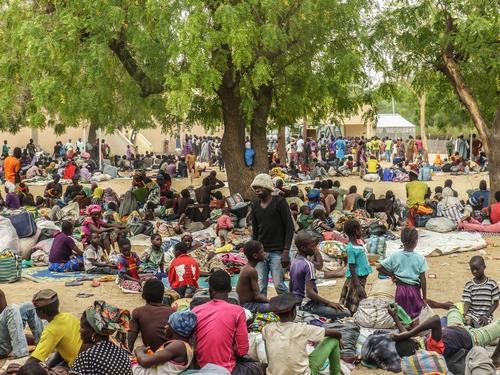
A general view of the  Nyaragusu refugee camp in Tanzania.

MSF began activities in the camp in Nyarugusu camp in Tanzania in mid-May in response to a mass influx of thousands of refugees from Burundi, fleeing political unrest. The camp, in existence for 19 years and originally home to 64,000 Congolese refugees, is now stretched to capacity. Since the latest influx from Burundi, the camp’s population has swelled to 130,000 and is growing every day.  Refugees are arriving to overcrowded conditions, and face a lack of shelter and water as well as poor sanitation.
Tanzania

Services in Nyarugusu refugee camp ‘stretched beyond their limits’

"Now, as organisations are stretched beyond their limits as they try to cope with the increase of people arriving on a daily basis, this vulnerable population is more at risk. Reduced access to water, sanitation, shelter and healthcare puts them at a high risk of communicable and preventable diseases. Action needs to happen now, before the situation deteriorates even further.” Voices from the Field - 8 Jul 2015
 
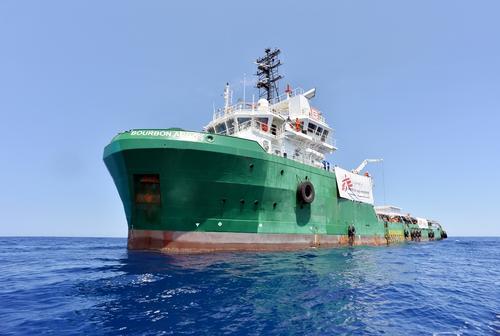
The Bourbon Argos at sea.
Mediterranean migration

Testimonies from the Bourbon Argos

Testimonies from the Bourbon Argos, the MSF search-and-rescue ship. Voices from the Field - 7 Jul 2015
 
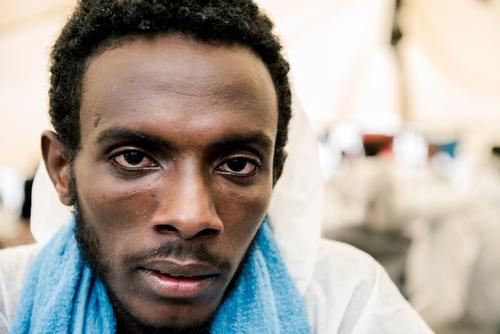
Not wanting to worry his family, 20-year-old Fresghy left Eritrea without telling anyone. More than a year later he found himself imprisoned in Libya. His only chance of release was if his relatives could raise the money to pay off his captors. 

“I migrated from my country because there are too many problems. My family has no work and no salary – things are impossible. The only solution was to leave. I decided to do it by myself, without telling anybody. 

When I reached a refugee camp in Ethiopia, I called my relatives and they told my parents where I was and not to worry about me. This was 18 months ago. 

I spent two months in Ethiopia before heading to Sudan. I decided to work in Khartoum so I could send money to my family. I spent more than a year there. Sudan is not a peaceful nation, but there is the chance of work sometimes. 

There are a lot of Eritreans in Khartoum, especially from poor families. They know that in order to go to Libya and cross the Mediterranean Sea, they need money, so they stop in Khartoum to work. They know that if you go to Libya without money you will probably die. 

I didn’t want to live in Khartoum because it is not possible to save money there. All you earn goes into rent and food. I couldn’t support my family from there. 

So I went to Libya. I didn’t tell my parents I was going because they would have opposed me. 

We went from Sudan to Libya in small containers, open at the back. The people were compressed in these containers, 30 to 40 people in each one. Many people fell off, but they didn’t get any help. They were left to die in the desert. Nobody can help you because no one knows where you are. Only the driver knows, but he says, “Leave him. Those who fall down must be left behind”. 

I called my family when I was in Libya and asked my relatives if they could help me pay for the voyage to Europe. I had to do that because I was taken by Libyan people. They robbed me and I had no choice but to call my relatives. 

People in Libya are unkind. They argue all the time and they animalise people. They put me in a closed compound. It was very hot. There was no air supply, no facilities, and if you were sick, nobody gave you medicine because nobody cared about you. They care only about money, not about the life of the man. 

Many women who were with us were raped. 

When we called our relatives on the telephone, we told them what Libya was like and asked them to please hurry up getting the money, otherwise they would kill us. Libyans want to scare us, and we automatically scare our parents. 

For rich ones there is no problem. But for ones like me and my parents, it takes many months to gather the money. 

Once my family had paid, they put me into a boat with 550 other people. It was very unsafe. There were too many people on it. I was on top of the boat, but down below it was very hot and people started having problems breathing. 

Everybody felt afraid because the boat was not safe. They didn’t give us any life jackets, and I don’t know how to swim. If any problem had occurred, I would have had no choice but to die.

I have many friends and relatives who came to Europe before me. I knew how dangerous the travel is – they had told me on Facebook and Messenger. But I had no choice. In Sudan there is no peace. In Ethiopia there is no peace. In Libya there is no government. We decide to cross very hard countries and be transferred in an unsafe boat, but this is the only choice we have: to cross the sea by the help of God.

The only thing you are thinking about is how to help your family and how to get to a peaceful place where you can live by working. 

My dream is to be able to provide for my family so that they will not be poor anymore. 

ENDS
Mediterranean migration

Testimonies from the MY Phoenix

Testimonies from migrants rescued by the search and rescue ship, MY Phoenix Voices from the Field - 7 Jul 2015
 
msf-placeholder
South Sudan

Distressing humanitarian situation in Upper Nile as civilians come under fire in Malakal shooting attack

Following a shooting incident in Malakal, Upper Nile state on 01 July 2015, directed at the Protection of Civilians (PoC) site Médecins Sans Frontières (MSF) received 9 wounded patients, including women and the elderly at its hospital in the PoC. This adds to an already deteriorating humanitarian situation in the state over the last few weeks, which has left the civilian population constantly exposed to episodes of violence, increased numbers of wounded, further displacements, heightening rates of malnutrition and the risk of outbreaks. Statement - 2 Jul 2015
 
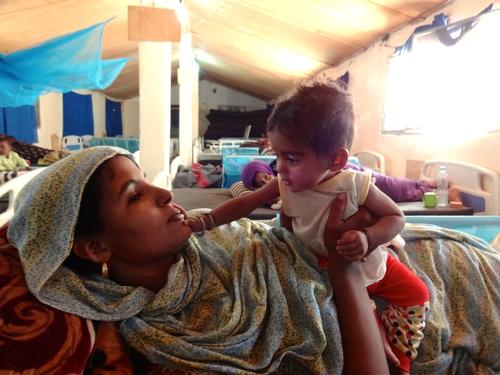
Fatimata Walet Mohamed’s 10 month old daughter Abubakri was a patient in the intensive therapeutic feeding centre in Mbera camp. “There are days when we find nothing to eat,” said the mother of three.
Mauritania

Malian refugees at risk of increased malnutrition following cancelled food distributions

“The timing of the gap in food distributions is all the more cruel because people are already fasting during daylight hours for the month of Ramadan, and now they have little food to break their fast at sunset,” said Maya Walet Mohamed, leader of the women’s committee in the camp. Press Release - 2 Jul 2015
 
Thousands of people have fled their villages on islands in Lake Chad, in south-eastern Niger, after Nigerien authorities urged them to leave the area following the deadly attack of Boko Haram on the island of Karamga on 25 April. About 1,500 additional people are now in a transit site in Diffa, the capital of the region.
Lake Chad Crisis

Around Lake Chad: People living in fear

First published in the International Activity Report 2015 Photo Story - 1 Jul 2015
Four mothers posing in a corridor of the Hospital in Bili. All four of them are staying in the hospital with their child, that's suffering from a severe case of malaria. Since the beginning of the project in 2016, the pediatric ward already treated more than 4.000 cases of complicated/severe form of malaria.
Médecins Sans Frontières (MSF)

Independent medical humanitarian assistance

We provide medical assistance to people affected by conflict, epidemics, disasters, or exclusion from healthcare. Our teams are made up of tens of thousands of health professionals, logistic and administrative staff - most of them hired locally. Our actions are guided by medical ethics and the principles of independence and impartiality. We are a non-profit, self-governed, member-based organisation.

Learn more