



Ebola disease in DRC: find out how we're responding
Learn more
1758 Results
 
5,000 still displaced in MSF-supported Batangafo Hospital
Central African Republic

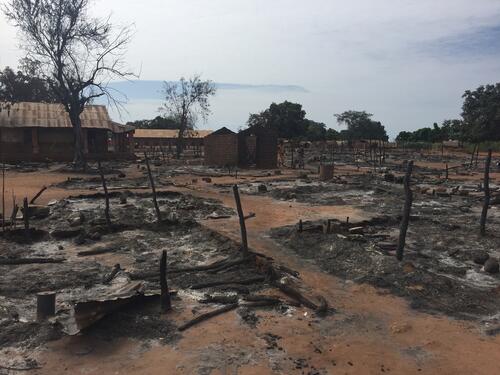
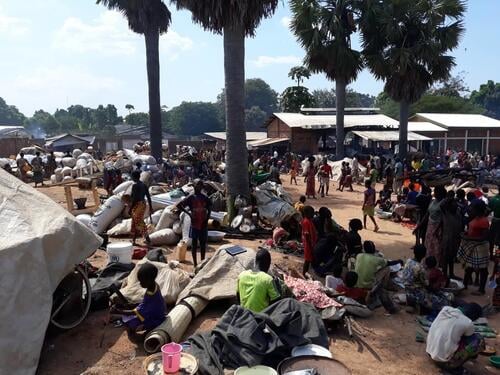
More than 5,000 people sheltering in MSF-supported Batangafo hospital after violent clashes

Fighting between two armed groups in Batangafo, in northern Central African Republic, in late October drove more than 10,000 people to seek shelter in Batangafo hospital, where 5,000 still remain. Project Update - 14 Nov 2018
 
On Wednesday, 31 October 2018, violent clashes in Batangafo, in the northern Central African Republic, led to 10,000 people fleeing to seek shelter in an MSF-supported hospital. Violence also affected Bambari, in the centre of the country. In total 32 wounded people received treatment at MSF facilities.
Central African Republic

More than 10,000 seek refuge in Batangafo hospital

Following clashes between armed groups that took place on Wednesday, 31 October 2018 in the north and centre of the Central African Republic (CAR), more than 10,000 people fled to seek refuge in the compound of a hospital supported by Médecins Sans Frontières (MSF). Press Release - 2 Nov 2018
 
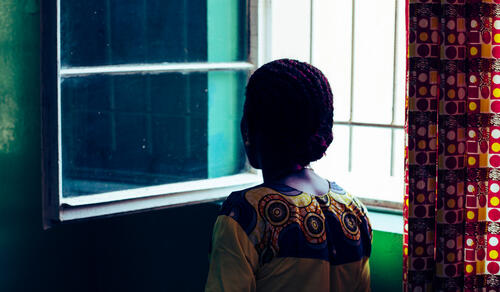
"I was at home with my husband that day. It was during the violence and fighting. We heard screams outside and neighbours crying. “I think they’ve killed someone,” my husband said. So we shut ourselves inside. We didn’t want to open the door. Armed men threw tear gas through the window to force us out. Eight people came into our home. They threatened to kill my husband and tried to force him to rape our daughter. She was 17. He refused and they murdered him. Then they raped our daughter, and me.

When they left, I hid in the forest next to the village with my children. I didn’t sleep or eat. For a year, before coming to the clinic, I was terrified by the thought that I could have HIV.

When I went back to Kananga – my father was very sick so I decided to return with my children – I went to see MSF at the hospital where they looked after victims of sexual violence. They examined me and told me that I didn’t have HIV."

//

"J’étais à la maison avec mon mari ce jour-là. C’était pendant le conflit et les affrontements. Nous avons entendu des cris de dehors et les voisins qui pleuraient. Mon mari m’a dit : « je crois qu’ils ont tué quelqu’un ». Nous nous sommes alors enfermés dans la maison et n’avons pas voulu ouvrir la porte. Des hommes armés ont lancé du gaz lacrymogène par la fenêtre pour nous obliger à ouvrir. Huit personnes sont entrées dans la maison. Ils ont menacé de mort mon mari et l’ont obligé à violer notre fille de 17 ans. Il a refusé et ils l’ont tué. Ensuite, ils ont violé notre fille, et moi aussi.

Quand ils sont partis, je suis partie dans la forêt, à côté du village, avec mes enfants. Je ne dormais pas et ne mangeais pas. Pendant un an, avant que je ne vienne à la clinique, j’étais très angoissée à la pensée d’avoir peut être contracté le VIH.

Mais quand j’ai dû rentrer à Kananga – mon père était très malade et j’ai donc décidé de m’y rendre avec mes enfants. Je me su
Democratic Republic of Congo

Sexual violence committed by armed men in Kasai

Between May 2017 and September 2018, MSF treated 2,600 victims of sexual violence in the town of Kananga in Kasai Central, Democratic Republic of Congo (DRC). Eighty per cent reported having been raped by armed men. Press Release - 1 Nov 2018
 
Kasai Central, VSX Témoignage 1
Democratic Republic of Congo

"When I tell this story, I see a film playing before my eyes"

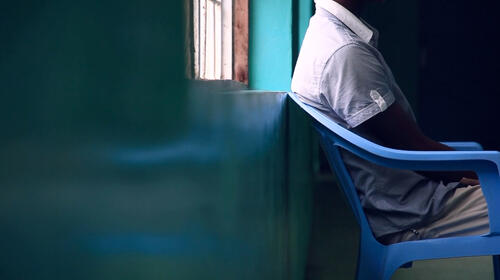
MSF patients in Kananga, Democratic Republic of Congo, share their stories of sexual violence. These testimonies were collected during a field visit by an MSF communications team in September 2018. Voices from the Field - 1 Nov 2018
 
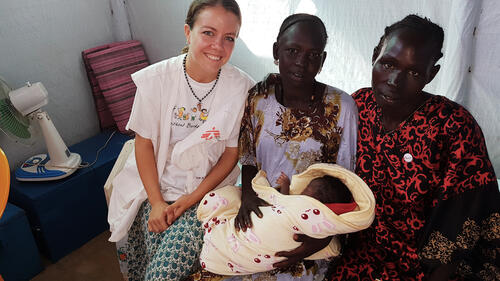
Ethiopia, Gambella Region: In the Kule Refugee Camp MSF runs a Health Center with around 120 beds. Around 54.000 refugees live in the Camp, they have fled the conflict in South Sudan. Midwife Christine Tasnier with Nyadak That and her baby Nyamire. “The birth was very difficult. But meanwhile, we were able to dismiss mother and child healthy. Right in the picture is Moskito - our translator and the aunt of Nyadak”, says Christine Tasnier.
Ethiopia

A name full of hope

Midwife Christine Tasnier and her colleagues work in the maternity ward of the 120-bed health centre MSF runs in Kule refugee camp, in Ethiopia. Around 54,000 refugees live in the camp, having fled the conflict in South Sudan. Voices from the Field - 30 Oct 2018
 
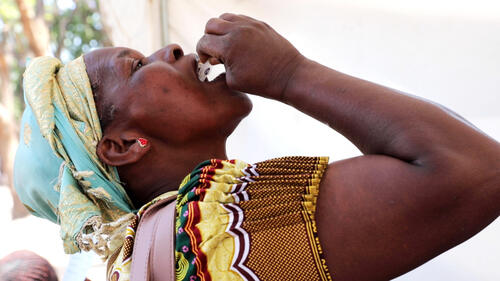
Juliet a resident of Glenview, Harare, the epicenter of the cholera outbreak takes the oral cholera vaccine during the mass vaccination campaign that took place in Glenview, Harare recently. The government of Zimbabwe with support from MSF and other partners rolled out the oral cholera vaccination campaign to protect people from cholera.
Zimbabwe

A collective response to cholera in Harare

MSF is supporting local authorities and mobilising community health clubs to implement a unique combination of emergency responses and longer-term solutions in the face of the country’s second biggest cholera outbreak to date. Project Update - 25 Oct 2018
 
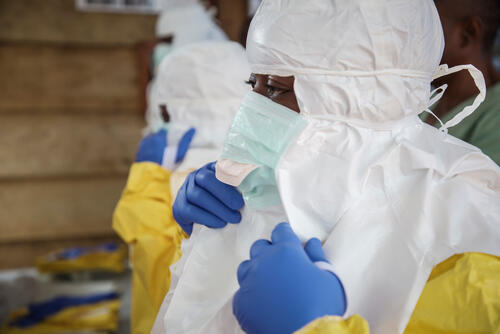
Seraphine is a MSF nurse who’s preparing herself together with her colleagues to go into the high risk zone of the Ebola Treatment centre (ETC). She’s from the region (North-Kivu) and has been working several years for MSF. She’s currently detached by the “Pool D’urgence de Congo” to help out in the Ebola project of Mangina. She got her first ebola experience earlier this year during the epidemic in the equator province. “During the first intervention I was really afraid to get sick (ebola),” she says. “At night I was all the time thinking about what I touched that day in the High risk zone of the ETC, worried that I might get Ebola. Now, I’m way more relaxed and I have more confidence!”
As an adolescent Seraphine wasn’t too keen to become a nurse, but she did because her aunt asked her.
“My aunt always complained that the people working in hospitals never smiled. That’s why she didn’t feel comfortable there. She literally asked me to become a nurse so she would encounter at least one person with a smile in the hospital. So that’s what I do now, I treat people in the best way I can, but more importantly, I also give them a big smile!”
DRC Ebola outbreaks

“Ebola is about human beings and trust”

Dr Hilde De Clerck is one of MSF’s most experienced Ebola doctors and has just returned from North Kivu, in eastern Democratic Republic of Congo (DRC), where the latest outbreak has proven hard to control.
Interview - 12 Oct 2018
 
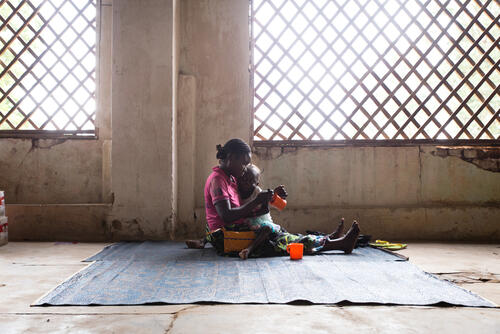
Dans le centre médical de Tshibala (CNTA) les patients ne pouvant se rendre à l'hopital viennent se faire osculter par des médecins MSF. Si les enfants souffrent de malnutrition sévère ils seront ainsi ramenés à la base MSF et hospitalisés.
Democratic Republic of Congo

MSF adapts to changing needs in Greater Kasai region

Since MSF first launched an intervention to respond to the recent crisis in Kasai in May 2017, our teams have established medical projects in a total of five different locations in Kasai and Kasai Central provinces. Project Update - 9 Oct 2018
 
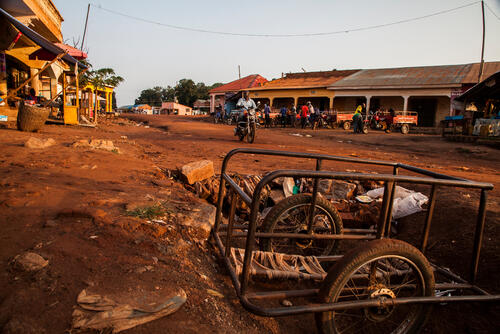
The main street in Yambio Town
South Sudan

Helping Yambio’s demobilised child soldiers come to terms with their past

MSF’s mental health support programme helps some of South Sudan’s estimated 19,500 former child soldiers come to terms with their experiences as they reintegrate their communities. Project Update - 5 Oct 2018
 
Bangassou – 8.8.2017

Surgery ward of Bangassou hospital.
Central African Republic

“We simply can’t let these people down. But we remain vigilant”: MSF returns to Bangassou

In 2017 a series of security incidents forced MSF to evacuate our team from Bangassou, CAR, and suspend activities in the area. In April 2018, our team returned to the city. Interview - 18 Sep 2018
Four mothers posing in a corridor of the Hospital in Bili. All four of them are staying in the hospital with their child, that's suffering from a severe case of malaria. Since the beginning of the project in 2016, the pediatric ward already treated more than 4.000 cases of complicated/severe form of malaria.
Médecins Sans Frontières (MSF)

Independent medical humanitarian assistance

We provide medical assistance to people affected by conflict, epidemics, disasters, or exclusion from healthcare. Our teams are made up of tens of thousands of health professionals, logistic and administrative staff - most of them hired locally. Our actions are guided by medical ethics and the principles of independence and impartiality. We are a non-profit, self-governed, member-based organisation.

Learn more