



Ebola disease in DRC: find out how we're responding
Learn more
1758 Results
 
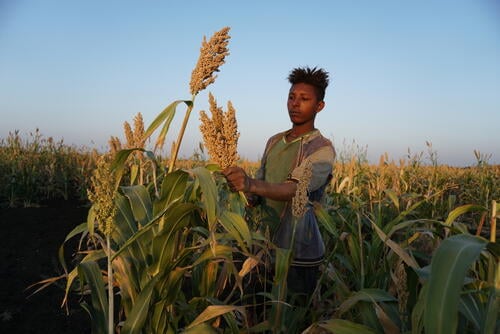
In the early morning in a sorghum field about 30-minute-drive by car from Abdurafi town. A group of migrant workers harvest sorghum. They usually come at the start of the harvest season (June) to the area to earn their living as daily worker on the big farms. Snakebites hit the poorest of the poor: in Ethiopia’s north the remote rural communities are more at risk as they live in simple mud tukuls/huts and often have no protective measures, such as bednets and beds that can protect them against snakes and kala azar. If they are bitten or fall ill with kala azar they have very limited access to health education and medical care. Patients and their families often resort to traditional medicine, or seek medical care too late, because they cannot afford to pay for treatment. Many have to travel for hours, especially migrant workers who live in the remote fields, to reach medical facilities, while timely treatment of snakebite is crucial.
The 18 years young man Getasew Dessie is from a village in South Gonder, coming to the farming region for two years. It takes him two days to reach Abdurafi. “My name is Getasew Dessie I am 18 years old, and I am from Esetia part of South Gonder. It is hard work, because it is always very hot and we live in the fields all the time, we have not free time, but work as much as we can. This is the last crop we harvest. We finish soon. I do not know if I can go home afterwards it depends on the situation. And how much money I could earn, but I would like to go home.”
Snakebite

“The first ten minutes are critical”: treating snakebite in Ethiopia

Snakebite overwhelmingly affects the rural poor, such as migrant harvest workers in northern Ethiopia. Access to treatment remains difficult, due to high prices for antivenoms, and the unavailability of effective antivenom in remote places.
Voices from the Field - 14 Feb 2019
 
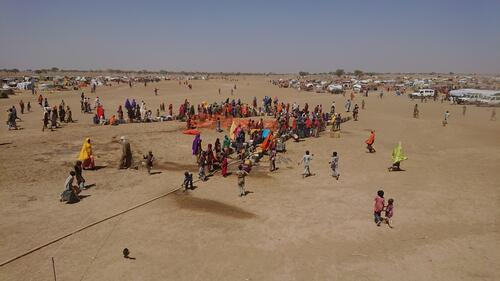
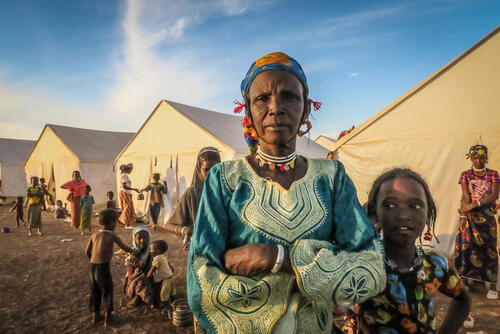
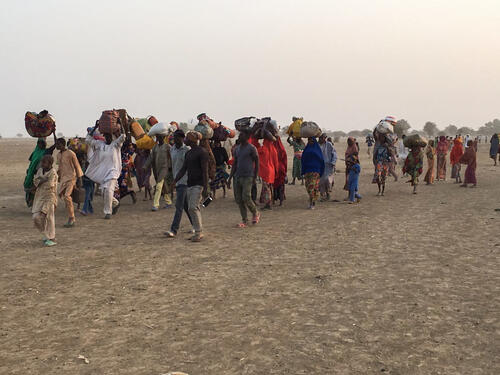
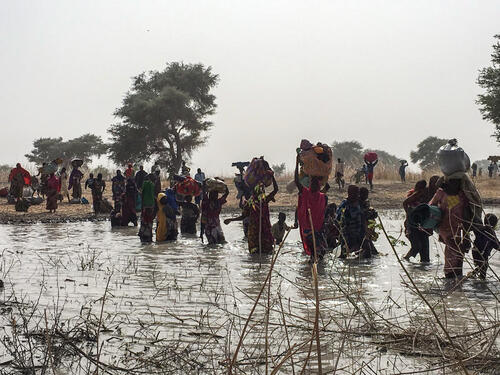
More than 35,000 Nigerians have crossed into Cameroon in recent weeks following an upsurge in violence around the northeast Nigerian town of Rann. Having arrived in the village of Goura in Cameroon’s far northwest, they are in urgent need of food, shelter and water, warns international medical organisation Médecins Sans Frontières/Doctors Without Borders (MSF), which has launched an emergency response.
Cameroon

Nothing to drink and nowhere to sleep for thousands who’ve fled Rann, Nigeria

MSF staff have treated hundreds of people with urgent needs living in a makeshift camp in far northwestern Cameroon after 35,000 fled violence in Rann, northeastern Nigeria. Press Release - 14 Feb 2019
 
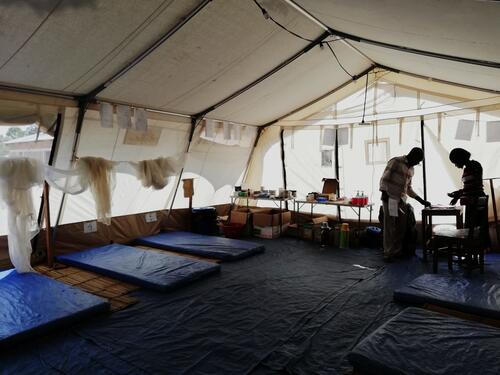
Set up of tent for admitting children to increase the capacity of Mukubu reference center.
Democratic Republic of Congo

Even during a widespread measles epidemic, we can save kids’ lives

A measles epidemic was declared in March 2018 in the former province of Katanga, southeastern Democratic Republic of Congo (DRC). Nearly 12 months on, MSF teams are still responding to the outbreak, vaccinating and treating children. Interview - 14 Feb 2019
 
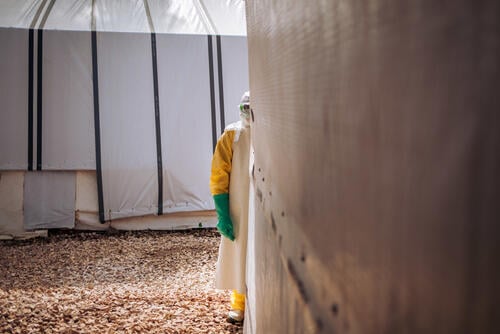
A health worker in the red zone.
DRC Ebola outbreaks

Potential new Ebola drugs being trialled in MSF treatment centres

Médecins Sans Frontières (MSF) has started enrolling patients in clinical trials of four potential new treatments for Ebola in treatment centres in Katwa and Butembo, North Kivu, Democratic Republic of Congo. Statement - 12 Feb 2019
 
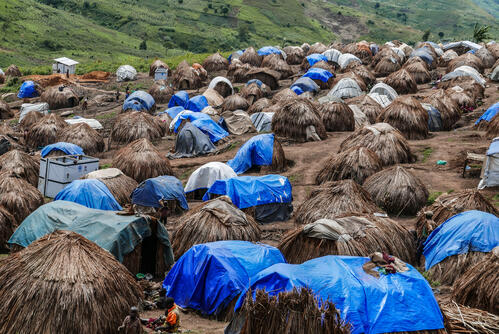
Godo 2 IDP (Internally displaced people) Camp
Democratic Republic of Congo

Ten thousand people living in desperate conditions in northeastern DRC

A year after violence in northern DRC forced people to flee their homes, 10,000 people are living in often dire conditions, with little food, water or shelter. MSF is urging for their needs to be quickly met. Project Update - 7 Feb 2019
 
“We were seven women in the courtyard when we understood, by seeing the smoke coming from the burned houses, that massacres were happening. We ran away in the bush with our children to hide behind trees and we staid there 3 days. We walked more than 50km to arrive up to here. The village? I don’t want to hear about it anymore. Our husbands were killed. Our children’s notebook were all burnt.” Haibata /

« Nous étions sept femmes dans la cour lorsqu’on a compris que des massacres avaient lieu, à cause de la fumée qui venait des maisons brûlées. Nous nous sommes enfuies en brousse avec nos enfants pour nous cacher derrière des arbres, nous y sommes restées 3 jours. Nous avons marché plus de 50 km pour arriver jusqu’ici. Le village ? Je ne veux plus en entendre parler. Nos maris ont été tués. Les cahiers d’école de nos enfants ont tous été brûlés ». Haibata
Burkina Faso

Escalating violence leaves displaced with significant needs

In the wake of violence which has displaced thousands of people from northern Burkina Faso, water, hygiene and medical needs in camps are significant. MSF is providing help. Project Update - 31 Jan 2019
 
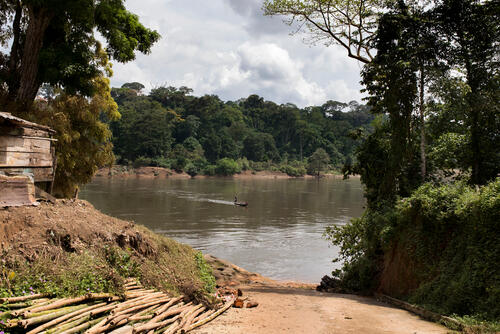
Cross River as it passes through Abgokim, in the border between Nigeria and Cameroon (in the other side of the river). Since internal unrest in the North West and South West regions of Cameroon intensified in late 2017, large numbers of refugees have crossed into Nigeria through border points like this. Around 30,000 Cameroonians are living in the villages, hosted by the local community.

Before the Cameroonian skirmishes, there used to be informal trade exchanges between both river banks, mainly fuel from Nigeria and food from Cameroon. Due to on-going unrest trade is minimal compounding difficulties faced by both host and refugee communities.
Nigeria

Cameroonian refugees in Nigeria

Tens of thousands of people flee the North-West and South-West regions of Cameroon to seek refuge in southern Nigeria’s Cross River State. Teams from MSF have launched an emergency response to provide aid to the refugees and the communities hosting them. Photo Story - 25 Jan 2019
 
MSF carried out an emergency intervention in the rural area of Dessa, in Tillabéry region. Our teams assisted more than 1,280 displaced people, victims of double violence: community conflicts on the one hand and the threat of armed groups considered as jihadists on the other.
MSF carried out 170 primary health consultations, 20 prenatal consultations and 131 measles vaccinations for children. Our teams also distributed essential items (blankets, cooking utensils, washing kits, mosquito nets and jerry cans) to 220 families of displaced persons.
Niger

“These displaced people live in fear of being attacked at any time”

After increased insecurity in the Tillabéry region of Niger caused large numbers of people to flee their homes, MSF carried out an emergency response in early January 2019. Interview - 17 Jan 2019
 
January 15, 2018.
Some 8000 people who fled Rann after attack last night seek shelter in Bodo, Cameroon.
An MSF medical team arrived in Bodo today. There they found more than 8’000 people, (estimate) mostly women and young children. 1’200 people have been able to settle inland and more than 7’000 people are still at the river (border).  But people continue to arrive. They have no shelter, no fresh water and fled Rann with no belongings. The local community organized solidarity to provide them with some food. MSF teams are bringing medical supplies and are preparing to support the local health centre there. MSF teams are planning to return tomorrow with emergency food, shelter and a watsan team to support them. This is devastating news for the people in Rann who have already suffered so much.
Nigeria

Rann was attacked – and was left “like a graveyard”

MSF nurse Isa Sadiq Bwala describes what he saw in Rann, northeastern Nigeria, following a devastating attack on the town on 14 January. Voices from the Field - 16 Jan 2019
 
January 15, 2018.
Some 8000 people who fled Rann after attack last night seek shelter in Bodo, Cameroon.
An MSF medical team arrived in Bodo today. There they found more than 8’000 people, (estimate) mostly women and young children. 1’200 people have been able to settle inland and more than 7’000 people are still at the river (border).  But people continue to arrive. They have no shelter, no fresh water and fled Rann with no belongings. The local community organized solidarity to provide them with some food. MSF teams are bringing medical supplies and are preparing to support the local health centre there. MSF teams are planning to return tomorrow with emergency food, shelter and a watsan team to support them. This is devastating news for the people in Rann who have already suffered so much.
Nigeria

Thousands fleeing Rann attack seek refuge in Cameroon

A devastating attack on Rann, northeast Nigeria, has sent thousands of people fleeing across the border to Bodo, Cameroon, needing assistance with food, shelter, water and medical treatment. MSF teams have arrived in Bodo to provide help. Project Update - 16 Jan 2019
Four mothers posing in a corridor of the Hospital in Bili. All four of them are staying in the hospital with their child, that's suffering from a severe case of malaria. Since the beginning of the project in 2016, the pediatric ward already treated more than 4.000 cases of complicated/severe form of malaria.
Médecins Sans Frontières (MSF)

Independent medical humanitarian assistance

We provide medical assistance to people affected by conflict, epidemics, disasters, or exclusion from healthcare. Our teams are made up of tens of thousands of health professionals, logistic and administrative staff - most of them hired locally. Our actions are guided by medical ethics and the principles of independence and impartiality. We are a non-profit, self-governed, member-based organisation.

Learn more