



Ebola disease in DRC: find out how we're responding
Learn more
431 Results
 
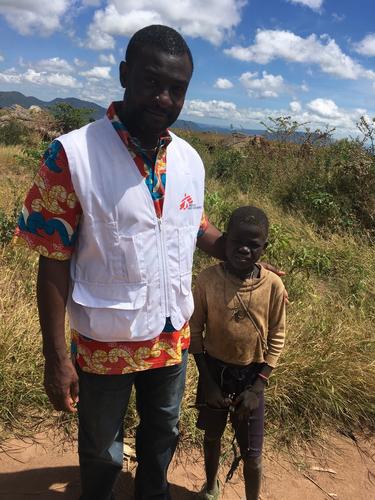
Narcisse Wega, MSF deputy emergency cell manager.
Democratic Republic of Congo

“If we sit back and do nothing, these people will die”

"As a result of intercommunal conflict, villagers left their homes in the hope of finding safety elsewhere." Voices from the Field - 26 May 2017
 
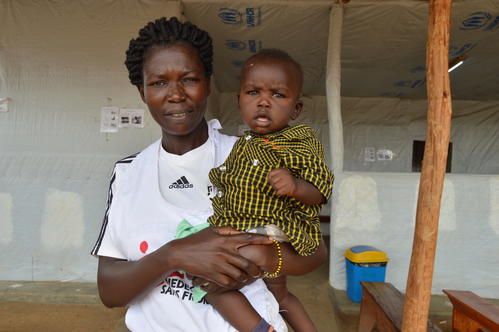
Nola Aniba Tito, 27, is one of the medical translators working in MSF health centre in Ofua 3 zone, in Rhino settlement. Originally from a town in the Equatoria region, she fled violence in South Sudan in July 2016 with her children and started working with MSF in March 2017. As 86% of all South Sudanese refugees in Uganda are women and children, Nola is one of the many female head of households. In this photo she is pictured with her baby, Aaron.
Full testimony from Nola: “I was living with my two children and expecting another child. My husband was in Juba. In my neighborhood, everyone was fleeing because we were seeing child abduction, rape, looting, forced marriage, and killing between tribes almost every day. Schools were attacked and children slaughtered like chicken. If people from the other tribe come, they kill everyone from the other tribe and leave their own tribespeople. Moreover, there was no access to health care, especially after many NGOs left the country.
One day, men knocked on the door of our house and threatened to open it. I was very scared so I didn’t open it, but instead carefully opened the window and saw them holding guns. I cried and shouted so much that neighbors came and the men just left. That’s when I decided to leave my home right away, without any belongings, just with my children and three of my brother’s children, who hasn’t been able to cross into Uganda. Even on the way to Uganda, there is fear of killing and violence and that is why my brother is still in South Sudan.
I was lucky to make it to Uganda. But upon arrival in the camp, we found no water, no food, and no health services. Sometimes we had no water for more than a week. How can we live without any water to use and drink? I also had to walk a very long distance to the hospital outside the camp to deliver my baby, who is now seven months old. We left with nothing, not even a penny to buy food or to pay for transport to hospital. So the start of MSF health service
Uganda

At night, I can’t stop thinking about what is going to happen to me and my children

I was lucky to make it to Uganda. But upon arrival in the refugee settlement, we found no water, no food and no health services. Voices from the Field - 18 May 2017
 
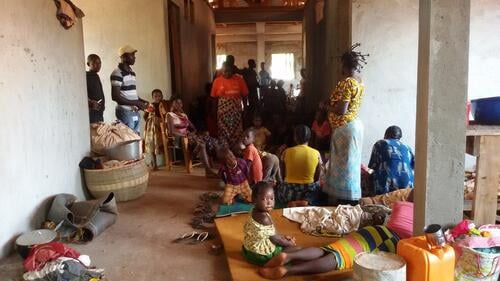
About 500 residents of Bangassou came to the hospital compound hoping that the fighters would not attack a medical structure. They were regrouped with the displaced people of the mosque and those of the church, Monday evening on the ground of the church of Bangassou.

Environ 500 habitants de Bangassou sont venus se réfugiés dans l’enceinte de l’hôpital espérant que les combattants ne se s’attaqueraient pas à une structure médicale. Ils ont été regroupés avec les déplacés de la mosquée et ceux de l’église lundi soir sur le terrain de l’église de Bangassou.
Central African Republic

"The city of Bangassou has turned into a battlefield; we fear the worst for the civilian population"

"When gunshots started in the Tokoyo neighbourhood... people scattered in all directions, running into the night to find shelter where they could." Voices from the Field - 16 May 2017
 
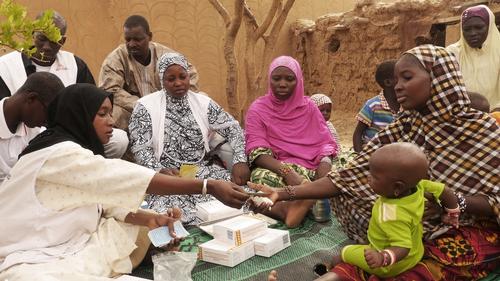
Between August and November 2015, MSF and the Ministry of Health of Mali launched a chemoprevention campaign against seasonal malaria, the leading cause of infant mortality in the country, which reached more than 45,000 children between three months and five years old in the Ansongo district, in the Gao region in the north of the country. During the campaign, MSF took the chance to complete the children’s vaccination records.
Mali

"There is a crisis overlap in northern Mali"

Interview with Côme Niyomgabo, MSF head of mission in Mali. Voices from the Field - 20 Apr 2017
 
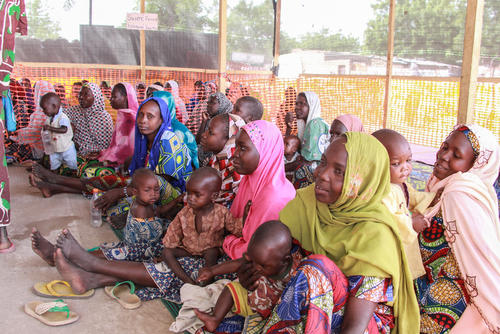
Mothers waiting for their malnourished children to be seen by a nutritionist at the MSF clinic in Banki.
Nigeria

Testimonies of forced return

Nigerian refugees in Cameroon are being forcibly returned to northeast Nigeria. In March 2017, three of them told MSF staff their stories. Voices from the Field - 19 Apr 2017
 
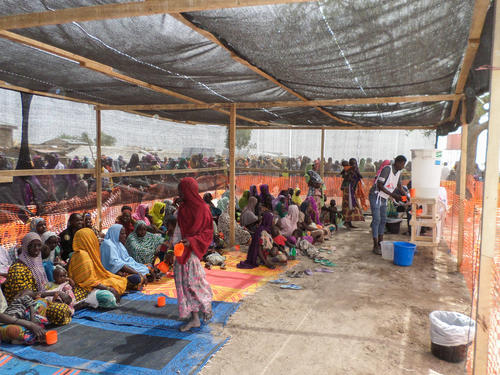
Patients waiting to be seen by the medical staff at the MSF health centre in Rann.
Nigeria

“Falling sick in Rann is almost a death sentence”

"The humanitarian situation in Rann is becoming increasingly critical as newly displaced continue to arrive. The most urgent needs now are healthcare, shelter and water." Voices from the Field - 19 Apr 2017
 
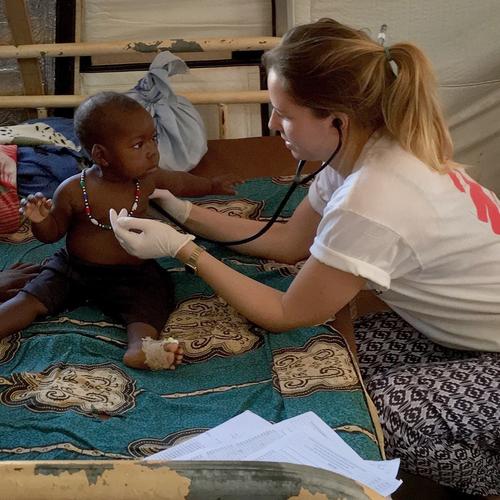
Dr. Katie Treble, a MSF doctor. Bria hospital.
Central African Republic

“Our paediatric hospital had to suddenly function as an adult trauma centre”

Katie Treble was working in the MSF hospital in Bria during the weekend of 24 to 26 March when heavy fighting occurred and MSF received 24 wounded people in three days. Voices from the Field - 13 Apr 2017
 
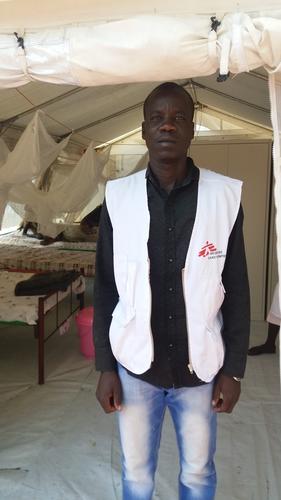
For the last two years, Francis Ronyo has worked as a nurse in MSF’s Wau Shilluk hospital. He was one of the national staff on duty when the decision was taken to evacuate and leave for Kodok. Since he arrived in Kodok, he doesn’t have a place to stay and ends up sleeping in the open with the rest of the people from Wau Shilluk. He however decided to continue serving the sick and the wounded in any way he could and is now  providing medical are in the MSF clinic in Aburoch
South Sudan

“My future is unclear, and I don't know what will happen to all of us from Wau Shilluk.”

Francis Ronyo worked as a nurse in MSF’s Wau Shilluk hospital for two years. He was one of the national staff on duty when the order was given to evacuate and leave for Kodok. Voices from the Field - 15 Mar 2017
 
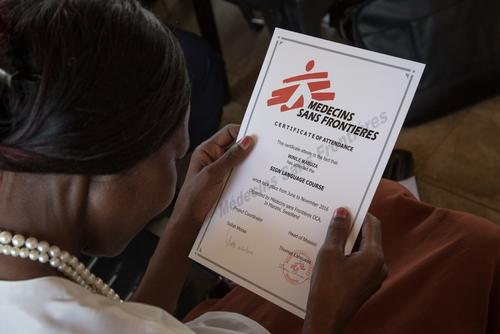
Winile, 39, XDR-TB patient & HIV-positive, received a sign language qualification. She became deaf due to the side effects of the treatment. Matsapha clinic, Manzini Region, Swaziland.
Eswatini

For patients with XDR-TB, treatment is a gruelling journey with severe side effects

Swaziland has one of the highest rates of TB and multidrug-resistant TB (MDR-TB) worldwide and 80 per cent of people in the country who contract TB are HIV positive. Voices from the Field - 27 Feb 2017
 
Jean François Saint-Sauveur
MSF Medical Director
Nigeria

“There are dramatic gaps in healthcare”

Jean François Saint-Sauveur, MSF medical director, ​​has just returned from Borno State, where he was able to visit three of MSF's projects. Voices from the Field - 23 Feb 2017
Four mothers posing in a corridor of the Hospital in Bili. All four of them are staying in the hospital with their child, that's suffering from a severe case of malaria. Since the beginning of the project in 2016, the pediatric ward already treated more than 4.000 cases of complicated/severe form of malaria.
Médecins Sans Frontières (MSF)

Independent medical humanitarian assistance

We provide medical assistance to people affected by conflict, epidemics, disasters, or exclusion from healthcare. Our teams are made up of tens of thousands of health professionals, logistic and administrative staff - most of them hired locally. Our actions are guided by medical ethics and the principles of independence and impartiality. We are a non-profit, self-governed, member-based organisation.

Learn more