


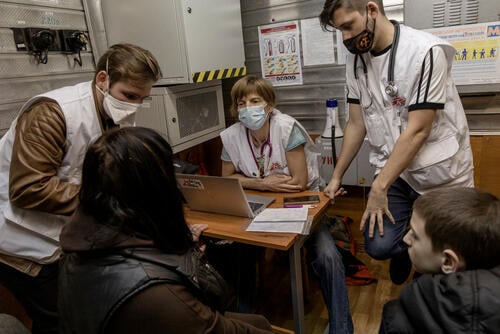
- The strength of the Ukrainian healthcare system in the face of extreme violence is clear.
- But as the full-scale war in Ukraine enters its fourth year, the need for sustained medical and mental health support is greater than ever.
- MSF continues to work in Ukraine, close to the frontlines and further afield, but more support is required.
Kyiv – Three years after Russian forces invaded Ukraine, dramatically escalating an international armed conflict that began in 2014, people continue to bear the burden of the war’s devastation as seen through their lost lives, lost limbs, and lost homes. The resulting medical humanitarian needs are clearer than ever. The strain on Ukraine’s medical services has only increased, exacerbated by frequent attacks on hospitals, ambulances and medical structures.
Since 2022, Médecins Sans Frontières (MSF) has seen more patients with war-related trauma in need of early rehabilitation, namely post-amputation physiotherapy. There is also an increase in the number of patients requiring treatment for post-traumatic stress disorder. In areas close to the frontlines, daily shelling means that some of the most vulnerable, including older people and people with chronic conditions, have extremely limited access to medical care.

MSF runs an early rehabilitation project with centres in Cherkasy and Odesa, where people receive early post-operative physiotherapy, mental health support and nursing care following incidents of violent trauma. MSF treated 755 patients in 2023 and 2024. From one year to the next, there was a 10 per cent increase in the number of patients requiring post-operative care for leg amputations.
In 2024, half of all patients in the project were diagnosed with either post-traumatic stress disorder, or depression. The need for mental health support in Ukraine is significant. In addition to the centres in Cherkasy and Odesa, MSF has established a project focused on post-traumatic stress disorder in Vinnytsia.
“The ferocity of this war has not diminished, and the medical humanitarian needs have only grown more complex,” says Thomas Marchese, MSF's head of programmes in Ukraine. “Even if the war were to end tomorrow, hundreds of thousands of people would require years of long-term physiotherapy, or counselling for post-traumatic stress disorder. Ensuring this care requires an ongoing humanitarian commitment.”
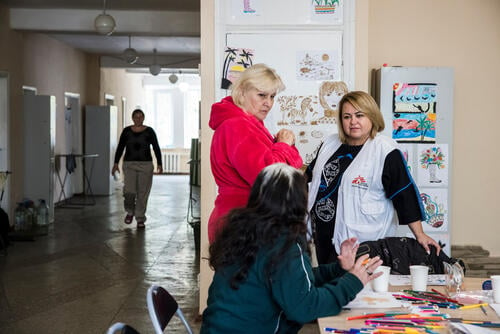
Today, Ukraine’s healthcare system faces immense pressure, balancing emergency responses with the ongoing needs of patients affected by the war. For three years, drone and missile attacks have been a daily occurrence, in some cases striking cities more than 1,000 kilometres from the frontline. Medical facilities and systems have been forced to adapt to treating patients in bunkers or basements, as well as to frequent power cuts from attacks on energy infrastructure.
In response to this, MSF operates ambulances, transferring patients from overburdened hospitals near the frontline to medical facilities in central and western Ukraine with greater capacity. Over the past three years, MSF ambulances have transferred more than 25,000 patients, more than half of whom had injuries caused by violent trauma.
In 2024, MSF mobile clinic and ambulance teams working near the frontlines saw a significant increase in referrals for patients with chronic diseases such as cardiovascular issues, diabetes, and cancer. In 2023, these cases accounted for 24 per cent of all referrals, rising to 33 per cent in 2024. However, regular shelling and strikes mean that the access of MSF’s teams is not guaranteed. Many of those living with chronic conditions are older, and less mobile, and in some areas, people have begun living in their basements or in bunkers, due to the intense shelling.
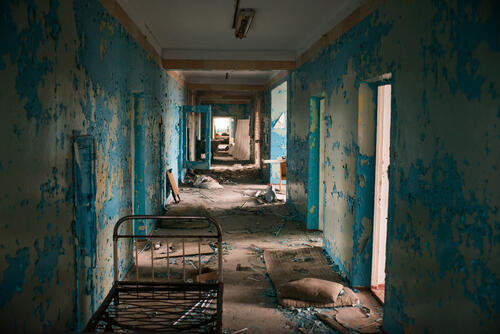
“For some of the most vulnerable people, relocating isn’t an option,” says Marchese. “Not everyone is able to leave their homes and start their life again, but the continued fighting means that these people are frequently cut off from medical care, just as MSF medical teams are sometimes unable to travel to certain areas due to ongoing shelling.”
As the war in Ukraine enters its fourth year, MSF’s teams witness how the medical humanitarian crisis deepens every day. The strength of the Ukrainian health system in the face of extreme violence is clear, but the need for sustained medical care and mental health support is greater than ever.
Even if the war were to end tomorrow, the long-term effects on people —physical and psychological— will linger for years to come. Ukraine’s infrastructure has also sustained staggering damage, with hospitals coming under direct attack. Hundreds of thousands of people will require ongoing care, rehabilitation, and therapy for trauma long after the last bomb falls. MSF continues to work in Ukraine, close to the frontlines and further afield, but more support is required.
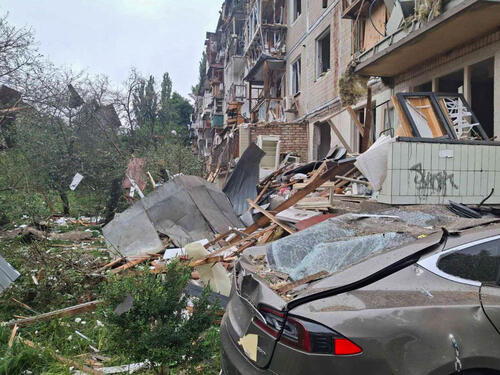
War in Ukraine
Increasing bombardment in Kyiv threatens lives and medical care
Press Release
31 Jul 2025
War in Ukraine
The relentless and indiscriminate bombing in Ukraine must cease
Press Release
24 Apr 2025
Ukraine
Ongoing medical needs amid relentless attacks in Dobropillia, eastern Ukraine
Project Update
14 Mar 2025