


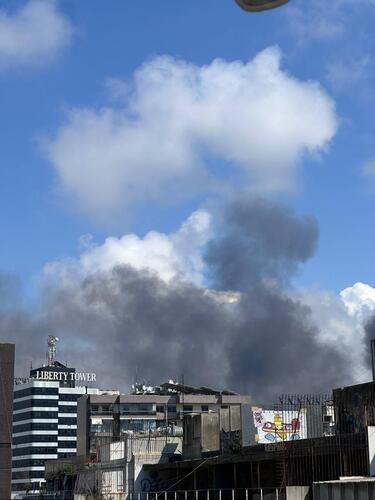
On Wednesday, 8 April 2026, Israeli forces launched mass-scale strikes across Lebanon, reportedly over 100 in 10 minutes. Many hit densely populated residential areas, and, once again, struck without prior notice or warning. The following is a firsthand account from Safa Bleik, a Médecins Sans Frontières (MSF) assistant medical coordinator and registered nurse. She was present in a public hospital in Beirut when a heavy influx of patients began arriving.
I was at Rafik Hariri University hospital when the bombardment began.
I was there with our MSF emergency room doctor for a routine visit. It was an ordinary moment — until it wasn’t. Suddenly, white smoke and dust engulfed the space. For a few minutes, no one understood what was happening. Then the ambulances began arriving.
And they didn’t stop.
The first patients came in with severe head injuries, with fragments of glass, metal and debris lodged in their bodies. Many were unconscious. Some died shortly after arrival. There was no time to process, only to move, to respond, to try to save lives.
Soon, the emergency room filled with people searching. Injured parents calling out for their children. Families coming with children's pictures asking if anyone had seen their loved ones — maybe still under the rubble, maybe taken somewhere else.
Soon, the emergency room filled with people searching. Injured parents calling out for their children. Families coming with children's pictures asking if anyone had seen their loved ones...Safa Bleik, MSF assistant medical coordinator
I was trying to stop the bleeding of a man who had arrived with severe head trauma and shrapnel in his abdomen, when a young man came up to me holding a phone, showing me a photo of his brother. He was asking if I had seen him. I didn’t have an answer, but I searched with him, checking rooms and faces, trying to find his brother while our emergency doctor helped bandage wounds and stabilise the patient.
Hours passed, but it felt like years. The cases kept coming — so many of them critical. At one point, nearly four hours after the bombardment began, around twenty ambulances arrived at once. Fifty people inside, all already gone.
There was one young man I can’t forget. He had lost both his legs, and there was a piece of debris lodged in his abdomen. I can almost still hear his brother’s cries in my ear. We tried everything we could to stabilise him, to control the bleeding, to suture. But we lost him.
The emergency room was overwhelmed. I found myself running alongside the hospital staff – exhausted, but extraordinary – moving from one patient to the next, from one corridor to another, trying to keep up with the sheer scale of need with limited supplies.
Despite everything, more and more doctors began arriving. The doctors’ syndicate had sent out a call for support to all hospitals, and specialists came in waves – surgeons, physicians, everyone ready to help. There was an incredible sense of solidarity. But in the emergency room, the available supplies were quickly used, the stretchers were full, and too many patients were arriving in critical condition or already dead.
Hours passed, but it felt like years. The cases kept coming — so many of them critical. At one point, nearly four hours after the bombardment began, around twenty ambulances arrived at once.Safa Bleik, MSF assistant medical coordinator
What we saw that day was not just a medical emergency. It was the direct impact of attacks on civilians, residential areas, on families, on children, on people who, just hours earlier, were living their normal lives.
The hospital staff did everything they could, both here and across Lebanon, as other hospitals faced similar mass influxes. I saw extraordinary dedication at Rafiq Hariri University hospital: people pushing themselves beyond exhaustion to care for others. But dedication alone is not enough in a mass-casualty situation.
As MSF, we are supporting hospitals and responding where we can, but what this day showed us clearly is how urgent the protection of civilians is.
MSF launched a nationwide emergency response in Lebanon since the escalation of 2 March 2026. MSF teams are supporting hospitals responding to mass influxes of wounded patients and have been present in several emergency rooms during these influxes, assisting with triage, patient flow, and the management of severe trauma cases. MSF has also donated fuel, mass-casualty and dressing kits, and other medical and non-medical supplies to help hospitals cope with the surge in needs. We are also coordinating with additional facilities to provide similar support based on assessed needs. Beyond hospital support, we continue our emergency response through 20 mobile clinics across the country, while scaling up the distribution of essential relief items, as well as water, sanitation, and shelter assistance.

Refugees, IDPs and people on the move
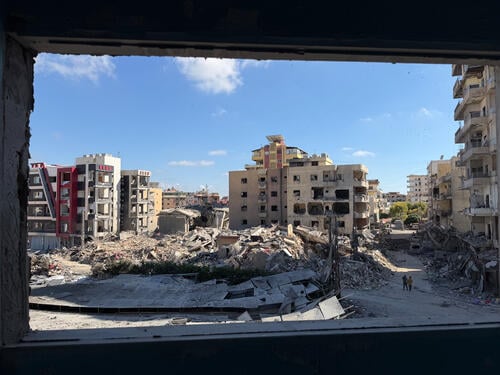
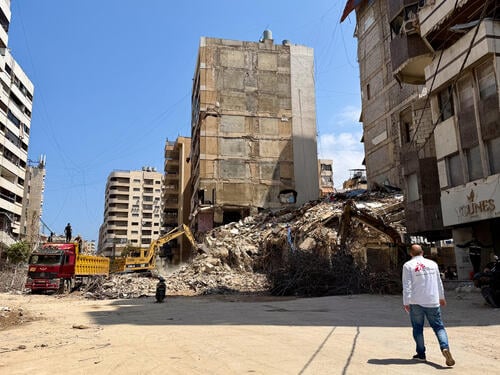
Military threats and forced displacement expose health risk for communities in southern Beirut
Project Update
5 Jun 2026