


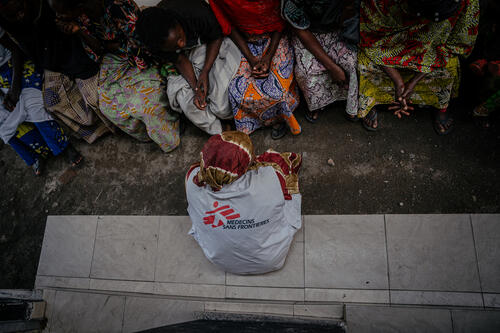

For Médecins Sans Frontières (MSF), providing sexual and reproductive health (SRH) care means supporting women and girls at some of the most vulnerable moments of their lives: in the critical period around birth, when the risk of death is highest for both mother and baby; in the aftermath of sexual violence; and when a pregnancy is unwanted or life-threatening.
People living through humanitarian emergencies need SRH care. Worldwide, 58% of maternal deaths, 50% of newborn deaths, and 51% of stillbirths occur in conflict-affected and fragile settings.1 MSF delivers SRH care to communities facing crises and exclusion because it is a core, lifesaving part of humanitarian care.
However, there is a general tendency to view SRH care as optional or secondary to other specialities. As a result, it remains underfunded and under-resourced globally. Between 2022 and 2023, official development assistance for SRH decreased by about one-third, with funding allocations steadily dropping each year after.2 While the US government has made the most drastic cuts,3 many other countries, including Germany, the UK, France, the Netherlands, and Sweden, have reduced SRH funding in recent years.4
Even when SRH services are available, this care remains politicised and is often treated as an ideological battleground. Beyond funding cuts, movements that are hostile toward SRH are advancing regressive policy measures that restrict this care.
Even when SRH services are available, this care remains politicised and is often treated as an ideological battleground.
MSF teams know how indispensable SRH care is because we see the dangerous consequences of its absence: women arriving late with severe complications of pregnancy; newborns who do not survive their first days of life; deaths that could have been prevented with contraception or safe abortion care; and stillbirths that could have been avoided. We also witness the profound relief that people feel when they can access SRH care. We see the circumstances under which childbearing becomes a powerful experience, when women are supported with dignified and respectful care that enables informed and non-coercive decision-making.
As shifting funding and political dynamics threaten the availability of SRH care, we must recognise that people’s need for these lifesaving services will not disappear. When facilities close and services are lost, the health providers who remain often struggle to keep up with patient needs. Women and girls bear the brunt of these challenges, having to travel farther distances and endure more hardship to reach this care.
MSF teams are witnessing the devastating consequences of shrinking SRH services
In the Democratic Republic of Congo, sexual violence has been a long-standing emergency; in 2025, MSF teams offered care to over 54,000 victims and survivors across the country. The scale of this crisis means that MSF cannot respond alone. During the year, other organisations were supposed to receive 100,000 post-rape kits, which include medication for preventing HIV and other sexually transmitted infections, but the order was cancelled after USAID5 was dismantled.6 In response to supply gaps in North Kivu province, MSF stepped in to purchase post-exposure prophylaxis for HIV.
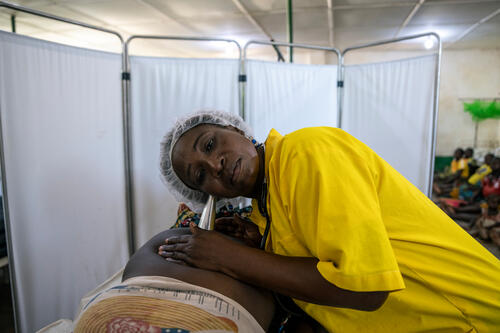
In Kenya, the abrupt withdrawal of US funding, which had previously covered 24 per cent of the national family planning programmes, left an estimated 6.2 million people without access to contraception.7 The closure of services caused major service disruptions for those in need of SRH care, including members of the LGBTQI+ community and people who engage in sex work, who already struggle to overcome stigma, discrimination, and social exclusion when seeking assistance.
In South Sudan, MSF began supporting the maternity department at Renk county hospital in September with supplies and financial incentives for staff, after another aid organisation was forced to withdraw support due to funding cuts in September. Our paediatric team working at the hospital immediately saw the repercussions of these changes on newborn health, prompting us to extend our assistance.
Working in environments hostile to SRH care
In addition to reductions in funding, we are seeing emboldened opposition movements to SRH care and new policy measures designed to curb access to these essential services. These include the Geneva Consensus Declaration (GCD), a non-binding document without any meaningful authority or enforcement power.8 The GCD is being used to promote heteronormative concepts of family, and to undermine access to SRH and LGBTQI+-inclusive care globally. Countries that are trying to implement the GCD through national reforms are using rhetoric to distort negotiated global agreements, pushing for regressive gender norms, and asserting that there is no international right to abortion.
Concurrently, the US government introduced its Promoting Human Flourishing in Foreign Assistance (PHFFA) policy early in 2026, expanding the Global Gag Rule (GGR) to its most extreme version to date. For decades, the GGR has been used intermittently to prevent US-funded partners from providing, referring, counselling, or advocating for abortion with their non-US funds, even in countries where abortion is legal.9 The PHFFA expands the GGR’s scope, and adds new restrictions on LGBTQI+-inclusive services and diversity, equity and inclusion programming. This represents an unprecedented system-wide restriction, affecting all aid sectors, all major implementers, and all health areas.10
When safe abortion care is not accessible, women and girls will still seek to end their unintended pregnancies, often resorting to dangerous methods that can lead to haemorrhage, infection, organ injury, infertility, and death. MSF routinely treats patients with complications caused by unsafe abortions, which continue to be a leading cause of maternal death and sickness in many of the places where we work. Our teams repeatedly see that women and girls delay seeking medical help due to fears that they will be stigmatised or punished.
These dire outcomes are not inevitable; safe and timely access to abortion care with evidence-based methods effectively prevents suffering and death.
These dire outcomes are not inevitable; safe and timely access to abortion care with evidence-based methods effectively prevents suffering and death.11 Women and girls who can access safe abortion care often report more positive health outcomes and experiences in the years following their decision, relative to those who cannot access abortion.12 This lifesaving care should be easily available to whomever needs it, wherever they are.
Measures like the GCD and PHFFA often frame safe abortion care and contraception as conflicting with, or being mutually exclusive from, maternal, newborn, and child health. But at MSF, our experience shows that SRH is a spectrum of care that patients rely on at different moments in their lives. For example, a woman who does not feel ready to be a parent may seek abortion care, and then later decide that she wants to become pregnant and have children. When politics interfere with this decision-making, the consequences can be damaging or even life-threatening.
Although MSF does not accept US government funds and is not required to comply with the PHFFA, the patients and communities we serve are not insulated from an environment where SRH is politicised, scrutinised, and restricted.
For MSF, providing SRH care is not optional; it is central to our mandate as humanitarians.
Our commitment to providing lifesaving SRH services
Our approach to SRH care is derived from the MSF Charter. We offer impartial medical assistance based on needs, uphold universal medical ethics, and maintain independence. We are committed to following medical guidelines that promote autonomy, respect, and person-centred care, because these principles contribute to better health outcomes for patients and communities.
For MSF, providing SRH care is not optional; it is central to our mandate as humanitarians. We will continue to deliver comprehensive services that are resilient during crises and emergencies, and which are grounded in equity and inclusion.
Although this article uses the term ‘women’ and ‘girls’, we recognise that transgender, intersex, and gender non-binary people also experience pregnancy and need contraceptive services. We work to ensure that our services are gender-inclusive, and we strive to overcome all barriers to sexual and reproductive health services.
World Health Organization: https://www.who.int/news-room/fact-sheets/detail/maternal-mortality
International Campaign for Women’s Right to Safe Abortion: https://www.safeabortionwomensright.org/news/donors-donors-delivering-for-srhr/
SEEK Development. Donor Tracker. The future of RMNCH-N funding: A sector at risk. 2025.
The Mexico City Policy: An Explainer: https://www.kff.org/global-health-policy/the-mexico-city-policy-an-explainer/
Biggs, M.A., Foster, D.G. (2024). What is the impact of having an abortion on people’s mental health? In: Bindeman, J. (eds) The Mental Health Clinician’s Handbook for Abortion Care. Springer, Cham: https://www.ansirh.org/research/ongoing/turnaway-study