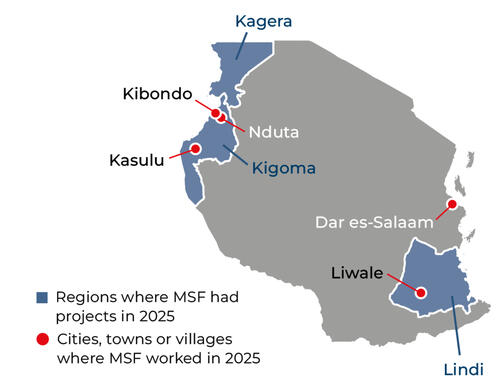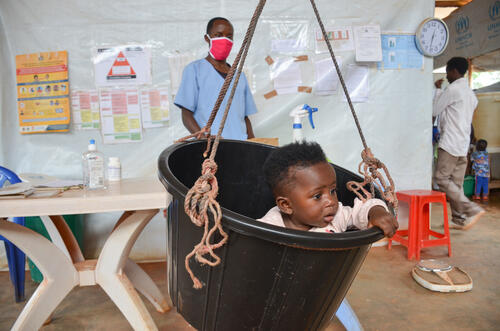
For the past decade, MSF has been the sole provider of specialised healthcare for Burundian refugees in Nduta camp. The population has decreased by 50 per cent since its 2017 peak, and stood at 55,000 by the end of 2025.* Despite funding cuts and the withdrawal of major partners, our teams remained a reliable presence, as accelerated voluntary repatriations ahead of the planned camp closure in March 2026 increased tensions and fears among refugees. In 2025, as well as running a range of general and specialist services, including maternal and neonatal healthcare and mental health support, our teams continued to speak out about the dire conditions in the camp and the need for sustained international support.
In Liwale, people are living in remote communities, with a lack of health facilities. MSF worked to strengthen maternal and emergency services at the district hospital, by renovating the operating theatre and neonatal intensive care unit, and donating biomedical equipment. We also installed solar panels to improve the power supply, and upgraded sanitation and waste systems. Elsewhere in the district, our teams enhanced the quality of care by making regular monthly supervisory visits to health centres, and donating medical supplies to dispensaries. We engaged with the community to help them obtain the care they needed. In addition, we had an ambulance based in Kimambi, to facilitate around-the-clock emergency referrals.
Following the cholera outbreak declared on 18 August in Nyansha ward, Kasulu district, we supported the Ministry of Health’s response, focusing on treating patients in the 20-bed cholera treatment centre, curbing transmission by improving infection prevention and control measures, and running community awareness-raising activities.
Ahead of the October 2025 general elections, MSF supported emergency preparedness in Dar es-Salaam, where unrest risked overwhelming public facilities. At Amana regional referral hospital, and in Buguruni and Magomeni health facilities, our teams assisted with mass-casualty planning, triage, staff training, logistics, and referral systems.