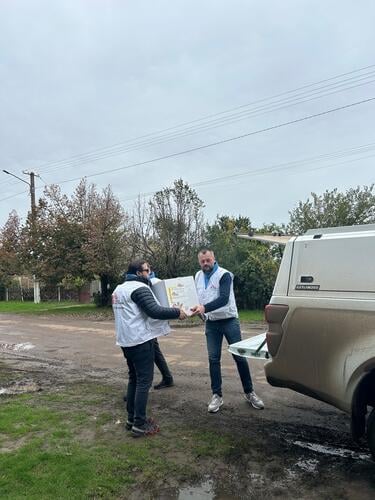
Following an agreement between the parties to the international armed conflict on a temporary ceasefire in parts of Kherson region from 27 October to 1 November 2026, MSF medical teams were able to deliver a three-month supply of essential medicines to three villages under Ukrainian government control: Muzykivka, Petrivka and Bohdanivka.
Around 4,000 people live in these villages, located up to 13 kilometres from the frontline, where access to medicines, food and other essential supplies remains extremely challenging due to insecurity and the constant threat of drone attacks. MSF had suspended visits to these settlements because of the security risks. However, our teams have remained in contact with local healthcare workers through remote consultations, providing medical advice and support.
“We have brought three main categories of essential medicines: painkillers, antibiotics and medicines for chronic conditions. These include medicines for high blood pressure, diabetes and ischaemic heart disease,” says Vladyslav Butskyi, MSF medical activity manager.
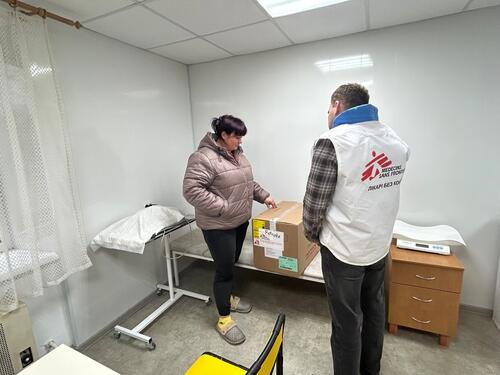
Kateryna Zoshchuk works as a laboratory assistant at the Ministry of Health outpatient clinic in Muzykivka. Until recently, only remote medical consultations were available in the village.
“To get a check-up, people have to travel to Kherson city, and that’s very dangerous. There are some things we can, of course, do here, but to carry out an ultrasound scan, for example, you have to travel,” explains Kateryna.
The prolonged isolation caused by the security situation is also taking a psychological toll on residents, says Iryna Morozova, a junior nurse at the Ministry of Health’s local medical point in Petrivka.
MSF mobile teams continue to work along the frontline, including in the south of Ukraine, in Kherson and Mykolaiv regions. We provide people with essential medicines, conduct medical examinations and support the hospitals near the frontline. In areas we cannot reach because of the security risks, we provide remote consultations.

Ukraine
Another senseless Russian attack kills and wounds several people in Dnipropetrovsk
Crisis Update
25 Oct 2026
Democratic Republic of Congo
Harmful, restrictive measures obstruct care for sexual violence survivors in North Kivu province
Press Release
2 Nov 2026