



Ebola disease in DRC: find out how we're responding
Learn more
2094 Results
 
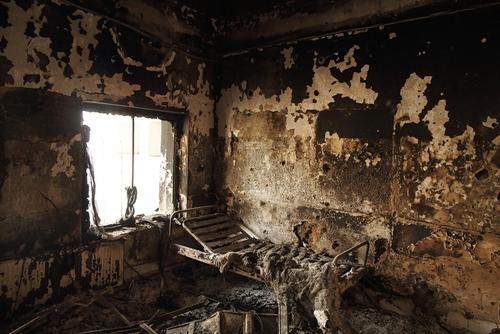
An interior view of the MSF Trauma Centre, 14 October 2015, shows a missile hole in the wall and the burnt-out remians of the the building aftera sustained attack on the facility in Kunduz, northern Afghanistan..
Kunduz hospital attack

This is my story

Voices from the Field - 3 Apr 2016
 
Interior of the Medecins Sans Frontiers (MSF) hospital in Kunduz, destroyed on the 3rd October 2016 in a sustained bombing attack by the US airforce on the facility.
Kunduz hospital attack

Kunduz: 6 months later

On 3 October 2015, MSF’s trauma hospital in Kunduz, Afghanistan, was destroyed by precise and repeated U.S. airstrikes. The attack killed 42 people, including 14 MSF staff members, 24 patients and four caretakers, and wounded dozens more. The facility was a fully functioning hospital at the time of the attack and was therefore protected under International Humanitarian Law. Project Update - 3 Apr 2016
 
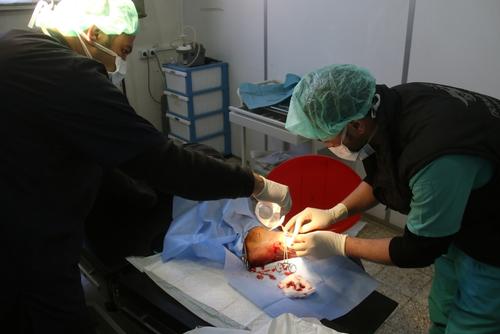
A young patient, whose leg was severly damaged when struck by shrapnel from a mortar, is visited by his father at Médecins Sans Frontières (MSF) Kunduz Trauma Centre where free treatment is provided to patients regardless of their political affiliation (ie. the side on which the fight in the war between the armed opposition group and Government forces) . MSF’s trauma  centre is the only facility of its kind in the whole north-eastern region of Afghanistan providing high level life- and limb-saving trauma care. MSF opened Kunduz Trauma Centre in August 2011 to provide high quality, free medical and surgical care to victims of trauma such as traffic accidents, as well as those with conflict related injuries from bomb blasts or gunshots.
Kunduz hospital attack

What has been lost

Voices from the Field - 3 Apr 2016
 
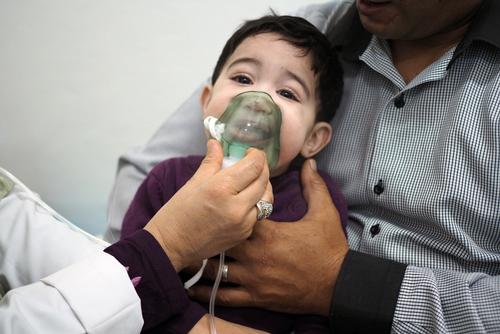
An MSF medical staff performs a paracheck rapid malaria test for a sick child in the UN compound in Pibor South Sudan. Over 2000 people are seeking shelter in conditions that fall way short of minimum humanitarian standards in an emergency setting. The majority of patients treated are under five years of age, suffering from malaria, respiratory tract infections and diarrhea.  MSF is the only provider of medical care in the camp
South Sudan

Activity Update, March 2016

MSF condemns the outrageous violence in the Malakal Protec­tion of Civilians site on February 17 and 18, which claimed the lives of 19 people, including two MSF staff. MSF employs more than 3,000 South Sudanese staff and 330 international staff to respond to a wide range of medical emergencies and provide free and high quality healthcare to people in need in 17 project loca­tions across the country. Crisis Update - 1 Apr 2016
 
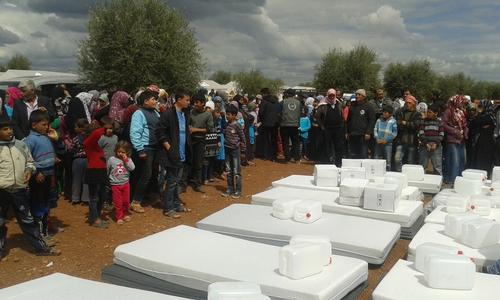
MSF clinic in Gari Wanzam where thousands of newly displaced people from Bosso district have have sought refuge in the last days.
Lake Chad Crisis

Testimony of Falmatou, a Nigerian refugee in Niger

Falmatou lives alone with her eight children in a refugee camp in southern Niger after having fled her village in northern Nigeria, during a violent attack by ISWAP (Boko Haram). Voices from the Field - 31 Mar 2016
 
A young boy stands on a pirog, a wooden boat, after fishing in the lake near Kaya, an internally displaced persons camp with about 1200 people near the town of Bol in Chad. Many people drink water directly from the lake, risking illness. Many have left Kaya because the lack of food and decided to go back to their villages located on Lake Chad’s islands.
Lake Chad Crisis

Lake Chad crisis update: Trapped in deadly violence

With more than 2.7 million people uprooted from their homes, the Lake Chad basin is currently home to one of the African continent’s biggest humanitarian crises. The region is reaching breaking point due to attacks by the Islamic State’s West Africa Province group (ISWAP), also known as Boko Haram, and a strong military response which has been launched to curb the violence. Project Update - 30 Mar 2016
 
Zwara, April 19th 2016. In one of the two operating theater of the marine Hospital.
Libya

Health system in a state of hidden crisis

Project Update - 17 Mar 2016
 
Caption: Patients being treated in the MSF-supported Abs Hospital following an attack on a marketplace on 15 March 2016 in Khamis district, northern Hajja governorate. Immediately following the attack the Abs Hospital, which is located 50km from Khamis, MSF treated 44 people, 2 of whom died.
Yemen

MSF treats more than 40 wounded following deadly airstrike on marketplace

“Yesterday´s attack is not the first, and it is unlikely to be the last. The constant and indiscriminate violence in this area is creating humanitarian needs that are increasing by the day. Now is not the time for humanitarian organisations to downsize their responses,” says Juan Prieto, MSF Country Representative in Yemen. Project Update - 16 Mar 2016
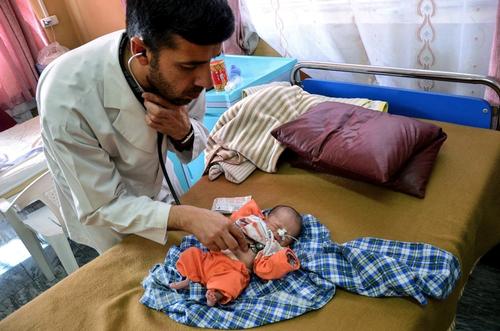
Four mothers posing in a corridor of the Hospital in Bili. All four of them are staying in the hospital with their child, that's suffering from a severe case of malaria. Since the beginning of the project in 2016, the pediatric ward already treated more than 4.000 cases of complicated/severe form of malaria.
Médecins Sans Frontières (MSF)

Independent medical humanitarian assistance

We provide medical assistance to people affected by conflict, epidemics, disasters, or exclusion from healthcare. Our teams are made up of tens of thousands of health professionals, logistic and administrative staff - most of them hired locally. Our actions are guided by medical ethics and the principles of independence and impartiality. We are a non-profit, self-governed, member-based organisation.

Learn more