



Ebola disease in DRC: find out how we're responding
Learn more
2094 Results
 
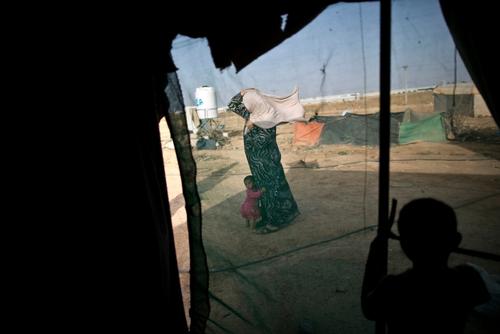
Makhmood is a taxi driver. He had brought his wife to the clinic in Hutheima who is complaining of strong headaches. "We went to
Dohuk to see a specialist, he says. She had a scan and was given medication but it didn't work. It's not easy to
go to Dohuk, you need a referral and permission from the police unless it's an emergency.
We asked the only local doctor for a referral and were granted one. Then we went to the police and
we got permission in a few hours. The journey to dohuk was smooth and we had no problems at the
checkpoints".
Iraq

I left all my memories in Mosul

"People started to flee. I didn’t know what to do: I was torn between the need to get my family to a safe place and my commitment to the hospital. It was a time of great uncertainty," says Baroj, assistant coordinator of MSF’s project in Ninewa, Iraq. Voices from the Field - 10 Jun 2016
 
The operating theatre is an essential part of emergency health services for women and children in Aweil. Young Wol Wol is deceptively tall at only 5 years old. He was climbing mango trees with his friend when he fell. And because it is the end of the season mangos only remain higher up in the trees, so he had to climb higher to reach the very last fruit and then fell.
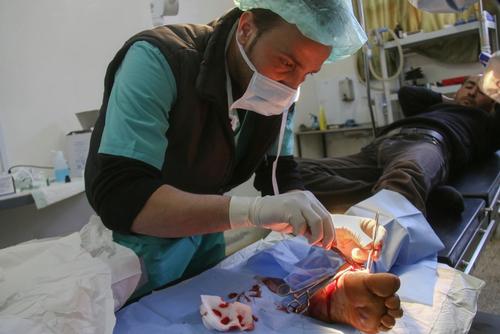
The boy sustained a head injury, open elbow fracture and displaced wrist fracture (in a displaced wrist fracture the bones are misaligned and won’t heal correctly unless they are realigned). Armelle will put the child to sleep under general anaesthetic, and the MSF medical team will do the debridement (removing damaged tissue) and washing of the wound, then the Ministry of Health surgeon will do the reduction of the wrist fracture. After surgery, Wol Wol’s arm had to be put in a plaster cast. 
The operating theatre team undertakes surgery for an average of more than 200 children like Wol Wol per month. The team manages many dressings for burns, orthopaedic cases like fractures, and drainage of abscesses. “For maternity patients we also do emergency obstetrics surgery. We complete around 20 to 15 caesarean sections every month”, explains Armelle Vanderhaghen, anaesthetist nurse.
South Sudan

Paediatric care and treating malnutrition in Aweil

Project Update - 9 Jun 2016
 
Yahya Jarad, nursing supervisor at MSF´s Al Salamah Hospital: 
"We hope the war will come to an end and the bloodshed will stop. but, it seems it´s not likely to happen soon."
Syria

We hope the bloodshed will stop, but it’s not likely to happen soon.

Yahya Jarad, nursing superviser at MSF's Al Salamah hospital in Azaz, speaks about practising medicine in a community under siege. Voices from the Field - 2 Jun 2016
 
MSF teams carry out distributions of emergency relief items to displaced people in Azaz district, northern Syria, following an offensive by IS which also forced MSF to close its Al Salamah hospital as frontlines came too close. 100,000 people are estimated to be trapped in Syria, between active IS frontlines, the Turkish border and areas under Kurdish control.
Syria

People trapped in Azaz urgently need safe haven - Turkey and the EU must open their borders

An estimated 100,000 people trapped in the Azaz district of Syria, between the frontline with the Islamic State group and the Turkish border, must be allowed to reach safe haven in Turkey. Europe must also honour its moral and legal commitments by granting asylum to those fleeing from this conflict. Press Release - 2 Jun 2016
 
On the 24th of May, the Greek police started to evacuate the camp of Idomeni, a transit camp where thousands of refugees have been stranded for over two months without adequate humanitarian assistance and with no access to asylum procedures. In the first hours of the morning, several hundred riot police started to slowly fill buses with the first groups of people to leave. According to Greek authorities at least 37 buses carrying more than 1780 people were evacuated in the first 12 hours. The situation is currently calm and whilst volunteers have been prevented from accessing the camp, MSF still has restricted access and continues to carry out our medical activities with a reduced team of 8 people (medical and deputy fieldco). 

MSF is not opposed to the movement of people from Idomeni to other locations, if they will be provided with better conditions, and if this is done on a voluntary basis by providing the refugees with sufficient information about the destination so they can take an informed decision. MSF asks the authorities to ensure that volunteers and NGOs are allowed to continue to access the people living at Idomeni camp for as long as they are there.
Greece

I am tired of being here and I’m tired of living in fear

"I am tired of being here and I’m tired of living in fear"
Siham, 30, is from Halab in Syria. She was still in the camp of Idomeni, in Greece, on Wednesday morning when our staff collected this testimony by phone.
Voices from the Field - 26 May 2016
 
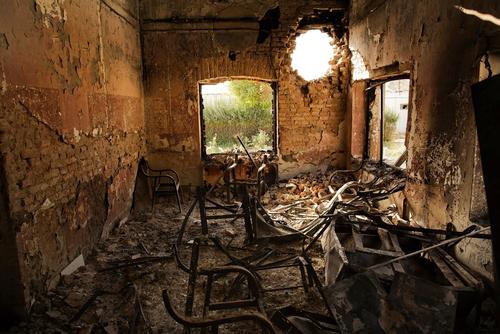
The MSF health post in Yebi before it was completely destroyed on 19 May 2016. It served a population of about 20,000 people. In the site of Yebi, in Bosso district, thousands of people displaced from the Lake Chad area have settled looking for refuge.
Niger

Deadly attack on Lake Chad refugees and MSF health post in Yebi

“We are very concerned about the impact of these attacks on the population and also about the lack of respect for the medical facilities which could jeopardise the already limited access to healthcare in Diffa,” says Elmounzer Ag Jiddou, MSF’s Head of Mission in Niger. “We are planning to resume activities as soon as possible.” Project Update - 25 May 2016
 
Situated in the Lake Chad region, the site of Koulkimé in Chad hosts approximately 1,800 displaced people according to OCHA. They have fled Islamic State's West Africa Province (ISWAP), also known as Boko Haram, as well as military operations carried out by the Chadian government.  MSF is working together with the Chadian Ministry of Health to support the primary health centre in Koulkimé.
Global

A call for action beyond summits - reflections on the World Humanitarian Summit

The report "Emergency Now: A call for action beyond summits" explains further the reasons why MSF decided not to participate in the World Humanitarian Summit (WHS) and shares a report on its reflections on the WHS. Report - 23 May 2016
Four mothers posing in a corridor of the Hospital in Bili. All four of them are staying in the hospital with their child, that's suffering from a severe case of malaria. Since the beginning of the project in 2016, the pediatric ward already treated more than 4.000 cases of complicated/severe form of malaria.
Médecins Sans Frontières (MSF)

Independent medical humanitarian assistance

We provide medical assistance to people affected by conflict, epidemics, disasters, or exclusion from healthcare. Our teams are made up of tens of thousands of health professionals, logistic and administrative staff - most of them hired locally. Our actions are guided by medical ethics and the principles of independence and impartiality. We are a non-profit, self-governed, member-based organisation.

Learn more