


Ebola disease in DRC: find out how we're responding
Learn more
2094 Results
 
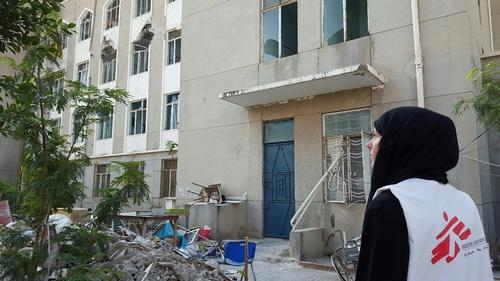
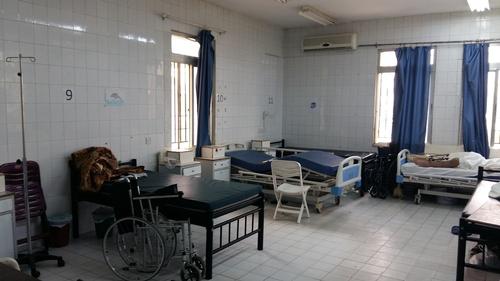
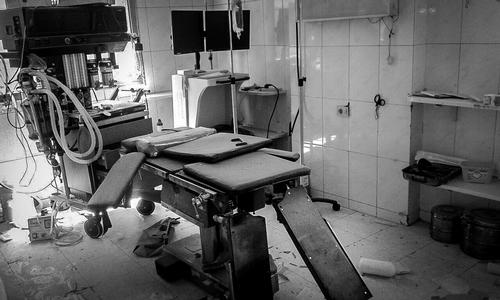
The MSF-supported hospital in Ma’arat Al Numan before it was attacked and destroyed on Monday 15th Feb. At least 25 people were killed, including nine staff members.
The 30-bed hospital  had 54 staff, two operating theatres, an outpatient department and an emergency room. The outpatient department treated around 1500 people a month, the ER carried out an average of 1,100 consultations a month, and around 140 operations a month, mainly orthopaedic and general surgery, were carried out in the operating theatres.

MSF has been supporting this hospital since September 2015 and covered all the needs of the facility including provision of medical supplies and running costs.
Syria

Providing healthcare in communities affected by conflict and violence in northern Syria

Jason Mills, former MSF Syria head of mission, describes our work to develop an alternative solution to providing healthcare for internally displaced Syrians and host communities in urgent need of assistance. Project Update - 10 Aug 2016
 
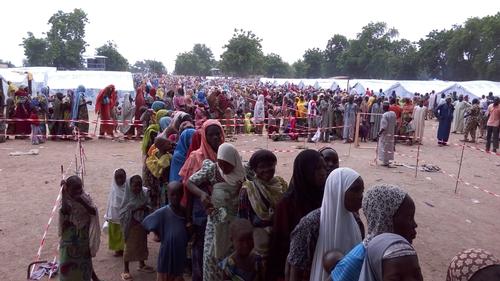
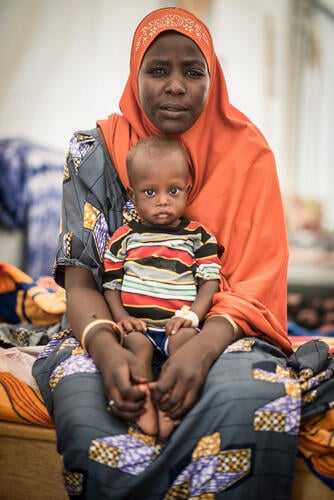
Muna camp in Maiduguri.
Nigeria

Crisis Info on Borno emergency - August 2016

Project Update - 10 Aug 2016
 
Street scene in Aleppo, from April 2013.
Syria

Trapped, under attack and struggling to survive in Aleppo

Fighting has intensified over the past three weeks and the long-suffering people of Aleppo city are bearing the brunt of the devastation. Continuous aerial attacks pound the east of the city, while shelling strikes the west, causing many casualties and injuries. Project Update - 28 Jul 2016
 
During the second week of July 2016, MSF organised an exploratory mission and an emergency distribution for more than 15,000 displaced people leaving in dire conditions in the city of Banki, in Borno State – Nigeria.
Project Update

Crisis Info - July 2016

Crisis Update - 27 Jul 2016
 
During the second week of July 2016, MSF organised an exploratory mission and an emergency distribution for more than 15,000 displaced people leaving in dire conditions in the city of Banki, in Borno State – Nigeria.
Nigeria

MSF warns of large-scale humanitarian disaster in Borno State

More than 500,000 people are living in catastrophic and unsanitary conditions in a number of villages and towns across Borno State, northeastern Nigeria. “In Banki, as in a number of other areas, people have almost no access to humanitarian aid,” says MSF’s emergency programme manager Hugues Robert. Press Release - 27 Jul 2016
 
There are more than 4,400 patients with renal failure in Yemen who are struggling to get weekly dialysis sessions to stay alive. To avoid potential death, patients rely on machines to clean their blood, something normally done by functioning kidneys. Those living with kidney failure normally should attend dialysis treatment sessions three times per week at four hours per session. In order for patients to receive treatment, treatment centres have to be functioning and supplies must be available. Most of the functioning dialysis centers in Yemen lack supplies causing interruptions in treatment to patients in need. And because of the pressure on the dialysis centres, most renal failure patients now receive only two weekly sessions instead of three in order for the dialysis centers to be able to accommodate all the patients they are receiving.
Yemen

Dialysis treatment at breaking point

“People with renal failure are at a critical moment as there is a lack of essential medical supplies in the country. Patients usually need three dialysis sessions per week but under current circumstances, for most, this has been reduced to two sessions.” said William Turner, MSF Head of Mission in Yemen. Press Release - 26 Jul 2016
 
For the first time, a Médecins Sans Frontières team went to Dikwa, a town 90km from Maiduguri in Borno State, northeast Nigeria, to carry out a nutrition assessment on children under the age of 5 years. There are around 70,000 displaced people living in Dikwa, some of whom have have been living in Boko Haram controlled areas until very recently. The team recorded a 13% rate of severe malnutrition amongst those screened.
On the morning of 20th July alone, they identified 34 children who required hospitalisation and a further 663 severely malnourished cases. Due to the limited medical and transport capacity, the team was only able to evacuate the most urgent cases, who were immediatey admitted to the Gwange Inpatient Therapeutic Feeding Centre (ITFC), on the outskirts of Maiduguri.

Triage in Maimusari health center. Every day, medical team is doing about 500 consultations as well as 300 prenatal consultations and 10 deliveries.
Nigeria

Crisis Info on Borno Emergency - July 2016

Crisis Update - 22 Jul 2016
 
MSF opened a new surgical department within the Ramtha project to upgrade the quality of care provided to patients and to respond to these growing needs
Jordan

Working hand in hand to make a difference in Syrian lives

"Today, with the opening of this new operating department, a new stage in the life of the Ramtha surgical project is about to start," says Edgar Escalante, Surgical Focal Point, MSF Emergency Surgical Project in Ramtha, Jordan. Voices from the Field - 21 Jul 2016
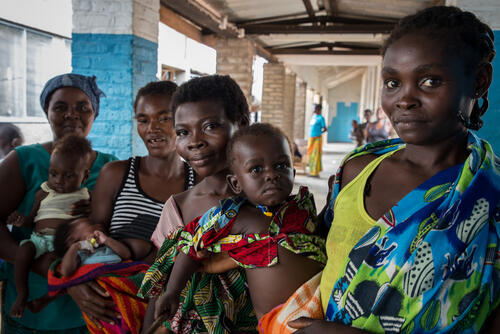
Four mothers posing in a corridor of the Hospital in Bili. All four of them are staying in the hospital with their child, that's suffering from a severe case of malaria. Since the beginning of the project in 2016, the pediatric ward already treated more than 4.000 cases of complicated/severe form of malaria.
Médecins Sans Frontières (MSF)

Independent medical humanitarian assistance

We provide medical assistance to people affected by conflict, epidemics, disasters, or exclusion from healthcare. Our teams are made up of tens of thousands of health professionals, logistic and administrative staff - most of them hired locally. Our actions are guided by medical ethics and the principles of independence and impartiality. We are a non-profit, self-governed, member-based organisation.

Learn more