



Ebola disease in DRC: find out how we're responding
Learn more
2094 Results
 
People are waiting to get potable water at the water distribution point in Bentiu PoC

In Bentiu POC, MŽdecins Sans Frontires (MSF) has been running a secondary level hospital since 2013, providing free quality healthcare to people living in the POC. Although the humanitarian needs have stabilized in the camp in the past months, the humanitarian and medical situation is still fragile and health indicators can quickly worsen.
South Sudan

Testimonies from Bentiu protection of civilians site

People waiting to collect potable water at the water distribution point in the Bentiu protection of civilians site. Voices from the Field - 16 Nov 2016
 
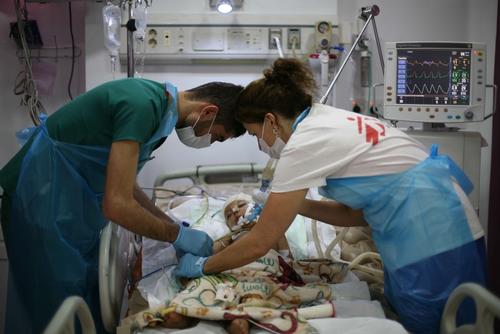
Young boy, aged 10, recovers in hospital after surgery to the bladder to remove several bladderstones.
Syria

Doctors under siege

As the siege of east Aleppo enters its fourth month, how are medical staff coping? Crisis Update - 15 Nov 2016
 
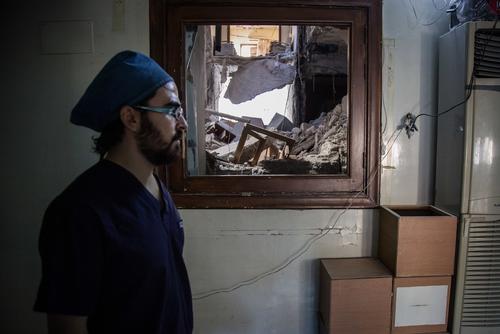
A hospital in east Aleppo is patched up with sandbags after it was hit by airstrikes in April 2016, killing one doctor and injuring several nurses.
Syria

Besiegement and bombing of east Aleppo is deepening a desperate health crisis

"The seriously injured or ill must be evacuated to safe areas for treatment. Medical supplies and humanitarian aid must be allowed in, and respite given to a city falling apart day by day, hour by hour and minute by minute," says Pablo Marco, Middle East Operational Manager. Voices from the Field - 15 Nov 2016
 
msf-placeholder
Yemen

Record number of babies born on hospital’s one-year anniversary

On 7 November, Médecins Sans Frontières (MSF) marked the one-year anniversary of its mother and child hospital in Taiz, assisting in the deliveries of 24 babies in a single day. Project Update - 10 Nov 2016
 
msf-placeholder
Syria

It has taken four years and 20 surgical operations to repair the damage

East Aleppo's besieged residents have been told to leave their homes or face annihilation. As they brace themselves for what comes next, Amal Abdullah recalls the day four years ago when she was told to leave the east Aleppo neighbourhood where she grew up. Voices from the Field - 8 Nov 2016
 
The waiting room of the MSF-supported Mbalazime health centre, Bangassou sub-prefecture, Central African Republic.
Central African Republic

Great humanitarian need, little international attention

Project Update - 1 Nov 2016
 
In Kousseri city, the number of displaced people who have fled violence could reach 40 000. They are scattered around the city and are hosted by local families. 
MSF is supporting 3 health centers in the city of Kousseri (Madana, Madagascar, Amchidiré) including ambulatory therapeutic treatment centers (ATFC) for severe acute malnutrition. In Madana and Amchidiré, under five OPD and cover up vaccination is also provided by MSF, along with mental health support. Activities are open several times a week (from 2 to 5 times according to the number of patients seeking care). The main illnesses are diarrhea, malaria skin diseases and respiratory tract infections. Complicated cases are referred to Kousseri regional Hospital.
Lake Chad Crisis

Lake Chad: Years of Forgotten Crisis

Located in west-central Africa at the junction of Chad, Nigeria, Niger, and Cameroon, Lake Chad was once among the continent’s largest bodies of water. Owing to a combination of climate change and overuse, however, Lake Chad’s size has steadily dwindled, putting the region’s population of roughly 30 million people under increasing strain. But diminishing resources are not the only thing they have to fear. Medium.com - 31 Oct 2016
Four mothers posing in a corridor of the Hospital in Bili. All four of them are staying in the hospital with their child, that's suffering from a severe case of malaria. Since the beginning of the project in 2016, the pediatric ward already treated more than 4.000 cases of complicated/severe form of malaria.
Médecins Sans Frontières (MSF)

Independent medical humanitarian assistance

We provide medical assistance to people affected by conflict, epidemics, disasters, or exclusion from healthcare. Our teams are made up of tens of thousands of health professionals, logistic and administrative staff - most of them hired locally. Our actions are guided by medical ethics and the principles of independence and impartiality. We are a non-profit, self-governed, member-based organisation.

Learn more