



Ebola disease in DRC: find out how we're responding
Learn more
8016 Results
 
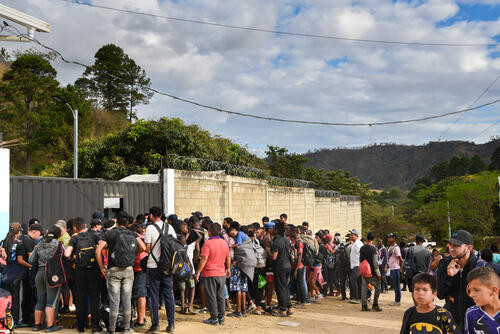
The situation for migrants at the border between Nicaragua and Honduras has worsened in recent months. Since the beginning of March, a new wave of people who are migrating has been crossing the eastern borders of Honduras. From January to March, more than 30,000 people have entered the country irregularly between the municipalities of Trojes and Danli, both border points with Nicaragua. Médecins Sans Frontières (MSF) mobile clinics continue to travel to different points in the area to provide medical and humanitarian assistance to people on the move.
 
In the midst of these consultations, MSF teams listen to the stories of people who arrive affected by physical exhaustion and have experienced situations of violence that impact their mental and emotional health. This was the case for Natasha and René, who had to leave Venezuela with their puppy Juan Pablo to cross the Darien jungle between Colombia and Panama to Danli.
 
Their testimony was captured in a coloring book to try to bring people closer to this type of situation in a different way; as well, to give health promotion teams something they can provide children waiting at border points with to awaken their interest in drawing, as well as use as a child-friendly support tool to help them see others are also facing this difficult journey.
 
Like Natasha and René, between 80 and 160 people are treated every day at the MSF clinic for different health conditions. In 2022, the teams provided more than 17,000 medical consultations at two border points in the country: Danli and Trojes. Of these people, a large percentage are minors, pregnant women and people with chronic diseases.
The Americas

Nicaragua

Discover how we delivered medical humanitarian assistance in Nicaragua. Country
 
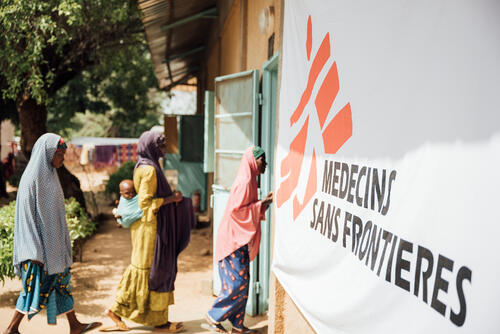
Patients and relatives of patients entering one of the MSF wards in the District Hospital of Magaria, that is supported by MSF in paediatrics and malnutrition.
Africa

Niger

Niger is affected by violence and displacement around its border regions. Country
 
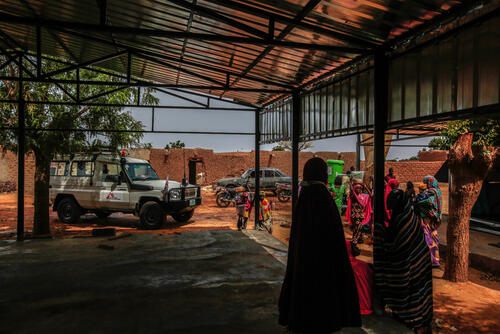
People looking for treatment for their malnourished children arrive at MSF ATFC located in Riko village, Katsina State, Nigeria, June 2022.
Africa

Nigeria

Regular disease outbreaks, malnutrition, and violence continue to endanger people's lives in Nigeria. Country
 
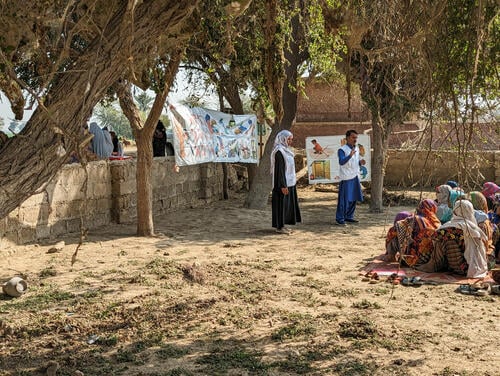
MSF’s health promotion (HP) team conducts a health education session for women in a rural village of Dadu. The focus of the HP session is on the importance of hygiene, the prevention of malaria and other diseases and nutrition. February 2023
Asia & Pacific

Pakistan

Access to healthcare remains a challenge in Pakistan, especially for people in isolated rural communities, urban slums and areas affected by conflict. Country
 
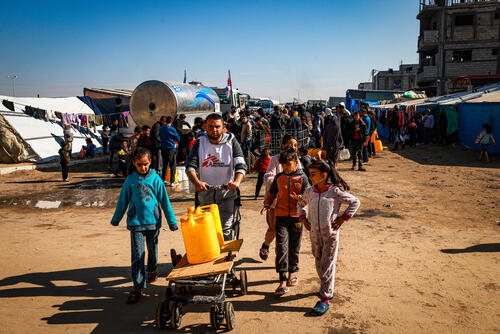
Youssef Al-Khishawi, an MSF water and sanitation agent, helps children carry water to their tent in the Tal Al-Sultan area of the southern Gaza town of Rafah, on January 27, 2024.
He says: “In a normal situation, one person needs two to three liters of drinking water per day. Now, with the current shortage, the average for one family of six is one gallon of water (3.8 litres).” 

“The main challenge we face in distributing water is the lack of fuel to pump and transport it,” says Al-Khishawi. “The second is the lack of proper roads for our trucks to drive on, because there are tents even on the asphalt. The third is that there are no water distribution points – even they have been bombed. Water pipes, streets and infrastructures are destroyed.”
Middle East & North Africa

Palestine

We provide medical and psychological assistance to people affected by the ongoing conflict in Palestine, continuing our long-running mental health programmes on the West Bank and support to victims of burns and trauma in the Gaza Strip. We also provide surgical and post-operative care for people wounded during the Great March of Return protests. Country
 
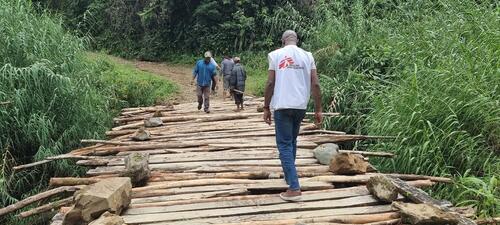
Border between Jimi and North Waghi districts, Jiwaka province, PNG
Asia & Pacific

Papua New Guinea

We are working to improve access to care for survivors of violence in Papua New Guinea’s Highlands region. Country
 
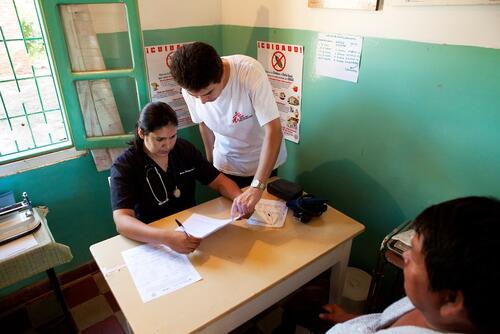
The MSF intervention strategy, in collaboration with Paraguay’s Ministry of Health, consists in bringing Chagas diagnosis and treatment closer to the most isolated communities and building health staff capacities so that they are able to see to the needs of the affected people
The Americas

Paraguay

MSF first worked in Paraguay in 2010 and closed its projects in 2013. Country
 
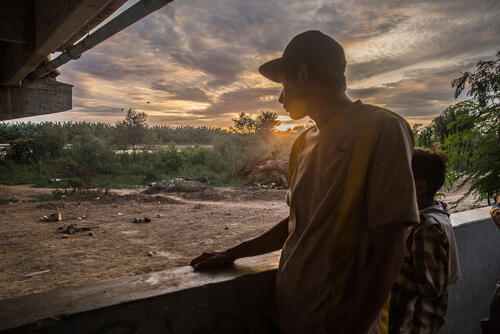
A Venezuelan migrant looks out from the malecón of the Tumbes River in central Tumbes.
The Americas

Peru

MSF teams in Peru have responded to earthquakes and pandemics, such as COVID-19, and have treated marginalised people for HIV. Country
 
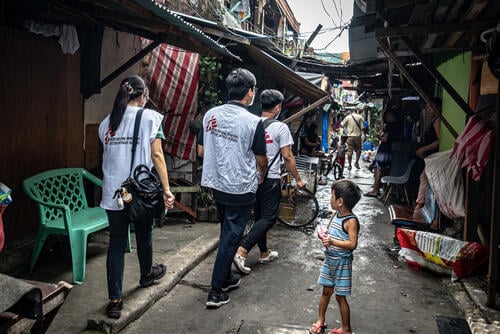
The MSF patient support team navigates overcrowded and narrow alleys of Barangay 105 Aroma neighbourhood, Barangay 105, of Tondo, Manila, the Philippines, March 2, 2023.
Asia & Pacific

Philippines

An assessment we conducted in the Philippines in 2015 confirmed the need for sexual and reproductive health services in the densely populated and impoverished Tondo area of the capital, Manila. Country
 
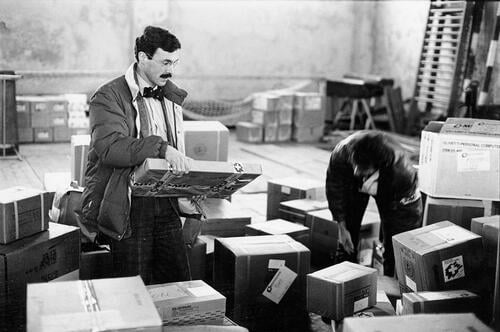
ROMANIA, MSF provided medical and technical aid to the poorest in Romania.  Photo by MSF-H
horizontal, bw, european community, logistics, truck, supply, distribution, poverty, men, man, logistician, national, staff, logo, box
From the Illustrious database.
Europe & Central Asia

Romania

MSF briefly returned to Romania in 2022. Country
Four mothers posing in a corridor of the Hospital in Bili. All four of them are staying in the hospital with their child, that's suffering from a severe case of malaria. Since the beginning of the project in 2016, the pediatric ward already treated more than 4.000 cases of complicated/severe form of malaria.
Médecins Sans Frontières (MSF)

Independent medical humanitarian assistance

We provide medical assistance to people affected by conflict, epidemics, disasters, or exclusion from healthcare. Our teams are made up of tens of thousands of health professionals, logistic and administrative staff - most of them hired locally. Our actions are guided by medical ethics and the principles of independence and impartiality. We are a non-profit, self-governed, member-based organisation.

Learn more