



Ebola disease in DRC: find out how we're responding
Learn more
7998 Results
 
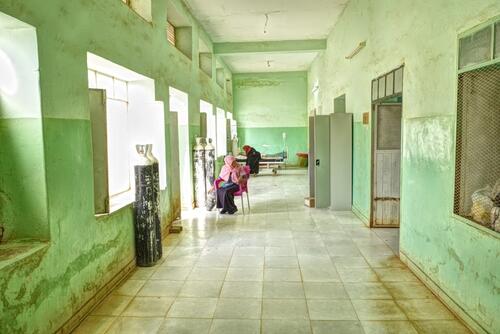
Resting area in the middle of Tabarre hospital.
Haiti

MSF fully reopens Tabarre hospital following armed intrusion

We have fully resumed medical services at Tabarre hospital in Port-au-Prince, Haiti, after an armed intrusion in July caused us to suspend admissions in the trauma centre. 
Press Release - 29 Aug 2023
 
An MSF team travels to the village of Kaoukoure once a week to provide healthcare to people who live far from urban centers and who face difficulty accessing health centers and basic social services. They screen and treat malnourished patients, distribute soap for personal hygiene and mosquito nets to tackle malaria.
Chad

Community-focused projects aim to reduce rising malnutrition in Chad

As rising numbers of children continue to suffer from malnutrition in Chad, our teams are bringing medical care closer to people through community-based projects. Project Update - 28 Aug 2023
 
The recommended spaces to place the bottles of mosquitos with Wolbachia are those where there is not sunlight and it is not within the reach of children or pets. 

----------

 has been responding to dengue outbreaks in Honduras since 1998. These are growing increasingly severe, with emergency thresholds reaching alarming levels and more than 10,000 dengue cases reported each year.  


Current prevention tools are not sufficient to protect people from dengue, there are no specific treatments currently available and no vaccines have yet been produced that provide sufficient protection against infection. With the aim of finding better and more sustainable solutions to the growing global health challenge that dengue represents, MSF is undertaking new activities to prevent dengue transmission and other arboviruses. This includes deploying an innovative method to reduce the risk of dengue and other arboviruses, carried out in partnership with local communities, the Honduras Ministry of health and the World Mosquito Program. The method consists of releasing Aedes aegypti mosquitoes carrying the natural Wolbachia bacteria, which reduces mosquitoes’ ability to transmit arboviruses – with the aim to lower the number of people affected by dengue fever in the area.  


Dengue fever is an important global health threat. It is rapidly spreading with reported incidence increasing 30-fold over the past 50 years. Today, more than half the world’s population is at risk, and it is expected that another billion people will be exposed to dengue fever in coming decades due to climate change. (Population growth, the movement of people from rural areas to cities, more international travel and climate change have all increased the spread of Aedes aegypti mosquitoes - also causing an increasing number of people affected by mosquito-borne diseases.)   


This comms initiative is the first public communication about this project which is unprecedented for both MSF and local communities.
Honduras

Innovative approach uses mosquitos to combat dengue in Honduras

MSF has teamed up with Honduran partners with the aim of finding better and more sustainable solutions to tackle high rates of dengue in the country. Press Release - 25 Aug 2023
 
The MSF flag flutters in the wind at MSF’s clinic in Al-Tanideba camp for Tigray refugees, in Eastern Sudan.
Conflict in Sudan

People trapped by indiscriminate attacks in Nyala, South Darfur

We again urge all parties of the conflict to respect civilians and civilian infrastructure, and allow people safe passage, while ensuring humanitarian workers and facilities are protected from the fighting. Statement - 24 Aug 2023
 
Commune of Ranobe, Amboasary District.

People in the south-east of Madagascar are facing the most acute nutritional and food crisis the region has seen in recent years. MSF began setting up mobile clinics in Amboasary district in late March to screen and treat acute malnutrition in remote villages like those of Ranobe commune, providing ready-to-use therapeutic food and medical care.
Libya

MSF to close medical activities in Tripoli

MSF will end medical activities in Tripoli, Libya, where we provide healthcare to migrants, asylum seekers and refugees. Press Release - 24 Aug 2023
 
Children walking through the outskirts of the camps.
Rohingya refugee crisis

Funding for Rohingya must increase as medical needs surge in camps

As the health situation for Rohingya in Cox's Bazar continues to deteriorate, international aid organisations must step up funding to improve access to healthcare. Project Update - 23 Aug 2023
 
The new MSF-built health post of Nganzi, standing behind the rubble of the old one. The old ramshackle facility was not fit to respond to the population’s needs, Mbomou prefecture, March 2023.
Central African Republic

Health emergency in Central African Republic requires urgent response

Vital support is needed in the Central African Republic, where instability, armed violence and a lack of international attention continue to contribute to one of the most severe humanitarian crises in the world. Project Update - 21 Aug 2023
 
Fatima is 1 year and 3 months old, and she is receiving treatment in Al Thawrah Hospital isolation center in Al Bayda after she contracted measles.

"I came from the Dhi Na'im District, my child’s symptoms started as fever, diarrhea, and then a skin rash. I didn’t expect this was measles until I noticed the skin rash. My other son was admitted here; he was discharged after his recovery, thanks to God and the doctors here", Says Fatima's mother.

In response to the increased number of measles cases reported in the Al Bayda governorate in February 2023, the MSF Mobile Emergency Team (MET) started an intervention in Al Bayda to reduce mortality and morbidity related to the measles outbreak in the governorate. 
In Al Thawrah and Radaa hospitals, MSF provides free-of-charge case management for patients admitted in their isolation centers, and supports with incentive payments, training for the Ministry of Health staff and provides meals for patients. Furthermore, the MSF team supports six primary health care centers (PHCCs) across Al Bayda governorate to treat non-complicated measles cases and refer the complicated cases to the two main hospitals. 
The team also supports the Governorate Health Office in running two mobile clinics, which reach communities in Al Baydhaa with more difficult access to health care. These clinics provide consultations for children under 5 years old and refer patients who need further treatment to the hospitals, in addition to vaccination and health promotion activities.
Yemen

Grave health crisis as measles cases surge in Yemen

We are seeing an alarming rise of measles in Yemen. Authorities, along with health actors, must ensure a comprehensive and coordinated response to avoid further preventable deaths. Project Update - 18 Aug 2023
 
The MSF supported Al Nao hospital in Omdurman, to the northwest of Khartoum, where intense fighting is taking place.
Conflict in Sudan

Violence threatens people and vital hospital in Omdurman

As the conflict in Sudan intensifies, causing horrific injuries and death, we call on all warring parties to spare civilians from violence and to ensure the protection of hospitals and healthcare workers. Press Release - 17 Aug 2023
 
An aunt calms her 9-year-old niece as she is admitted to the paediatric ward at the MSF hospital in Bentiu IDP camp in Unity state. After recovering from measles, the child is being given paediatric care to treat other medical complications.
South Sudan

Children at deadly risk of measles and malnutrition after fleeing conflict in Sudan

Our teams are seeing alarming levels of measles and malnutrition among people fleeing the conflict in Sudan and arriving in South Sudan. We call for an urgent scale up to the humanitarian response before more lives are lost. Press Release - 17 Aug 2023
Four mothers posing in a corridor of the Hospital in Bili. All four of them are staying in the hospital with their child, that's suffering from a severe case of malaria. Since the beginning of the project in 2016, the pediatric ward already treated more than 4.000 cases of complicated/severe form of malaria.
Médecins Sans Frontières (MSF)

Independent medical humanitarian assistance

We provide medical assistance to people affected by conflict, epidemics, disasters, or exclusion from healthcare. Our teams are made up of tens of thousands of health professionals, logistic and administrative staff - most of them hired locally. Our actions are guided by medical ethics and the principles of independence and impartiality. We are a non-profit, self-governed, member-based organisation.

Learn more