



2109 Results
 
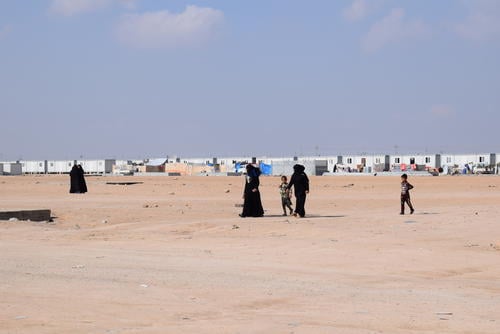
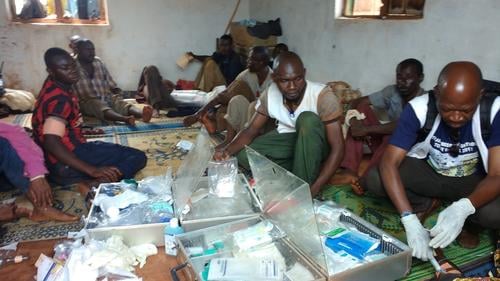
The camps of Ameriyat al Fallujah host around 60,000 Iraqis who have fled violence in other parts of Anbar province. Many are from the city of Fallujah and arrived in June 2016 when the Iraqi forces started an offensive to retake the city from the so-called Islamic State.  Living conditions in the camps are harsh and have an adverse effect on people’s physical and psychological health, but returning home is still impossible for the majority.
Iraq

Mental health needs mount after years of war

Iraq’s recent history has been dominated by wars. Generations of Iraqis have grown up in shattered families, living in camps or among the rubble of their home towns. Each conflict has left its scars, both visible and invisible. Project Update - 15 Jun 2017
 
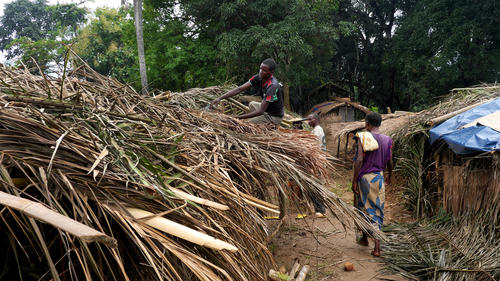
People are building huts on the grounds of the mission. They are afraid of going back to their neighborhoods as they fear new fighting between the autodefense groups and members of the Union pour la Paix en Centrafrique (UPC).
Central African Republic

Scores dead and thousands displaced as conflict erupts in Alindao

Conflict has erupted in recent weeks in several cities in the Central African Republic (CAR). In Alindao, in the centre of the country, more than a hundred people have been killed and thousands have been displaced. Voices from the Field - 9 Jun 2017
 
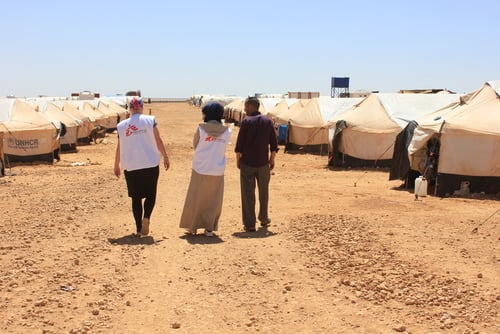
MSF teams  working in Menbij camp to provide humanitarian assistance for Syrian IDPs, north Syria.
Syria

Airstrikes or minefields – Raqqa’s residents face a deadly choice

As fighting intensifies for control of the Syrian city of Raqqa, people must decide whether to remain in the city and surrounding villages under heavy bombardment, or leave the area by crossing active frontlines and minefields, says international medical organisation Médecins Sans Frontières (MSF). Press Release - 9 Jun 2017
 
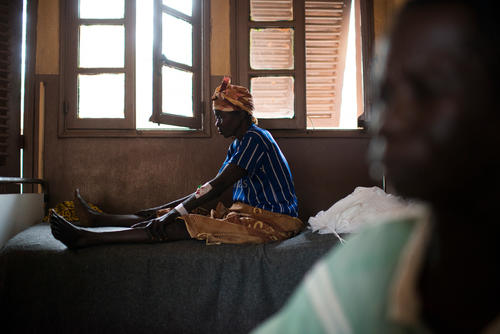
Thérèse Erede, 45, wounded by gunfire. Bambari's hospital.
Central African Republic

Will Bambari be next?

‘Will Bambari be next?’ This is the question on everyone’s lips in Central African Republic’s second city and commercial hub. Its residents worry that the violence engulfing the cities of Bangassou and Bria since early May – in the form of brutal massacres – could soon spread to Bambari, a repetition of the bloodshed of the 2013-2014 war. Project Update - 8 Jun 2017
 
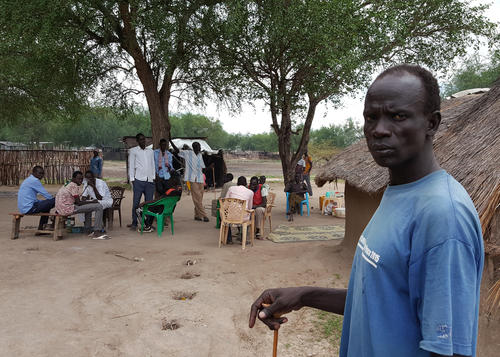
William Nyuon Kuolang, 41, is a father of 5. He used to live in Yuai, a place he fled on the 15th of February 2017 following some fighting between the SPLA and opposition groups. Since then, he lives with his family in a village near Pieri.
South Sudan

“They killed the women, the girls, everybody in the town”

"I left Yuai on 15 February because of the fighting. I left running, there was no time to take anything," says William Nyuon Kuolang, 41, a father of five. Voices from the Field - 2 Jun 2017
 
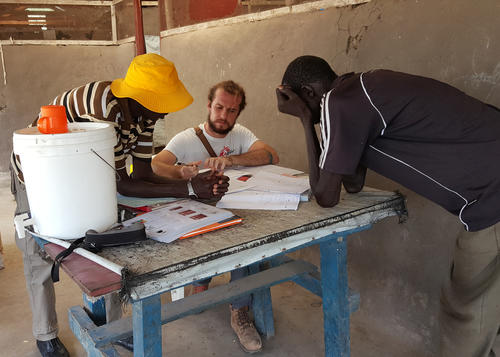
Jonathan Skillen, a MSF nurse, gives explanations to Chuol Gatweck Leo and John Malith Reath, two freshly recruited MSF staff, on how to fill the register book.
South Sudan

Thousands at risk of cholera and malnutrition after fleeing attacks in Yuai and Waat

More than 27,000 people have fled their homes since mid-February after clashes between the Sudan People’s Liberation Army (SPLA) and opposition groups. Press Release - 2 Jun 2017
 
Narcisse Wega, MSF deputy emergency cell manager.
Democratic Republic of Congo

“If we sit back and do nothing, these people will die”

"As a result of intercommunal conflict, villagers left their homes in the hope of finding safety elsewhere." Voices from the Field - 26 May 2017
 
An Medecins Sans Frontieres (MSF) truck on the streets of Bangassou.
Central African Republic

Unacceptable violence in Bangassou hospital

In the evening of 24 May 2017, an armed man entered Bangassou hospital, which is managed by Médecins Sans Frontières (MSF) and the Central African Republic Ministry of Health. He inflicted violence on an MSF nurse, before seizing a patient and her caretaker. Respect for patients and medical facilities must be unequivocally maintained to permit a continued minimum level of healthcare in the country. Project Update - 26 May 2017
 
MSF team finally reached the mosque on the third day of fighting and was able to provide some emergency care to 10 wounded before the gunfire went off again and the team had to flee.
Central African Republic

Update on violence in the east of CAR and MSF response

While the situation calmed down in Bangassou on 15 May, rivalries between self-defence forces and Ex-Seleka coalition dissidents led to an outbreak of violence in Bria, a town where MSF runs a paediatric programme. Project Update - 19 May 2017
 
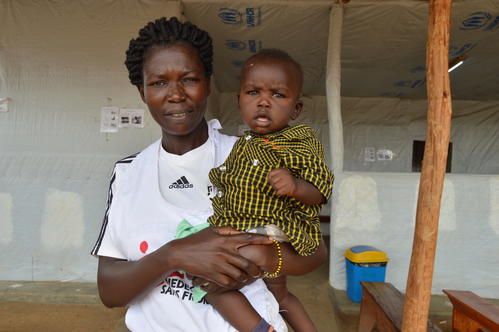
Nola Aniba Tito, 27, is one of the medical translators working in MSF health centre in Ofua 3 zone, in Rhino settlement. Originally from a town in the Equatoria region, she fled violence in South Sudan in July 2016 with her children and started working with MSF in March 2017. As 86% of all South Sudanese refugees in Uganda are women and children, Nola is one of the many female head of households. In this photo she is pictured with her baby, Aaron.
Full testimony from Nola: “I was living with my two children and expecting another child. My husband was in Juba. In my neighborhood, everyone was fleeing because we were seeing child abduction, rape, looting, forced marriage, and killing between tribes almost every day. Schools were attacked and children slaughtered like chicken. If people from the other tribe come, they kill everyone from the other tribe and leave their own tribespeople. Moreover, there was no access to health care, especially after many NGOs left the country.
One day, men knocked on the door of our house and threatened to open it. I was very scared so I didn’t open it, but instead carefully opened the window and saw them holding guns. I cried and shouted so much that neighbors came and the men just left. That’s when I decided to leave my home right away, without any belongings, just with my children and three of my brother’s children, who hasn’t been able to cross into Uganda. Even on the way to Uganda, there is fear of killing and violence and that is why my brother is still in South Sudan.
I was lucky to make it to Uganda. But upon arrival in the camp, we found no water, no food, and no health services. Sometimes we had no water for more than a week. How can we live without any water to use and drink? I also had to walk a very long distance to the hospital outside the camp to deliver my baby, who is now seven months old. We left with nothing, not even a penny to buy food or to pay for transport to hospital. So the start of MSF health service
Uganda

At night, I can’t stop thinking about what is going to happen to me and my children

I was lucky to make it to Uganda. But upon arrival in the refugee settlement, we found no water, no food and no health services. Voices from the Field - 18 May 2017
Four mothers posing in a corridor of the Hospital in Bili. All four of them are staying in the hospital with their child, that's suffering from a severe case of malaria. Since the beginning of the project in 2016, the pediatric ward already treated more than 4.000 cases of complicated/severe form of malaria.
Médecins Sans Frontières (MSF)

Independent medical humanitarian assistance

We provide medical assistance to people affected by conflict, epidemics, disasters, or exclusion from healthcare. Our teams are made up of tens of thousands of health professionals, logistic and administrative staff - most of them hired locally. Our actions are guided by medical ethics and the principles of independence and impartiality. We are a non-profit, self-governed, member-based organisation.

Learn more