




Ebola disease in DRC: find out how we're responding
Learn more
8016 Results
 
msf-placeholder
Mozambique

MSF supports Mozambique as the country confronts a cholera epidemic

MSF is also prepared to expand its intervention if requested. Other cholera cases have been declared in other provinces in the country. Press Release - 2 Feb 2004
 
msf-placeholder
Tuberculosis

Questioning health and human rights

In order to curb the spread of MDR-TB, many medical NGOs - including my own, Médecins Sans Frontières (MSF) - have become committed to WHO's program, which instructs that no patient should be treated unless you can expect an 80 percent rate of compliance from the population to which he or she belongs. Project Update - 2 Feb 2004
 
msf-placeholder
Russia

Treatment of multidrug-resistant tuberculosis in Russian prisons

Sir - Ben Aris highlights important shortfalls in the Russian public-health system and its devastating effect on health. Project Update - 20 Jan 2004
 
msf-placeholder
Liberia

MSF reopens abandoned hospital in eastern Liberia

Persistent health problems include malaria, respiratory tract infections, measles, anaemia, ulcers and complications during childbirth. Project Update - 19 Jan 2004
 
msf-placeholder
Bolivia

Nearly 40,000 people affected by floods in Bolivia

The MSF team is working closely with local health authorities to strengthen the epidemiological surveillance network, as the risk of epidemic outbreaks of diseases such as dengue fever is high. Press Release - 15 Jan 2004
 
msf-placeholder
War and conflict

Guardian newspaper features MSF

The Guardian and Observer newspapers (UK) are running a series of articles featuring MSF's work in forgotten wars, raising awareness of the suffering caused by conflicts usually ignored by the outside world. Project Update - 8 Jan 2004
 
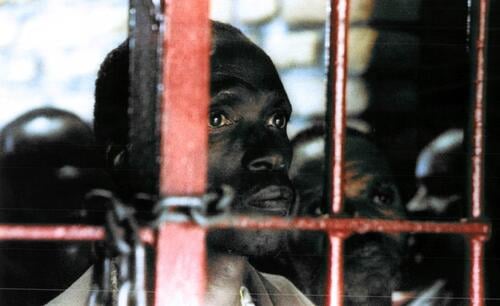
Gitarama. One of more than 7.000 mostly Hutu inmates at the overcrowded Gitarama prison stares out from behind the bars. Some 120 inmates were transferred by the UN in an effort to try to relieve overcrowding.
MSF Speaking Out

The Violence of the New Rwandan Regime 1994-1995

The ‘Violence of the New Rwandan Regime’ case study describes the difficulties and dilemmas faced by Médecins Sans Frontières teams in 1994 and 1995 when confronted with the abuses and crimes of the new regime who had put an end to the Genocide of Tutsis and taken over Rwanda in July 1994. Speaking Out Case Studies - 1 Jan 2004
 
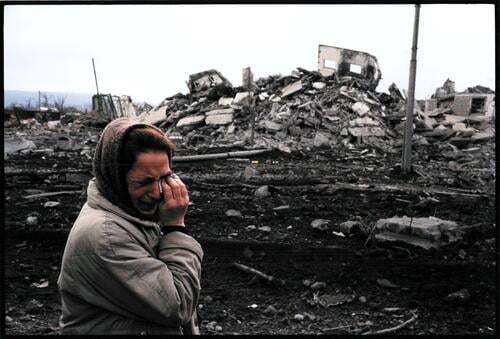
Grozny. A Grozny MSF a conduit des activites de soutien aux structures sanitaires tchechenes, en approvisionnant en medicaments et en materiel medical l’hopital de la ville (maternite) et en realisant des travaux de rehabilitation et d’amelioration des structures.
MSF Speaking Out

War crimes and politics of terror in Chechnya 1994-2004

The ‘War crimes and politics of terror in Chechnya 1994-2004’ case study describes the constraints, questions and dilemmas experienced by MSF while speaking out during the two Russian-Chechen wars and the following years of the so-called ‘normalization’.

Speaking Out Case Studies - 1 Jan 2004
 
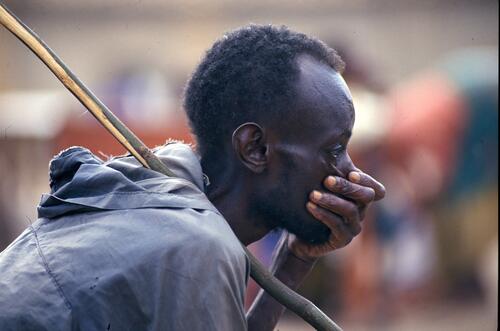
A survivor of Gitarama in Ruhango, Rwanda, July 1994
MSF Speaking Out

Genocide of Rwandan Tutsis 1994

The 'Genocide of Rwandan Tutsis 1994' case study is describing the difficulties and dilemmas met by Médecins Sans Frontières (MSF) during the genocide of Rwandan Tutsis in April, May and June 1994. Speaking Out Case Studies - 1 Jan 2004
 
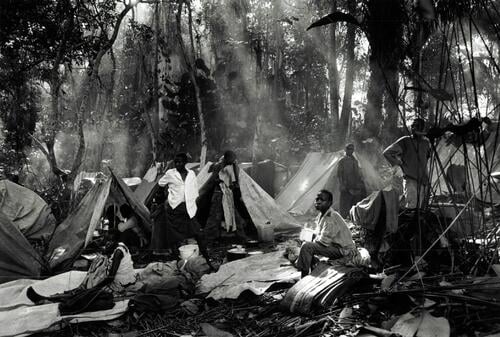
At the village of Biaro. The Zairian Red Cross are present (brought here by the rebels of Kabila, who want to make sure the bodies are burried as fast as possible, fearing typhus epidemic) and make a count of all the orphans: above 1000 children. They are lined up along the railway tracks.Tens of thousands of Rwandan Hutu refugees, (they all come from the refugee camps of Goma and Bukavu), fleeing the Zairian rebels of Laurent- Desire Kabila, for the last 5 months, hiding in the bush, exhausted, famished, and all waiting to return home, to Rwanda, are today in the midst of a new nightmare. They had taken residence in camps in 1994, when they fled their country in fear of retribution for the massacres of hundreds of thousands of Rwandan Tutsi by Hutu extremists. The presence of Hutu nettled Zairian Tutsi, who joined forces with Kabila, a longtime Mobutu foe, and  launched the insurgency. The fighting forced most of the Rwandan refugees to go home in Autumn 96, but about 350.000 of them have been marooned in tough eastern Zaire, fighting terrain. They are dying at an alarming rate. They need food, water ans safe passage home. But no one has made the refugees a priority. The Zairian rebels of Kabila who seized Kisangani, Zaire'sthird city, had ordered the Rwandan Hutu Refugees, who were in this region's camps, to move back south.
MSF Speaking Out

The Hunting and Killing of Rwandan Refugees in Zaire-Congo: 1996-1997 (PDF, 6 MB)

https://www.msf.org/sites/default/files/2026-04/VA_The%20Hunting%20and%20Killing%20of%20Rwandan%20Refugees%20in%20Zaire.pdf - 1 Jan 2004
Four mothers posing in a corridor of the Hospital in Bili. All four of them are staying in the hospital with their child, that's suffering from a severe case of malaria. Since the beginning of the project in 2016, the pediatric ward already treated more than 4.000 cases of complicated/severe form of malaria.
Médecins Sans Frontières (MSF)

Independent medical humanitarian assistance

We provide medical assistance to people affected by conflict, epidemics, disasters, or exclusion from healthcare. Our teams are made up of tens of thousands of health professionals, logistic and administrative staff - most of them hired locally. Our actions are guided by medical ethics and the principles of independence and impartiality. We are a non-profit, self-governed, member-based organisation.

Learn more