



Ebola disease in DRC: find out how we're responding
Learn more
8009 Results
 
msf-placeholder
Democratic Republic of Congo

The socio-economic consequences of sexual violence

MSF's report: Medical, psychosocial, and socio-economic consequences of sexual violence in Eastern DRC
Project Update - 1 Apr 2004
 
msf-placeholder
Democratic Republic of Congo

Sexual violence as a weapon of war

Since August 2003, more than 550 sexual violence victims have been treated by MSF in its hospital in Baraka. Project Update - 1 Apr 2004
 
msf-placeholder
Democratic Republic of Congo

The road to recovery - Sexual violence in the eastern DRC

At the time of this report, sexual violence against girls, boys, men, and women of all ages is still ongoing in eastern DRC, despite the peace agreement. Project Update - 1 Apr 2004
 
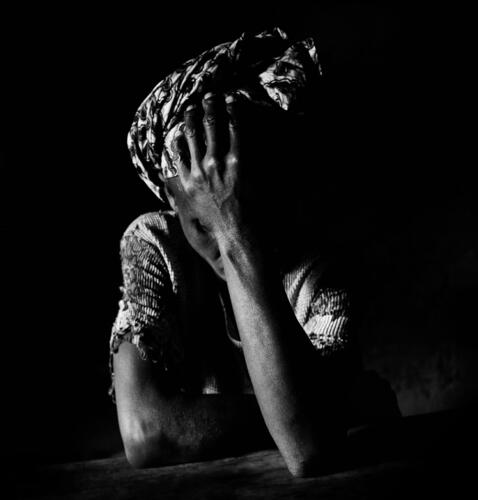
Wars leave women and girls particularly vulnerable. Women, girls and even young children are all too often raped, abducted and forced into sexual slavery as social and economic structures fall apart. When forced to flee their homes, women and girls frequently become separated from their families and are left open to attack. They may be forced to trade sex for protection, or simply food or shelter. 
The incidence of rape and sexual violence in these situations not only increases but also often becomes systematic. Rape becomes a weapon of war with women and girls the targets.
Democratic Republic of Congo

Medical, psychosocial, and socio-economic consequences of sexual violence in Eastern DRC

In the psychosocial sessions conducted by MSF, several important issues were addressed. People received an explanation for their symptoms. It turned out to be very important for most survivors that rape is considered legally as a crime punishable even in international courts. Report - 1 Apr 2004
 
msf-placeholder
Sudan

Loneliness and distress in Darfur

Coralie Lechelle, a nurse from France, and Jean-Sébastien Matte, a logistician from Canada, are volunteers with Médecins Sans Frontières (MSF). Project Update - 31 Mar 2004
 
msf-placeholder
Meningitis

Multiple outbreaks as meningitis season starts in Africa

As Africa enters the dry season, meningitis outbreaks have reported. The so-called 'meningitis belt' is a massive strip of Africa, travelling east to west, parallel to the Sahara desert and covering sub-Saharan countries from Senegal to Ethiopia. Project Update - 31 Mar 2004
 
msf-placeholder
Chad

New malaria project launched in most affected region of Chad

In one year, the mortality rate was 330 deaths per 10,000 inhabitants - three times the rate for the developed world. Over half of these deaths were caused by malaria. In Chad, malaria is the principal cause of death. Project Update - 30 Mar 2004
 
msf-placeholder
Afghanistan

Out of The Fire and Into Our Clinic

The story of one very brave little girl Project Update - 27 Mar 2004
 
msf-placeholder
Afghanistan

Lack of maternal health care in Afghanistan

This is an edited version of a letter that first appeared in The Lancet. Project Update - 22 Mar 2004
 
msf-placeholder
Uganda

Seeking shelter for the night: Uganda's 'night commuter'children

They are called the 'night commuters', a euphemism that hides an ugly, cruel reality. Throughout northern Uganda an estimated 50,000 children take part in this exodus every night, looking for shelter in town centers out of the sheer terror of being attacked or kidnapped by soldiers from the Lord's Resistance Army (LRA). Project Update - 22 Mar 2004
Four mothers posing in a corridor of the Hospital in Bili. All four of them are staying in the hospital with their child, that's suffering from a severe case of malaria. Since the beginning of the project in 2016, the pediatric ward already treated more than 4.000 cases of complicated/severe form of malaria.
Médecins Sans Frontières (MSF)

Independent medical humanitarian assistance

We provide medical assistance to people affected by conflict, epidemics, disasters, or exclusion from healthcare. Our teams are made up of tens of thousands of health professionals, logistic and administrative staff - most of them hired locally. Our actions are guided by medical ethics and the principles of independence and impartiality. We are a non-profit, self-governed, member-based organisation.

Learn more