



Ebola disease in DRC: find out how we're responding
Learn more
2094 Results
 
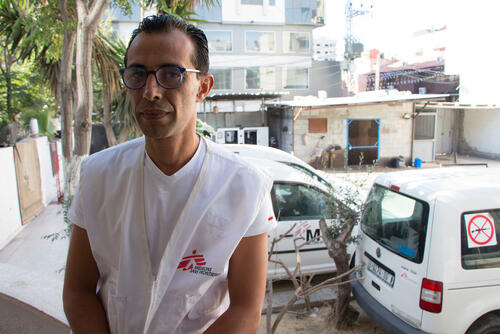
A health promotion MSF worker at the referral hospital in Ansongo, where MSF has been running projects since 2012.
Mali

“Insecurity has pushed people to their limits”

Jamal Mrrouch has just returned from Mali, where he spent more than one year coordinating MSF’s work in the northern regions of Gao and Kidal, and in the central region of Mopti. Interview - 13 Jul 2018
 
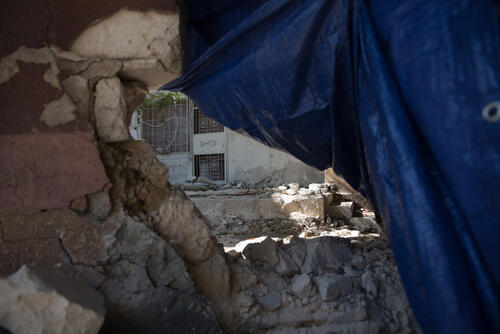
Mosul’s old town experienced intense shelling, aerial bombing and attacks with improvised explosive devices (IED) during the conflict to retake the city from the Islamic State group in 2016/17. Much of the old city is still inaccessible due to the destruction and presence of IEDs, unexploded ordinance (UXO) and booby traps. 

Between 5,000 and 7,000 people have returned to their homes in Mosul’s old city, despite the danger of explosive remnants of war. They face extremely difficult conditions, often living without water and electricity and in partially damaged houses.
Iraq

After the battle: The unfolding of a disaster

A year has passed since the battle for Mosul officially ended, yet its consequences can be still witnessed inside and around the city. The battle might be over, but our work here is not, even a year later. Follow our timeline of events, from the military offensive launched in October 2016 to Mosul today. Photo Story - 11 Jul 2018
 
Nashwan, 42, is prepared for surgery at the Médecins Sans Frontières / Doctors Without Borders (MSF) post-operative care facility in east Mosul. Nashwan is one of the many war-wounded patients still trying to recover a year after the conflict in Mosul officially ended. 

“On 11 March 2017, our neighbourhood was retaken [from the Islamic State group],” Nashwan recalls. “Two days later, we went out to buy food and we were happy. But fighting was continuing in the neighbourhoods around ours. There was a tall building nearby and there was a sniper on top. He started hunting us down. My neighbour was shot in the head and killed. My brother was shot in the leg. The sniper shot me in the back and in the leg.”

Nashwan went to several hospitals outside Mosul for treatment. He then returned to his home in west Mosul where the conflict was still raging. 

“I waited in my home for several months for the bombs to stop,” he says. “When I was at home during these seven months the pain started to grow in my leg and hip, and eventually it became unbearable. So in October 2017 I went to the general hospital in west Mosul. They did x-rays and tests and they said I needed a huge operation and they didn't have the capacity to do the operation.” 

Nashwan’s neighbours helped him pay for a private doctor to do the operation, but it was unsuccessful and Nashwan was soon in agonising pain again. He was forced to go back to the general hospital, which then referred him to MSF’s surgery and post-operative care facility in east Mosul.

“Life has been really hard. My injury has had a negative impact on my life - my family, the way I interact with my kids. I can’t play with them. I can't work and we haven’t had an income. I've been really depressed and I cannot talk to people. Even to go to the bathroom I need someone to come with me. And I need the crutches to go everywhere. It's been really hard for me. But thankfully the hardest part has passed now that I am here.” 

The MSF facility provides free surgeries, post-operative care, rehabilitation and mental healthcare, especially for war-wounded patients. MSF works closely with local health authorities to refer the most urgent patients for care.  

The facility is run by a team of 30 highly qualified international and Iraqi medical experts and has a 33-bed capacity.
Iraq

A year on from battle, Mosul’s healthcare system is still in ruins

National authorities and the international community need to urgently rebuild public health infrastructure, provide patients with access to affordable medication and ensure medial facilities are supplied with the necessary equipment. Press Release - 9 Jul 2018
 
Zainab* stepped on an improvised explosive device when she was running through the streets of Mosul trying to flee fighting between the Islamic State (IS) group and the Iraqi forces. Hours later Zainab woke up in a hospital south of Mosul. She had badly broken her leg and had lost a lot of blood. 

Over the past year she has suffered immensely as she has tried to access healthcare in Mosul to fix her broken leg. But in city still recovering from the conflict, public health facilities for Mosul’s war-wounded are scarce. Zainab is now receiving treatment in the Médecins Sans Frontières / Doctors Without Borders (MSF) surgery and post-operative care unit in east Mosul.

“Our family became separated when we were fleeing our home in 11 April 2017. 
I don't know what happened, I must have stepped on something and I lost consciousness. I woke up in a hospital in Hamman al-Alil (30km south of Mosul). The doctors had to give me blood transfusions. About 19 bags of blood in total. Some of my daughters also got injured with shrapnel,” Zainab says. 

“I've had about 15 operations on my leg so far. When I did the operation with the private doctor I said it was the last operation, I thought it would be finished. But the operation failed and it started to get infected. Then I came here (MSF’s post-operative care facility) and I've had two operations, and I still have three more operations until it's fixed.

“The healthcare situation in Mosul is so bad because all the hospitals are destroyed. Since my injury we haven't visited any public hospitals, only private hospitals.  

“My injury has changed my whole life and it has made me exhausted and my family exhausted. Each time I have an operation I hope it is the last.” 

The MSF facility provides free surgeries, post-operative care, rehabilitation and mental healthcare, especially for war-wounded patients. MSF works closely with local health authorities to refer the most urgent patients for care.  

The facility is run by a team of 30 highly qualified international and Iraqi medical experts and has a 33-bed capacity. 

*Name changed to protect her identify.
Iraq

The agony of Mosul’s war wounded: “I've had about 15 operations on my leg so far.”

Zainab* stepped on an improvised explosive device (IED) in April 2017 as she was running through the streets of Mosul trying to flee fighting between the so-called Islamic State (IS) group and the Iraqi forces. Voices from the Field - 9 Jul 2018
 
MSF’s Aden hospital: consists of ER (4 patients’ capacity), 3 OT (one is dedicated to internal fixation), ICU (10 beds), 6 IPD (58 beds), 2 isolation wards (total of 15 beds), OPD, physiotherapy, health education and support services: general/bacteriological lab, X-Ray, sterilization, ambulances, pharmacy, laundry and management offices.
In 2017, MSF Aden hospital provided 4502 ER Consultations, received 1798 IPD Admissions 448 ICU Admissions, performed 4193 Surgical Procedures and16 Internal Fixations.
Yemen

“Our concern is that fighting could turn Hodeidah into a besieged city”

On Wednesday 13 June, forces loyal to President Hadi, supported by the Saudi and Emirati-led coalition (SELC), officially launched an offensive to take Hodeidah city from Ansar Allah forces (Al Houthis). Voices from the Field - 26 Jun 2018
 
Improvised kitchen in Bambari general hospital. In Bambari, MSF supports the paediatric and maternity wards and supports the surgery national team. In February, the UN stabilisation mission, MINUSCA, declared Bambari a “city without armed groups”, strengthening the perception of it as a safe area for those fleeing violence elsewhere in the country. Currently, 50 percent of Bambari’s residents (113.800 people in total) have been displaced from their homes in other parts of Central African Republic. Of the 55,869 displaced people, 10,300 have arrived in Bambari since mid-March. Most are living in nine camps which ring the city but several moved in the hospital compound, where they feel safer.
Central African Republic

Ongoing fears of outbursts of violence in Bambari hamper access to healthcare

Interview with former head of mission Paul Brockman about recent outbursts of violence in Bambari, CAR, and their impact on the local population. Voices from the Field - 26 Jun 2018
 
Survivor of an airstrike in al-Dashisha area, in north east Syria, receiving treatment at an MSF hospital in Hassakeh governorate. The airstrike that injured them killed 14 others.
After a period of relative calm, airstrikes on the Islamic State group in Der ez-Zor and Hassakeh governorates intensified in June 2018. As a result, and over a period of ten days in early June, 17 people arrived to the MSF hospital with injuries related to airstrikes, compared to 7 between January and June.
For those who survived the airstrikes and reached the MSF hospital, they had to travel for hours. The meandering frontlines between armed groups can turn a mere one-hour journey into a six hour trek, as people often have to take detours and travel through rural parts of the governorates to avoid checkpoints. In parallel, the few remaining and functioning health centers in the region are either private and very expensive, or they lack specialized teams.
Syria

MSF Hassakeh hospital seeing an increase in casualties of airstrikes in northeast Syria

Between 4 and 14 June, MSF-supported hospital in Hassakeh received 17 survivors of airstrikes, including 6 children and 3 women. Project Update - 21 Jun 2018
 
MSF flag over the top of the hospital
Yemen

MSF provides support to hospitals treating wounded from Hodeidah

On Wednesday 13 June, forces loyal to President Hadi, backed by the Saudi and Emirati-led international coalition (SELC) have launched a military offensive on Hodeidah, whose strategic port on the Red sea remains one of the few lifelines left for people living in northern Yemen. Project Update - 14 Jun 2018
 
Surgery with Surgeon Dr Hayder Alwash 

MSF Medical staff are working in Ramtha hospital in Jordan (5 km from Syrian border) where war wounded patients from Syria are being treated. Majority of patients require emergency surgery. Due to the severity of the injuries, patients require multiple complex surgery and long rehabilitation. The surgery runs 24 hours a day, 7 days a week.
Jordan

Lack of patients forces closure of Ramtha surgical project

After more than four years of emergency lifesaving activities in which over 2,700 war-wounded Syrians underwent medical treatment, Médecins Sans Frontières (MSF) has taken the difficult decision to close the Ramtha surgical project in northern Jordan. Project Update - 11 Jun 2018
 
Ahmed, a Syrian boy looks out from the window of a tent in a camp for displaced people in Idlib, Syria.
Syria

In dust and despair, displaced Syrians wait

More than half of Idlib’s population of roughly two million people are displaced. The arrival of 80,000 more people in the last two months from east Ghouta, rural Damascus and north Homs is further stretching the ability of local residents and humanitarian organisations to address their needs. Project Update - 8 Jun 2018
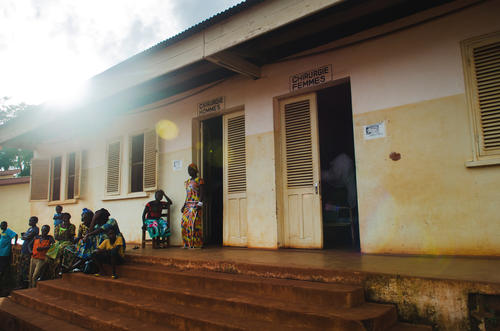
Four mothers posing in a corridor of the Hospital in Bili. All four of them are staying in the hospital with their child, that's suffering from a severe case of malaria. Since the beginning of the project in 2016, the pediatric ward already treated more than 4.000 cases of complicated/severe form of malaria.
Médecins Sans Frontières (MSF)

Independent medical humanitarian assistance

We provide medical assistance to people affected by conflict, epidemics, disasters, or exclusion from healthcare. Our teams are made up of tens of thousands of health professionals, logistic and administrative staff - most of them hired locally. Our actions are guided by medical ethics and the principles of independence and impartiality. We are a non-profit, self-governed, member-based organisation.

Learn more