




Ebola disease in DRC: find out how we're responding
Learn more
8003 Results
 
msf-placeholder
Malnutrition

Rome food summit to fail if governments continue spending peanuts on childhood malnutrition

Funding by rich countries to combat malnutrition has remained flat for seven years, according to a report released today by Médecins Sans Frontières (MSF). Press Release - 11 Nov 2009
 
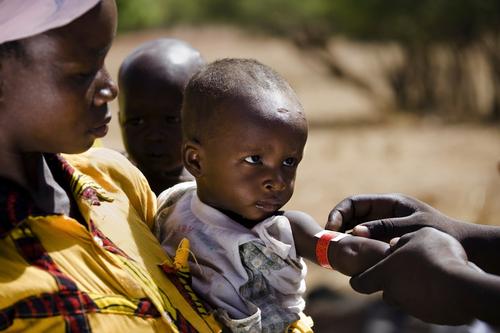
A baby having been screened with MUAC in an ambulatory site (Sarma), Yako District, May 2009. In September 2007 MSF launched a program for children suffering from acute malnutrition in the provinces of Passoré and Loroum in northern Burkina Faso.<br/>
In 2008, 16 500 children were treated with a cure rate of 88%. To counter the impact of malaria on the mortality of young children during the annual seasonal peak of the disease, MSF has set up a specific response from mid-September to late December 2008, treating 10800 children with the disease.
Malnutrition

Malnutrition: How Much Is Being Spent? An analysis of nutrition funding flows 2004 - 2007

How much is the world spending on the treatment and prevention of childhood malnutrition? This MSF report aims to answer this complex question. Report - 10 Nov 2009
 
msf-placeholder
South Sudan

MSF responds to serious kala azar outbreak in southern Sudan

Following a serious outbreak of severe parasitic disease, kala azar, in southern Sudan, medical humanitarian aid agency, Médecins Sans Frontières (MSF), is responding to the emergency in several locations across both Jonglei and Upper Nile States. Project Update - 6 Nov 2009
 
msf-placeholder
Project Update

MSF vaccination used as bait in unacceptable attack on civilians

Médecins Sans Frontières (MSF) denounces this clearly unacceptable abuse of humanitarian aid for military purposes. Press Release - 6 Nov 2009
 
msf-placeholder
Sudan

MSF assists newly displaced people in Shangil Tobaya

Clashes near Shangil Tobaya, a town in northern Darfur, Sudan, have led to a number of casualties and the displacement of hundreds of families. Project Update - 3 Nov 2009
 
msf-placeholder
Indonesia

Adapting to changing needs one month after the Indonesian earthquake

Nearly one month after an earthquake measuring 7.6 on the Richter Scale hit the Indonesian island of Sumatra, Médecins Sans Frontières (MSF) is focusing its efforts on the most affected area - the villages near Padang and Pariaman. Project Update - 30 Oct 2009
 
msf-placeholder
Eswatini

TB and HIV/AIDS in Swaziland

The small kingdom of Swaziland in southern Africa is on the brink of a major health crisis due to the killer twin-epidemic of HIV-AIDS and tuberculosis (TB), which is decimating the population and now sees Swaziland as the state with one of the highest Aids death rates in the world today. Project Update - 28 Oct 2009
 
msf-placeholder
Greece

Overcrowded cells and deteriorating living conditions cause tension inside Pagani Detention Center

The needs for psychosocial support are much greater and, day by day, the Médecins Sans Frontières (MSF) team realizes that they could have provided much more help, if at least the basic humanitarian needs of the migrants were met. Project Update - 26 Oct 2009
 
msf-placeholder
Colombia

New people displaced by the armed conflict in the Nariño department

Since last June, Médecins Sans Frontières (MSF) has provided care to those affected by eight massive displacements in the department, where approximately 4,000 people fled the countryside to nearby towns in search of safety. Project Update - 26 Oct 2009
Four mothers posing in a corridor of the Hospital in Bili. All four of them are staying in the hospital with their child, that's suffering from a severe case of malaria. Since the beginning of the project in 2016, the pediatric ward already treated more than 4.000 cases of complicated/severe form of malaria.
Médecins Sans Frontières (MSF)

Independent medical humanitarian assistance

We provide medical assistance to people affected by conflict, epidemics, disasters, or exclusion from healthcare. Our teams are made up of tens of thousands of health professionals, logistic and administrative staff - most of them hired locally. Our actions are guided by medical ethics and the principles of independence and impartiality. We are a non-profit, self-governed, member-based organisation.

Learn more