



Ebola disease in DRC: find out how we're responding
Learn more
8003 Results
 
msf-placeholder
Somalia

MSF resumes activities in Hawa Abdi, Somalia, after security incident

On May 5, 2010 a private dispute escalated into a violent clash in the area surrounding the Hawa Abdi clinic in Somalia and triggered the occupation of the medical premises by an armed group. MSF was forced to evacuate its patients and suspend its activities, leaving thousands of Somalis living in the Afgooye corridor without access to health care. Project Update - 18 Jun 2010
 
msf-placeholder
South Africa

The false victory over measles

Over the past two years, several teams from Médecins Sans Frontières (MSF) have responded to increasingly frequent and widespread measles outbreaks in several African nations. Even though WHO has targeted measles for eradication by 2015, the disease has seen a marked rise since 2009, following 20 years of steep decline.
In this interview, Florence Fermon, a measles specialist in MSF, explains possible reasons for the resurgence, and outlines the difficulties faced by the teams in establishing a rapid and effective response to epidemics in order to limit the number of cases and deaths.
Voices from the Field - 17 Jun 2010
 
msf-placeholder
Measles

MSF measles programs

Project Update - 17 Jun 2010
 
msf-placeholder
Malawi

More than 2.5 million children to be vaccinated and over 8,000 patients in care with biggest measles outbreak in over a decade in Malawi

In coordination with the country's health authorities, MSF teams are providing care and vaccination campaigns. The epidemic threshold has been surpassed in 23 of the country's 28 districts. Along with the vaccination efforts by MSF are training and medical support throughout the country. Project Update - 9 Jun 2010
 
msf-placeholder
Somalia

23 women and children injured by shelling in Mogadishu Somalia

War wounded admitted to Daynile hospital, treated by MSF. Project Update - 7 Jun 2010
 
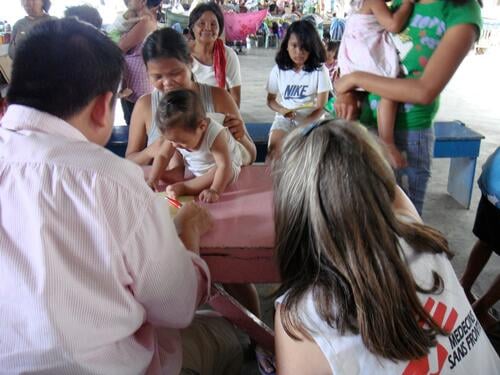
Typhon Ondoy, Angono, novembre 2009.<br/>Clinique mobile : consultation de Lisa Triger, médecin, dans le centre d¿évacuation de Pag asa *** Local Caption *** In Manila and its surrounding areas, MSF teams are  working to provide medical care and distribution of non-food items to the most vulnerable people affected by three typhon and tropical storms in october and november 2009. Dozens of thousands of people still live in flooded areas in critical conditions in the slums near a canal east of Manila and in the north and south-east Laguna de Bay area. These people are particularly vulnerable because either they live in crowded evacuations centers or in partially flooded houses.

International Financial Report 2009

Annual Report - 30 May 2010
 
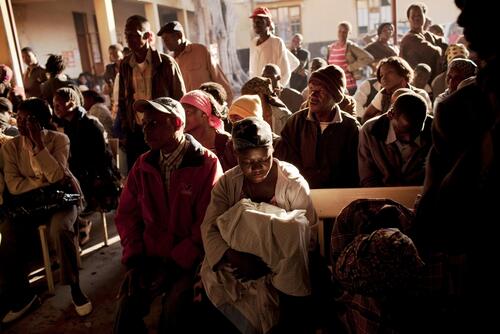
People wait to be attended at Chamanculo Hospital in Mozambique, Aug. 2009. Infrastructure is a major concern in Mozambique, the majority of people are treated at the large Health Facilities in the country, comprising of 3 central hospitals, 7 provincial hospitals, 31 rural and general hospitals. Health sites outside of those lack resources such as health care workers, infrastructure, equipment, supplies, sources of electricity and water.
HIV/AIDS

No time to quit: HIV/AIDS treatment gap widening in Africa

Titled “No time to quit: HIV/AIDS treatment gap widening in Africa”, the report builds on analyses made in eight sub-Saharan countries to illustrate how major international funding institutions such as PEPFAR, the World Bank, UNITAID, and donors to the Global Fund have decided to cap, reduce or withdraw their spending on HIV treatment and antiretroviral drugs (ARVs) over the past year and a half. Report - 27 May 2010
Four mothers posing in a corridor of the Hospital in Bili. All four of them are staying in the hospital with their child, that's suffering from a severe case of malaria. Since the beginning of the project in 2016, the pediatric ward already treated more than 4.000 cases of complicated/severe form of malaria.
Médecins Sans Frontières (MSF)

Independent medical humanitarian assistance

We provide medical assistance to people affected by conflict, epidemics, disasters, or exclusion from healthcare. Our teams are made up of tens of thousands of health professionals, logistic and administrative staff - most of them hired locally. Our actions are guided by medical ethics and the principles of independence and impartiality. We are a non-profit, self-governed, member-based organisation.

Learn more