



Ebola disease in DRC: find out how we're responding
Learn more
8003 Results
 
msf-placeholder
Global

Frontlines podcast: Giving children with HIV the support they need

Frontlines podcast: Giving children with HIV the support they need Project Update - 1 Dec 2010
 
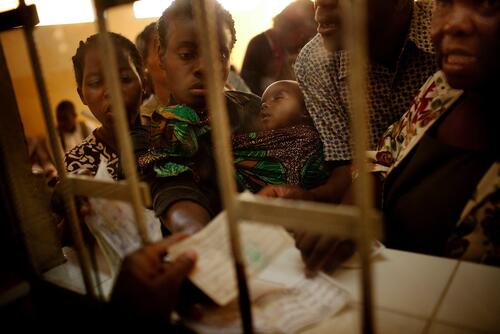
People receive medication in a government run hospital assisted by MSF, in Chamanculo, a poor neighbourhood of Maputo, Mozambique.
HIV/AIDS

MSF in Mozambique 2001-2010: Ten years of HIV projects

This report details MSF's work and achievements in Mozambique in the field of HIV/AIDS over the last ten years, as well as pointing to the challenges that lie ahead. Report - 25 Nov 2010
 
msf-placeholder
Pakistan

Relief for some flooded areas of Pakistan but work continues in the south

Three months after the floods that inundated Pakistan, MSF has stopped the emergency response activites in some parts of the country, such as in Khyber Pakhtunkhwa and in northern Sindh provinces, where flood-affected people have started returning to their homes. Project Update - 24 Nov 2010
 
msf-placeholder
Haiti

Port-auPrince, Haiti – November 2010

Port-auPrince, Haiti – November 2010
Patients receive treatment for cholera in Sarthe, in the west of Port-au-Prince. The number of cases MSF has seen in the capital jumped from 350 during the first week of November to 2,250 during the second week.
Voices from the Field - 22 Nov 2010
 
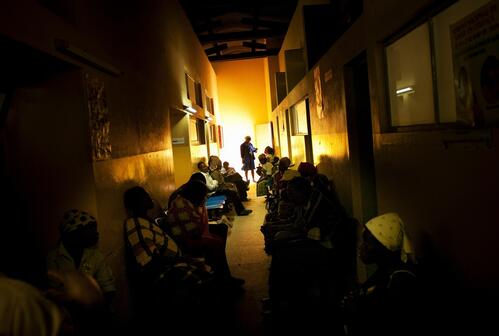
Waiting room at the 1 de Junho, a Health Center, assisted by MSF in Mavalane, Maputo, Mozambique.
Mozambique

MSF points at achievements and challenges in fighting HIV in Mozambique

Although important achievements in the last decade have allowed over 200,000 people living with HIV in Mozambique to receive life-saving treatment, many challenges remain in the fight against HIV/AIDS warns the international humanitarian medical organisation Médecins Sans Frontières (MSF) in a new report. Press Release - 21 Nov 2010
 
msf-placeholder
Haiti

Cholera in Haiti: MSF calling on all actors to step up response

Despite the huge presence of international organizations in Haiti, the cholera response has to date been inadequate in meeting the needs of the population. Press Release - 18 Nov 2010
 
msf-placeholder
Haiti

Photoblog: Haiti - Moises Saman/Magnum

Archaie, Haiti – October 2010 Voices from the Field - 17 Nov 2010
 
msf-placeholder
Malnutrition

Malnutrition Campaign Launch - Food Is Not Enough

Video: Malnutrition Campaign Launch - Food Is Not Enough Project Update - 17 Nov 2010
 
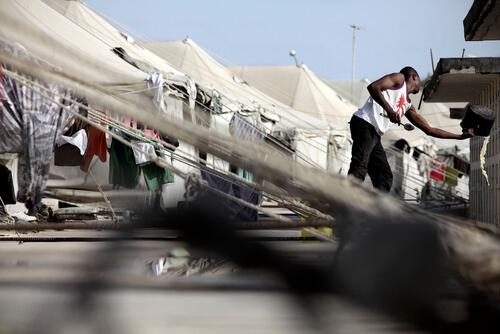
Malta's location in the Mediterranean Sea has made it a common port of disembarkation for migrants and asylum seekers setting off from the coast of Libya on their way to Europe. However, as a result of increased patrols in the Mediterranean, the number of migrants reaching Malta has dropped significantly. In 2008, 2700 people landed on the island. Form january to October 2010, only 28 made it to its shores. The small number of new arrivals hides the increasing suffering of those who embark on a dangerous journey only to be stopped short of their final destination. It also masks the plight of migrants who are already in Malta, stranded on an island where daily life is a struggle and prospects for the future are grim.  MSF started working in Malta in August 2008, when hundreds of newly arrived migrants were being locked up in detention centres where conditions were a serious threat to their health. MSF denounced these conditions and continued working on the island. In 2010, MSF focused on providing psychological care to migrants and asylum seekers trying to overcome trauma, depression and other mental health problems resulting from their previous experiences, current difficulties in Malta and failed attempts to leave the island. MSF is closing the project in Malta in December 2010.
Malta

Not Criminals: MSF exposes conditions for undocumented migrants and asylum seekers in Maltese detention centres

Report: MSF exposes conditions for undocumented migrants and asylum seekers in Maltese detention centres.
Report - 17 Nov 2010
 
msf-placeholder
Haiti

In Haiti, an easily treatable, preventable disease continues to claim lives

Even as MSF continues to increase its capacity to treat, there remains acute deficiencies in the well-established preventative actions that are essential to controlling the spread of the epidemic. The critical preventative activities such as the distribution of clean drinking water, positioning of oral rehydration points in affected communities, waste removal, and safe burial of victims of the epidemic, all remain far below the needs. Project Update - 16 Nov 2010
Four mothers posing in a corridor of the Hospital in Bili. All four of them are staying in the hospital with their child, that's suffering from a severe case of malaria. Since the beginning of the project in 2016, the pediatric ward already treated more than 4.000 cases of complicated/severe form of malaria.
Médecins Sans Frontières (MSF)

Independent medical humanitarian assistance

We provide medical assistance to people affected by conflict, epidemics, disasters, or exclusion from healthcare. Our teams are made up of tens of thousands of health professionals, logistic and administrative staff - most of them hired locally. Our actions are guided by medical ethics and the principles of independence and impartiality. We are a non-profit, self-governed, member-based organisation.

Learn more