




Ebola disease in DRC: find out how we're responding
Learn more
8003 Results
 
msf-placeholder
South Sudan

Preparing for potential emergencies in southern Sudan

Today, the southern region of Sudan is confronted by constant emergencies: malnutrition is chronic, violence continues to destroy lives and displace the population, and preventable diseases are relentless killers. Project Update - 29 Dec 2010
 
msf-placeholder
Haiti

Where aid failed

The road to controlling a cholera epidemic has been paved by hundreds of previous outbreaks worldwide. Yet, in Haiti, there are vast gaps in the deployment of well-established control measures. Now the epidemic is nationwide, making more than 120,000 people sick and killing at least 2,500. In the face of this ferocious outbreak, investigations into its origin have not been released publicly, even though this information is fundamental to understanding the epidemic's behaviour. Project Update - 28 Dec 2010
 
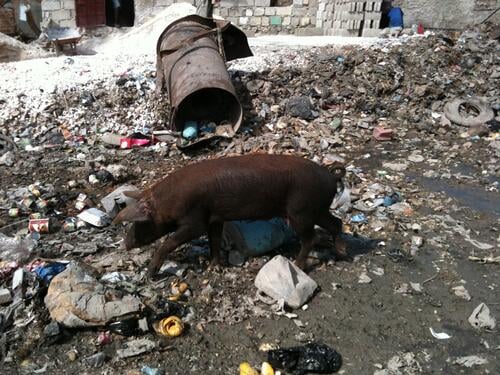
Scene de rue a Martissant
Haiti

Cholera emergency in Haiti far from over

Cases still increasing in north and south of the country . Project Update - 24 Dec 2010
 
msf-placeholder
Tuberculosis

Meet the first MSF patient to have recovered from XDR-TB

While one in five patients under treatment for moderately resistant strains of the disease do not survive, patients with extensively resistant cases, if they can get treatment at all, usually must rely on less effective and more toxic medicines, with lower success rates. For these reasons and others, Xoliswa Armans is a remarkable patient. Project Update - 23 Dec 2010
 
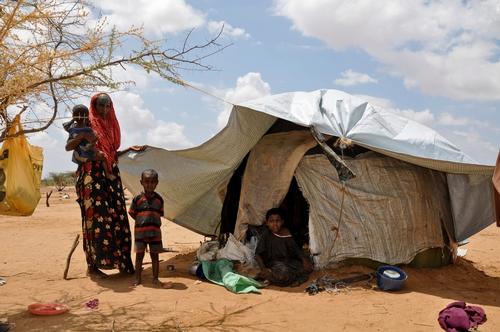
A newly arrived family of refugees from Somalia stand outside their shelter, near Dagahaley refugee camp, Dadaab, Kenya.
Kenya

A day in Dadaab

Having escaped the war, Somali refugees wait for a space in Kenya's overcrowded refugee camps Voices from the Field - 22 Dec 2010
 
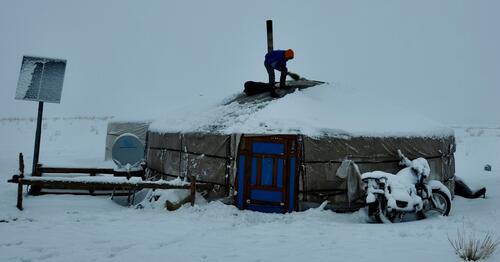
Uvs Province, Mongolia: The first snows of the winter of 2010 coat a ger in Uvs province. A pilot project in a remote province in northwest Mongolia has assisted health authorities and the local population prepare for the harsh winter. Last year, the country was hit by a devastating Òdzud,Ó which is a devastating winter that follows a particularly dry summer. Access to healthcare was impossible for large swathes of the population, and infant mortality rates doubled. The government of the impoverished and sparsely-populated country declared a national emergency, and once the snows melted in spring, MSF sent an exploratory team to see what assistance could be offered. 
<br/>
In Between September and November, the team worked in five districts of Uvs province, where some 70 per cent of the population was affected by the dzud. The project pilot involved a range of activities. These included improving infrastructure in five regional health facilities, providing a back-up supply of essential drugs and supplies in provincial and county hospitals, distributing basic first aid kits to 3,000 herder families and giving refresher training and drugs to 16 community-based medical officers.
Mongolia

Preparing for winter in a remote Mongolian province

The harsh winter has now begun in Mongolia, and in the spring, MSF team will return to evaluate the project. In the meantime, MSF is looking into starting projects in the capital Ulan Bator focused on tuberculosis, as well as the health needs of thousands of families who live in “ger” shanty settlements on the outskirts of the capital. Project Update - 20 Dec 2010
 
msf-placeholder
South Sudan

'A people way too used to suffering'

Award-winning photographer, Cedric Gerbehaye, travelled to Southern Sudan to visit Médecins Sans Frontières clinics and document the humanitarian crisis. Project Update - 16 Dec 2010
 
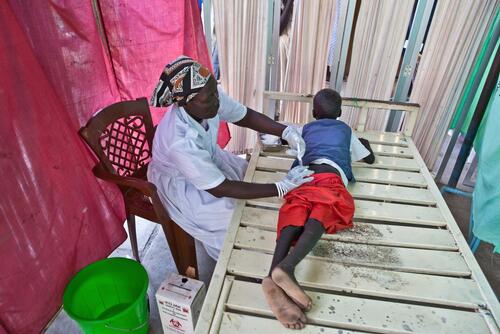
A young boy suffering from Kala Azar is getting an injection from one of the nurses. MSF supports the teaching hospital in Malakal, South Sudan.
South Sudan

Southern Sudan in grips of worst kala azar outbreak in eight years.

Epidemic compounds existing medical humanitarian crisis Press Release - 16 Dec 2010
 
msf-placeholder
Global

Underfunded Global Fund punishes ambition by rejecting AIDS proposals

The World Health Organization and other experts have recognized that early initiation of treatment is key to turning back the AIDS pandemic. However, countries’ proposals to initiate early treatment, implement WHO guidelines and aggressively reduce transmission both between mother and child, and between adults, have been denied. Press Release - 15 Dec 2010
 
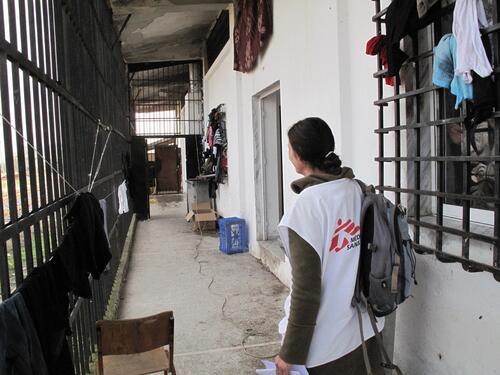
Tychero border police station, Evros, Greece - December 2010
 MSF¿s emergency coordinator visits one of the cells in the border police station of Tychero in the region of Evros. MSF has started an emergency intervention in Evros for the provision of medical and humanitarian assistance to migrants and asylum seekers detained in appalling living and hygiene conditions in detention facilities.
Greece

Critical situation for migrants and asylum seekers in detention facilities in Evros region, Greece

During an assessment carried out in November in two detention centers (Venna, Fylakio) and three border police stations (Soufli, Tychero and Feres), MSF documented the harsh and inhumane conditions in which detained migrants are being kept. Most of the detention facilities are very overcrowded, operating at two or three times their capacity. Due to the lack of space, men, women, young children and unaccompanied minors are being kept together in the same cells. Press Release - 13 Dec 2010
Four mothers posing in a corridor of the Hospital in Bili. All four of them are staying in the hospital with their child, that's suffering from a severe case of malaria. Since the beginning of the project in 2016, the pediatric ward already treated more than 4.000 cases of complicated/severe form of malaria.
Médecins Sans Frontières (MSF)

Independent medical humanitarian assistance

We provide medical assistance to people affected by conflict, epidemics, disasters, or exclusion from healthcare. Our teams are made up of tens of thousands of health professionals, logistic and administrative staff - most of them hired locally. Our actions are guided by medical ethics and the principles of independence and impartiality. We are a non-profit, self-governed, member-based organisation.

Learn more